Builder / Exercises
Exercise library
Curate movements, manage alternatives, and keep the library tight.
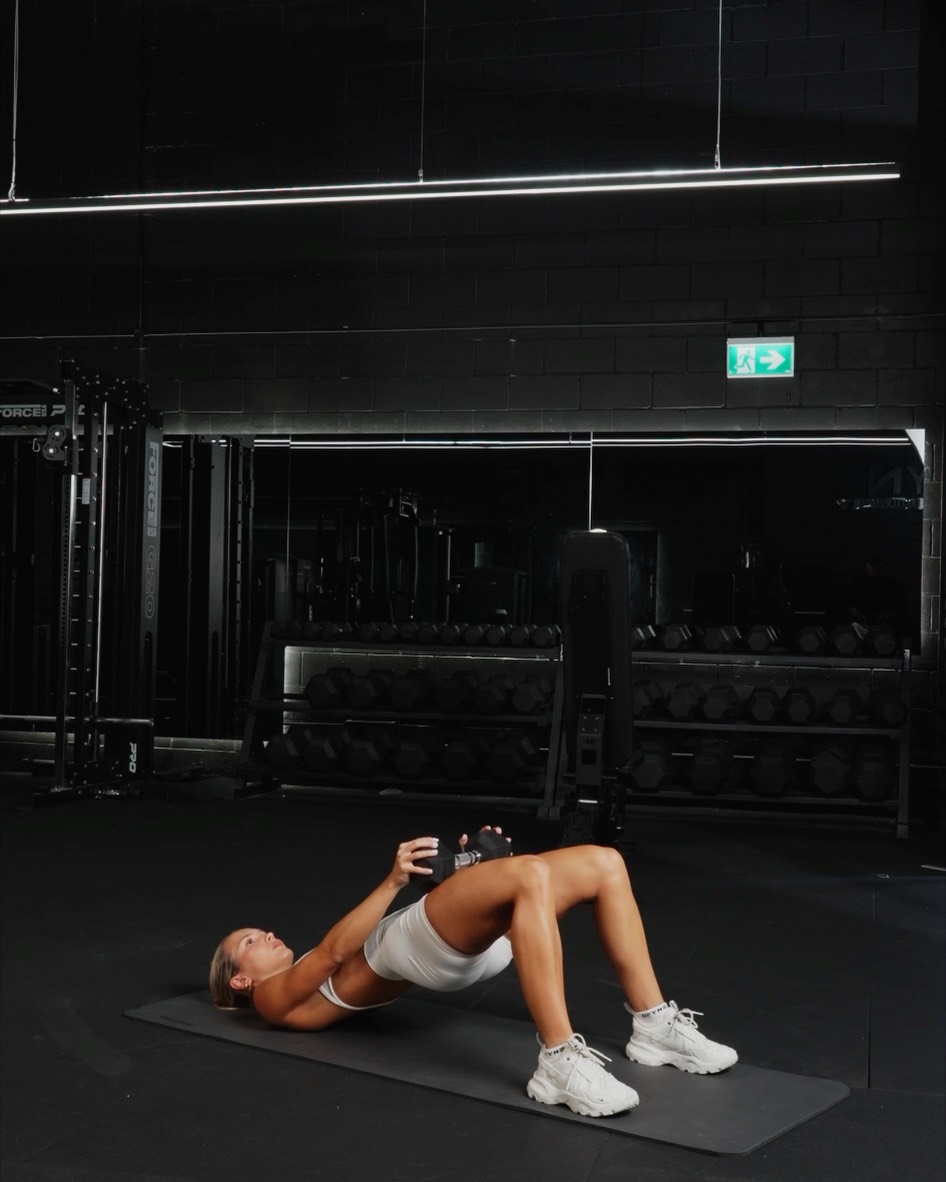
Dumbbell Glute Bridge
Setup - Lie flat on the ground with your legs bent and feet flat on the ground. Your feet should be positioned shoulder width apart, externally pointed outwards slightly - Rest a dumbbell over your hips or upper thighs and cup it with your hands to keep it stable Movement - Press your feet firmly into the floor and begin driving your hips up towards the ceiling. Focus on pushing through your heels while keeping your back flat on the ground - As you push upward, squeeze your glutes at the top of the movement - At the top of the thrust, your body should form a straight line from your shoulders to your knees - Slowly lower your hips back down to the floor
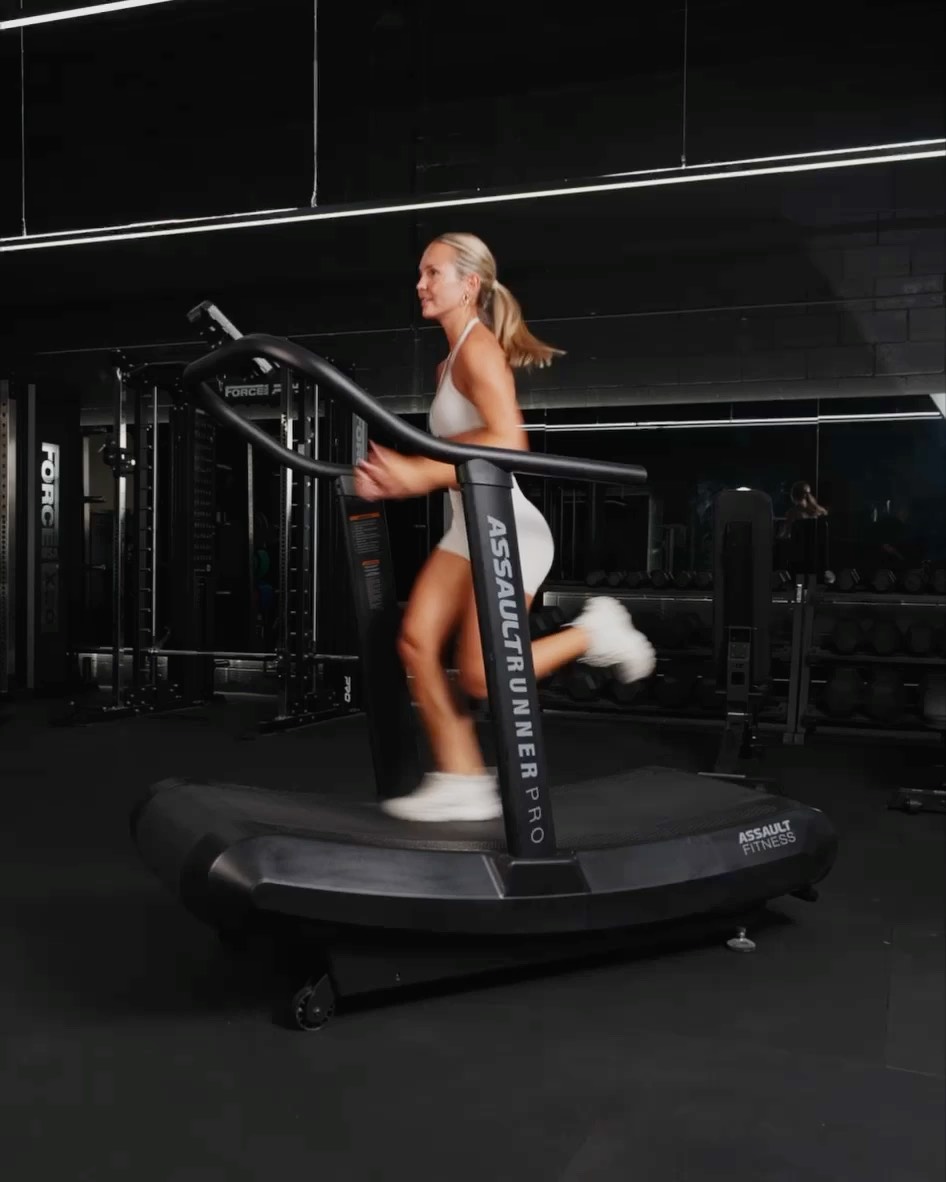
Sprint
Movement - Run/sprint at your own pace, aim to run as close as possible to your top speed
Jog
Movement - Jog at a pace that is comfortable for you
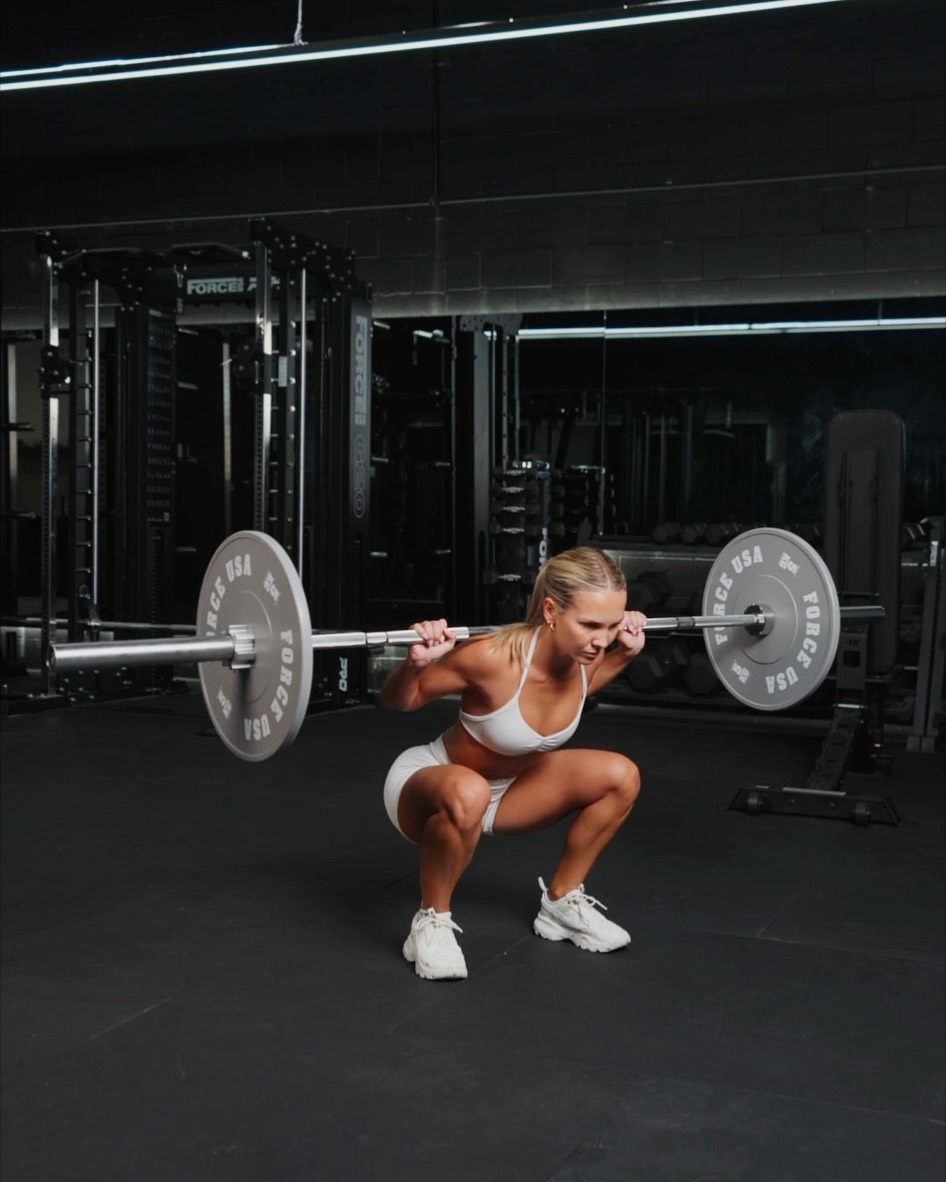
Barbell Squat
Setup - Position the barbell on a squat rack at about chest height - Position the barbell so it rests comfortably on your upper traps. Grip the bar with your hands wider than shoulder width apart and your elbows down Movement - Place your feet shoulder width apart with your toes externally pointed outwards slightly. Brace your core and hinge at the hips to simultaneously bend your knees. Push your hips back first, then drop your knees to allow your thighs to descend - Keep your chest up and eyes forward. Maintaining a neutral spine throughout the movement - Lower yourself until your thighs are parallel to the ground or your hips drop below your knees - Drive through your heels to push yourself back to a standing position
Full Body Conditioning Circuit (3 Rounds)
Conditioning Circuit (3 Rounds)
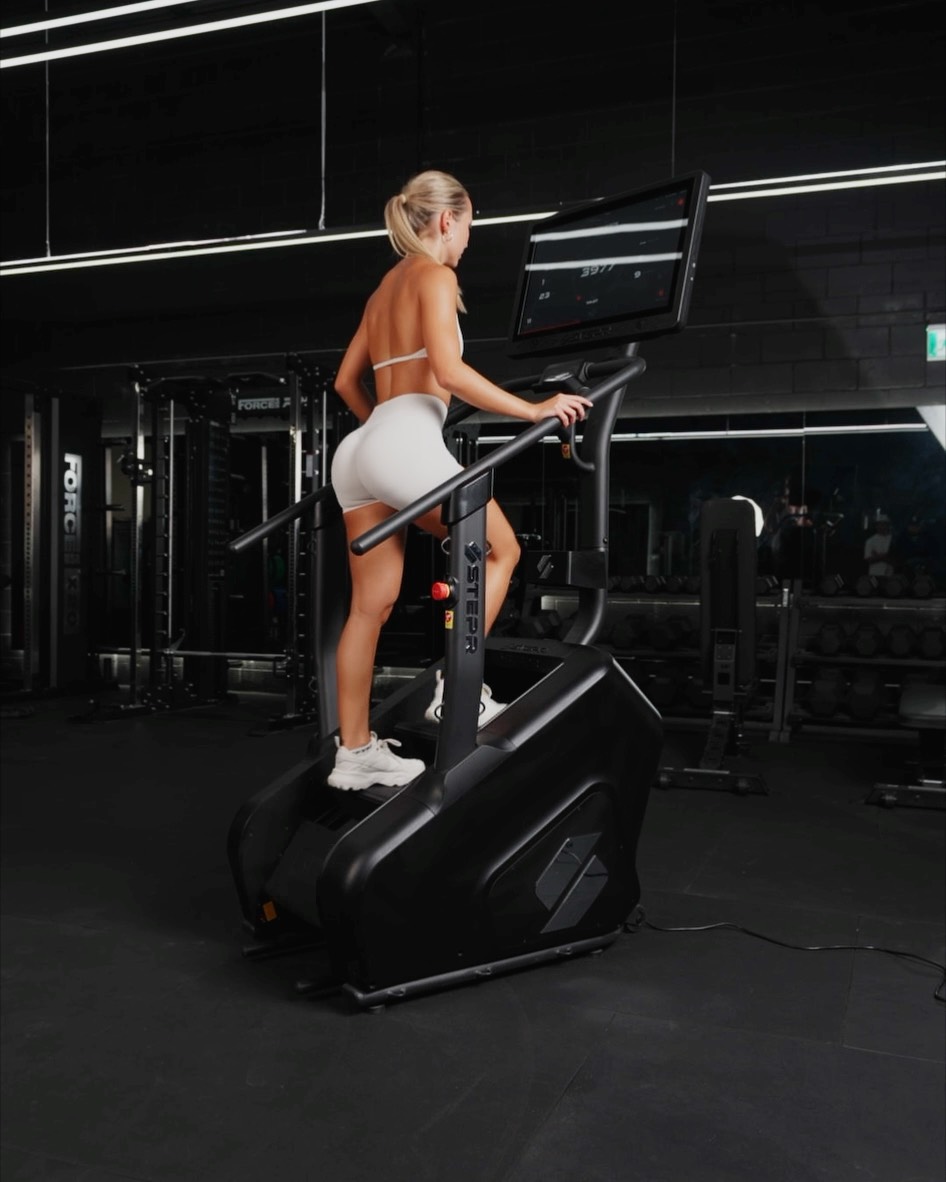
Stairmaster - Cooldown
Movement - Step at your own pace and hold the side bars for balance and stability
Stairmaster Hard
Movement - Step at your own pace and hold the side bars for balance and stability
Stairmaster - Steady Pace
Movement - Step at your own pace and hold the side bars for balance and stability
Stairmaster - Warmup
Movement - Step at your own pace and hold the side bars for balance and stability
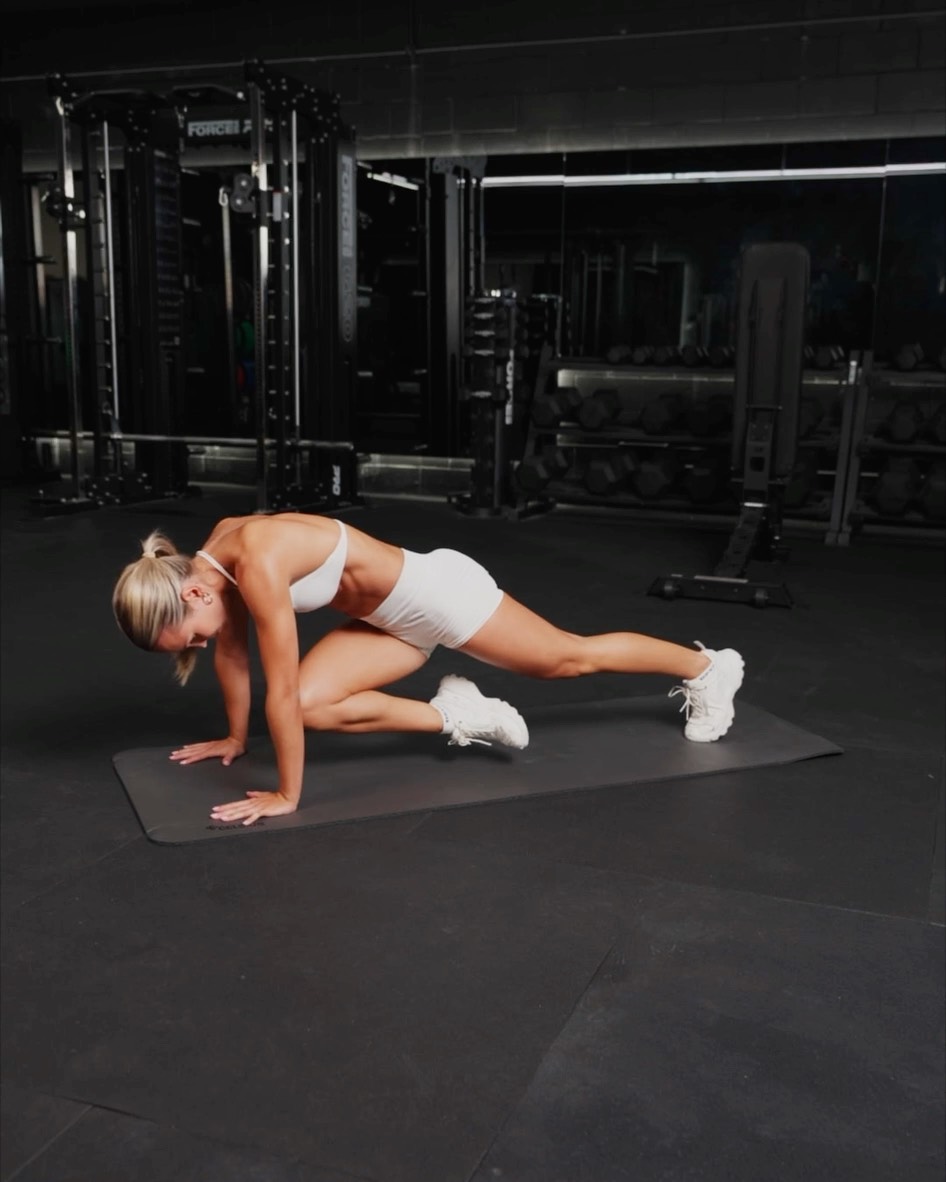
Spider Mountain Climbers
Setup - Start in a plank position with your arms straight and hands positioned under your shoulders Movement - Bring your right knee towards your left elbow and round your body as you do so - Return right leg to the starting plank position - Bring left knee towards right elbow in the same motion
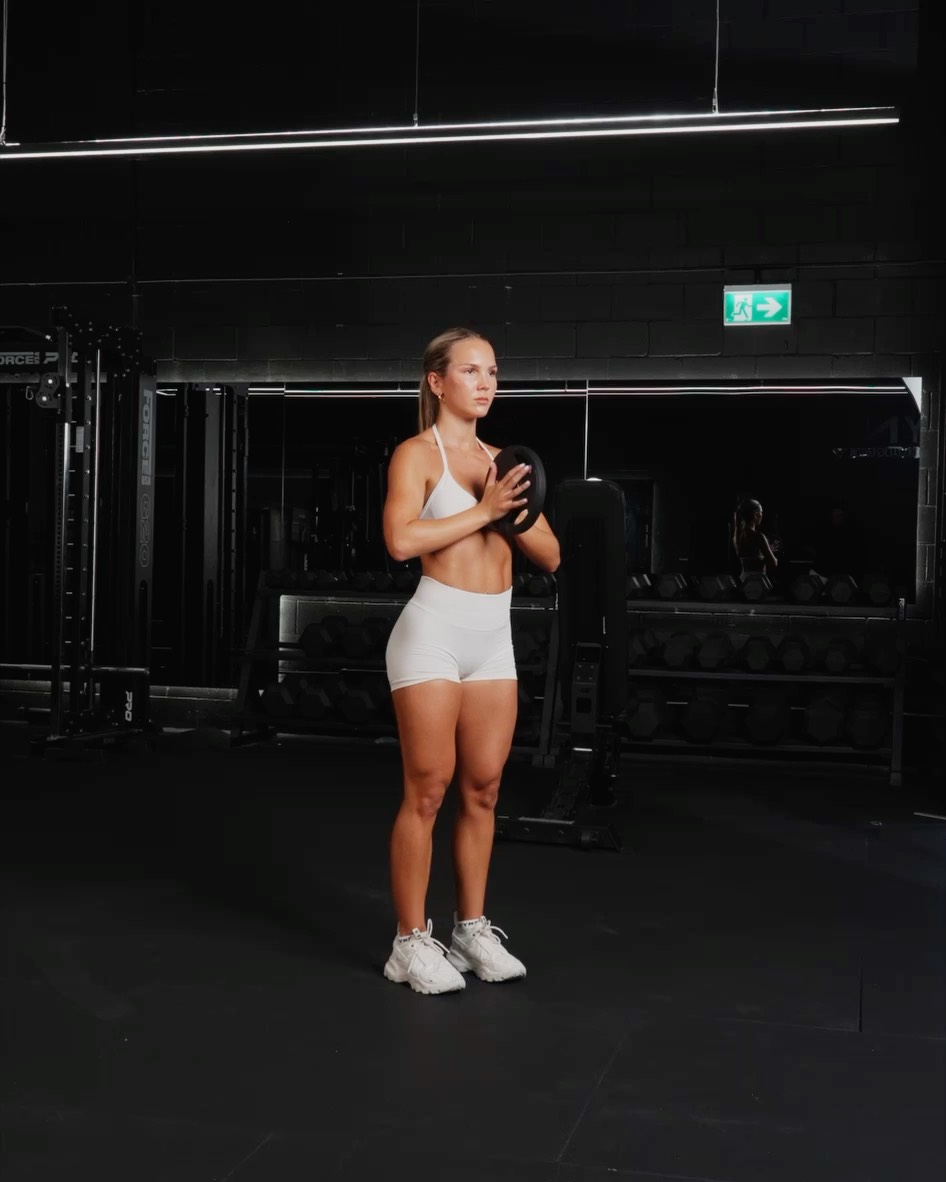
Plate Press
Setup - Have a weight plate pressed between your hands in front of your chest with your elbows bent at around a 90 degree angle - Stand with your feet shoulder width apart and engage your core Movement - Press the plate outward by extending your arms forward. Your elbows should travel outward to your torso - As you press, keep your wrists neutral, ensuring the plate doesn't tilt forward or backward. Maintain a firm grip on the plate - Press the plate as far forward as you can, extending your arms fully without locking the elbows out completely. Your arms should be extended in front of you at chest height or slightly higher - Slowly bring the plate back toward your chest. Keep your elbows bent at a 90 degree angle as you return to the starting position
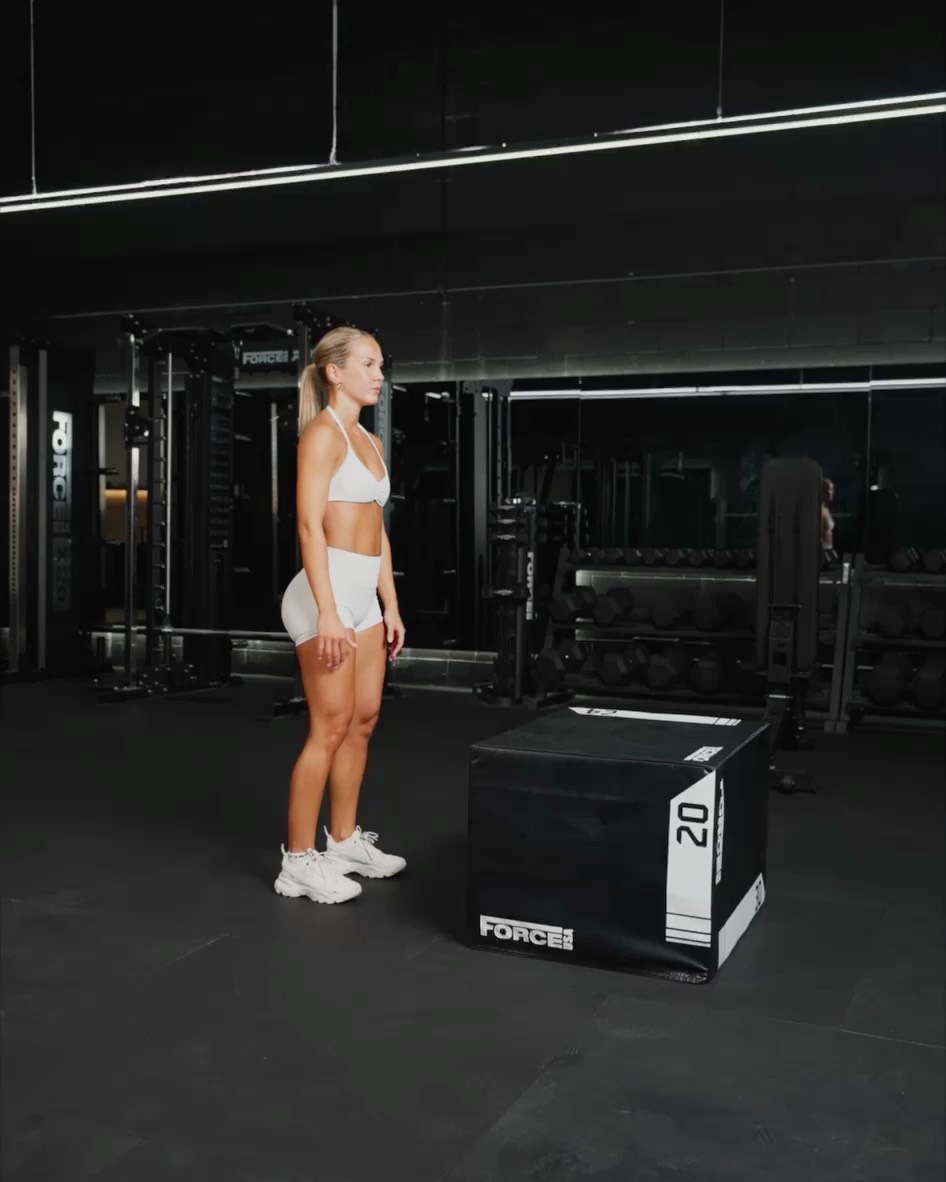
Box Jumps
Setup - Choose a stable box or platform that is appropriate for your fitness level - Stand in front of the box with your feet hip width apart Movement - Dip down into a quarter seat, bending your knees and hips slightly as you lower your body swing your arms back - Explode upward by pushing through your heels and extending your hips, using the power of your legs and arms to propel yourself upwards - Jump onto the box driving your knees forward and aiming for a soft landing with both feet landing simultaneously on the box - Once you land on box, stand tall and take a moment to stabilise yourself before stepping back down. Step down one foot at a time onto the floor - Reset your position and prepare for next jump

HIIT
Time for your HIIT circuit!!
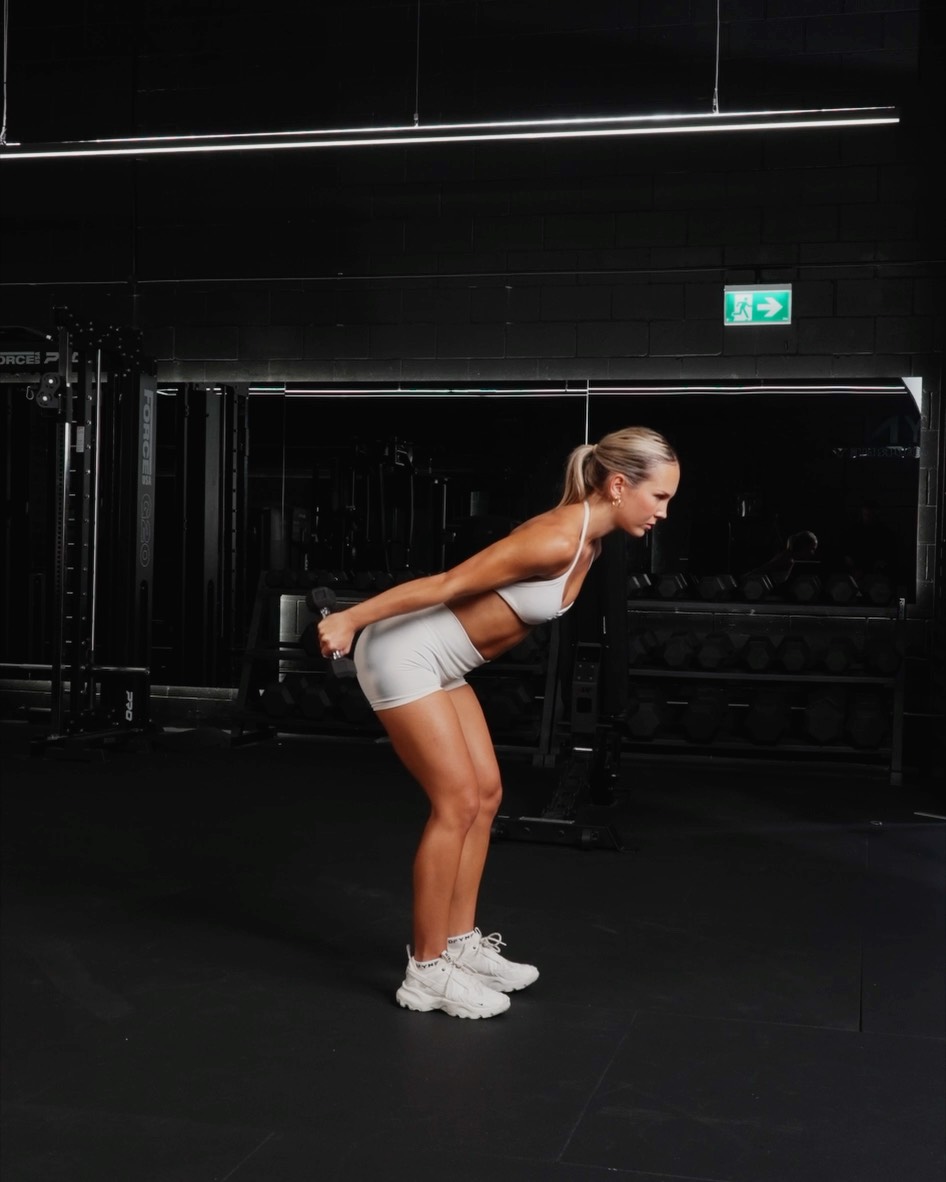
Dumbbell Tricep Kickbacks
Setup - Grab a dumbbell in each hand - Stand with your feet shoulder width apart, knees slightly bent for stability - Hinge forward at your hips, keeping a neutral spine. Your torso should be nearly parallel to the ground, and your elbows should be bent at about a 90-degree angle with the dumbbells near your chest - Position your elbows so they are tucked in close to your torso (not flaring out) - Grip the dumbbells with your palms facing inward towards your body Movement - From the starting position, press the dumbbells back by straightening your elbows - Keep your upper arms stationary, and only move your forearms as you extend your arms fully behind you - Squeeze the triceps at the top of the movement - Avoid locking your elbows completely at the top to keep constant tension on the triceps - Hold for a second at the top, and then slowly lower the dumbbells back to the starting position in a controlled manner
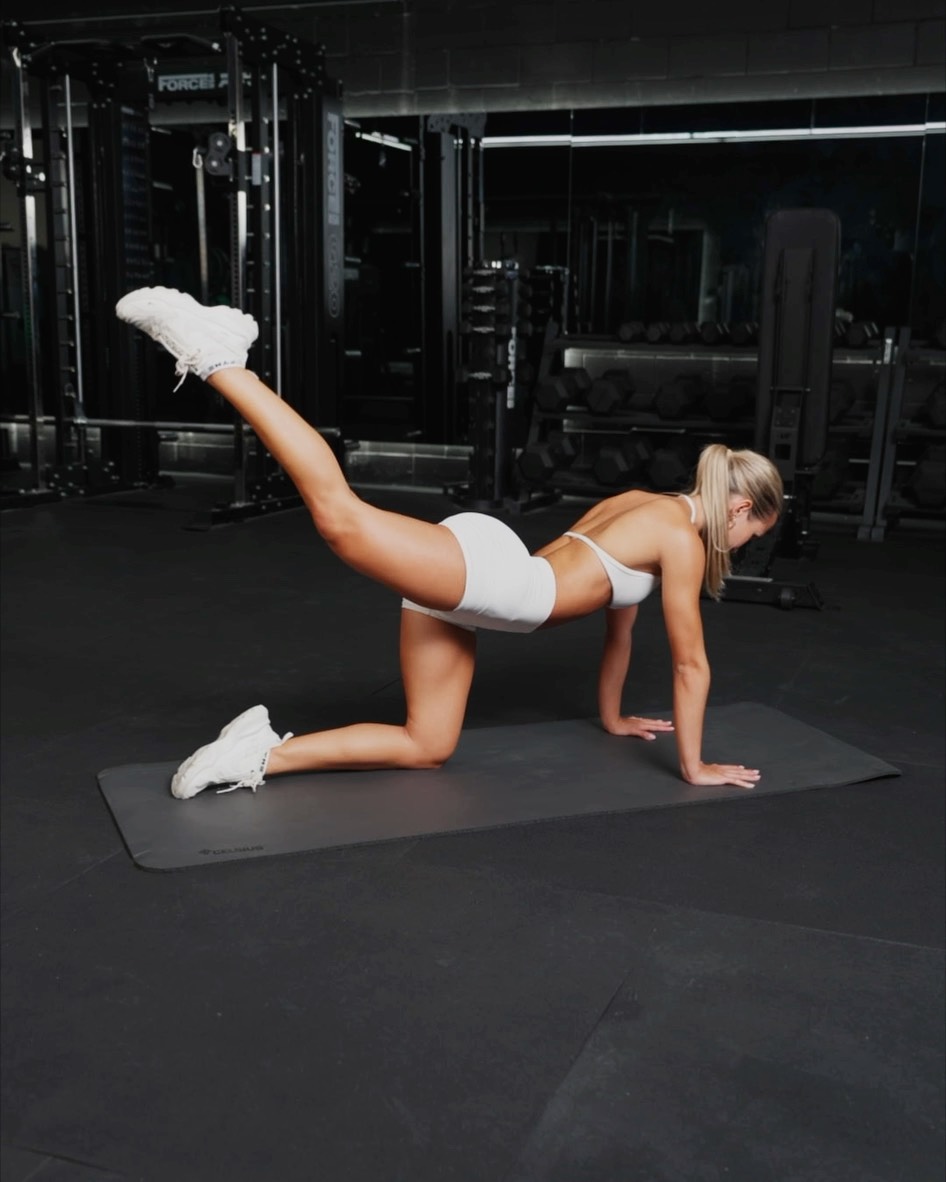
Kneeling Kick Backs
Set Up - Begin on all fours with your hands placed directly under your shoulders Movement - Keeping your back flat, hips squared and core engaged, begin to lift one leg behind you pushing through your heel and squeezing through your glute - Slowly lower your leg back down to the starting position
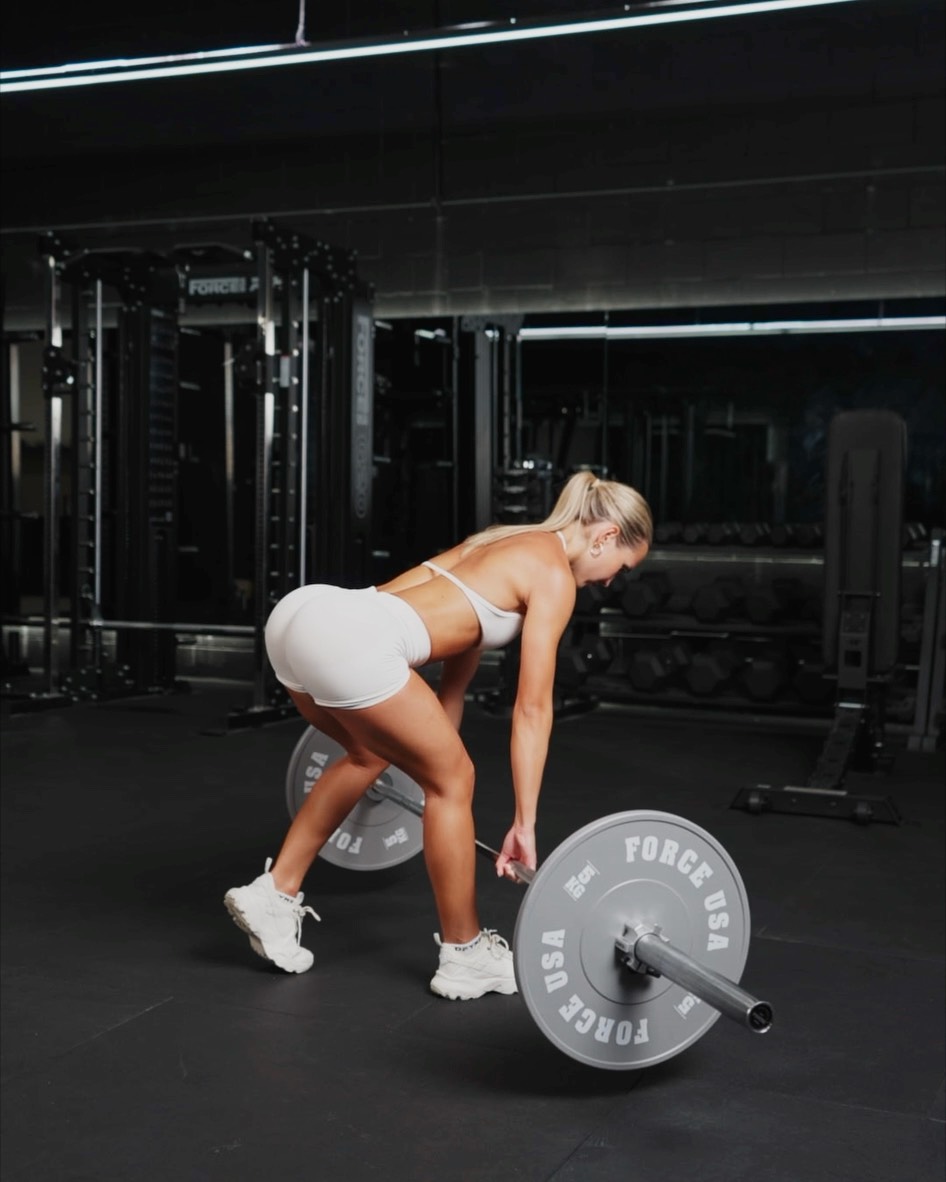
Barbell B Stance RDLs
Setup - Stand with your feet hip width apart, and place one foot behind you in a staggered position. The B Stance foot should have the toes on the floor but with most the weight placed on the front (working) leg - Reach down and grab the barbell with a shoulder width, overhand grip. Keep your chest up and shoulders back, with your spine neutral - Before initiating the lift, tighten your core to stabilise your torso. Ensure that your weight is in your heel of the working leg, not on your toes Movement - Initiate the movement by pushing your hips back, keeping a slight bend in your knees and maintaining a neutral spine. Your back leg will remain in place while your working leg controls the movement - Lower the barbell towards your mid-shins, making sure to keep the bar close to your body - As you lower the barbell you should feel a stretch in your hamstrings and glutes of the working leg. Lower the barbell aiming for just below knee height - Begin the upward motion by driving your hips forward and pushing the weight through the heel of the working leg to stand back up to the starting position
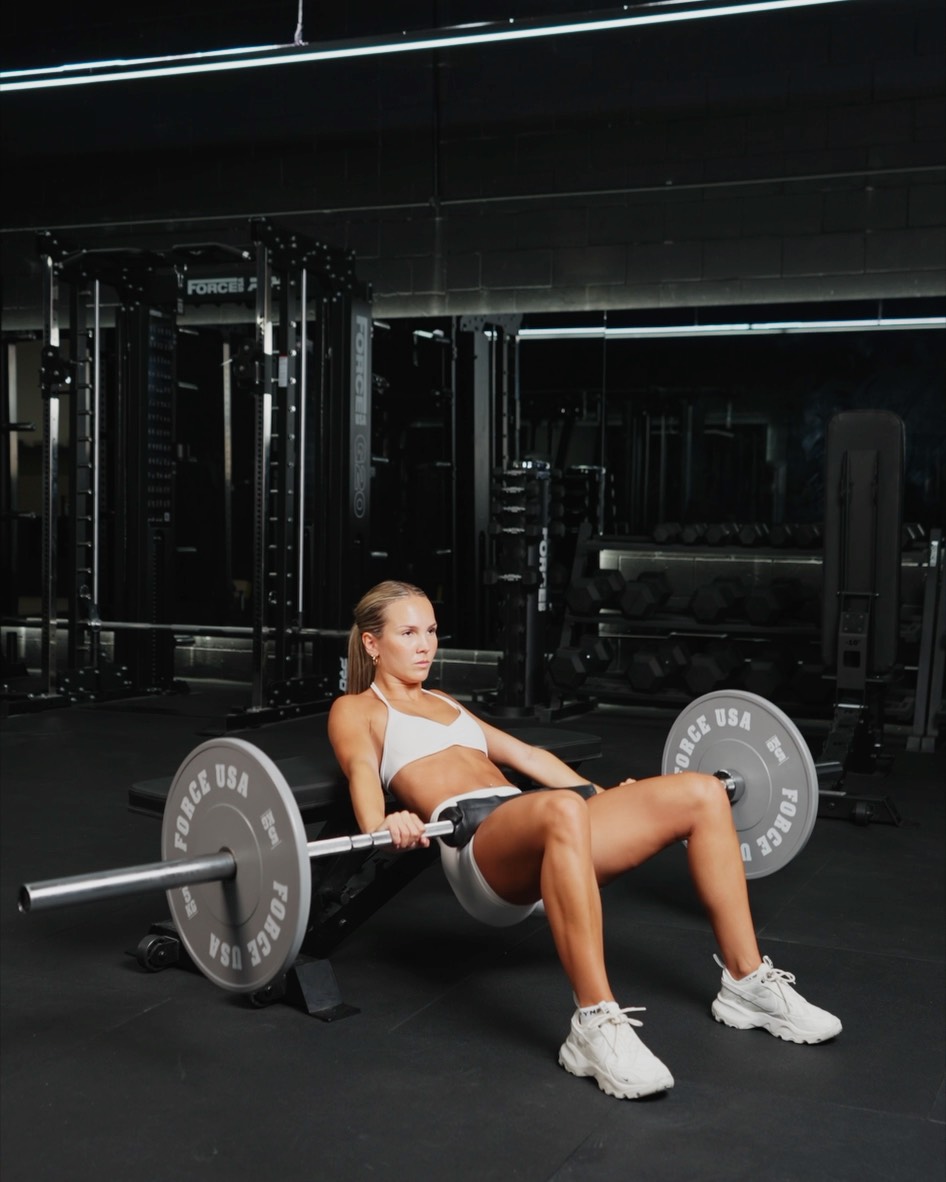
Kas Hip Thrust Dual Method
This method is simply a Kas Hipthrust (Shorter range of motion to a regular Hipthrust) into a pulse at the top. This will act as 1 rep Setup - Begin by setting up a barbell across your hips - Position your upper back against a bench or elevated surface. The bench height should allow your knees to bend at a 90 degree angle - Place your feet shoulder width apart with your toes externally pointed outwards slightly Movement - Begin by engaging your core and keeping your chin tucked. Then drive your heels into the floor while thrusting your hips upward. Push through your glutes to lift your body - At the top of the movement your body should form a straight line from your shoulders to your knees. Squeeze your glutes hard at the top - Once you reach the top of the movement, perform a small pulse by slightly lowering your hips and then driving them back up to full extension - Slowly lower your hips down. Not all the way to the ground, only halfway as this creates the Kas Hipthrust. Repeat movements
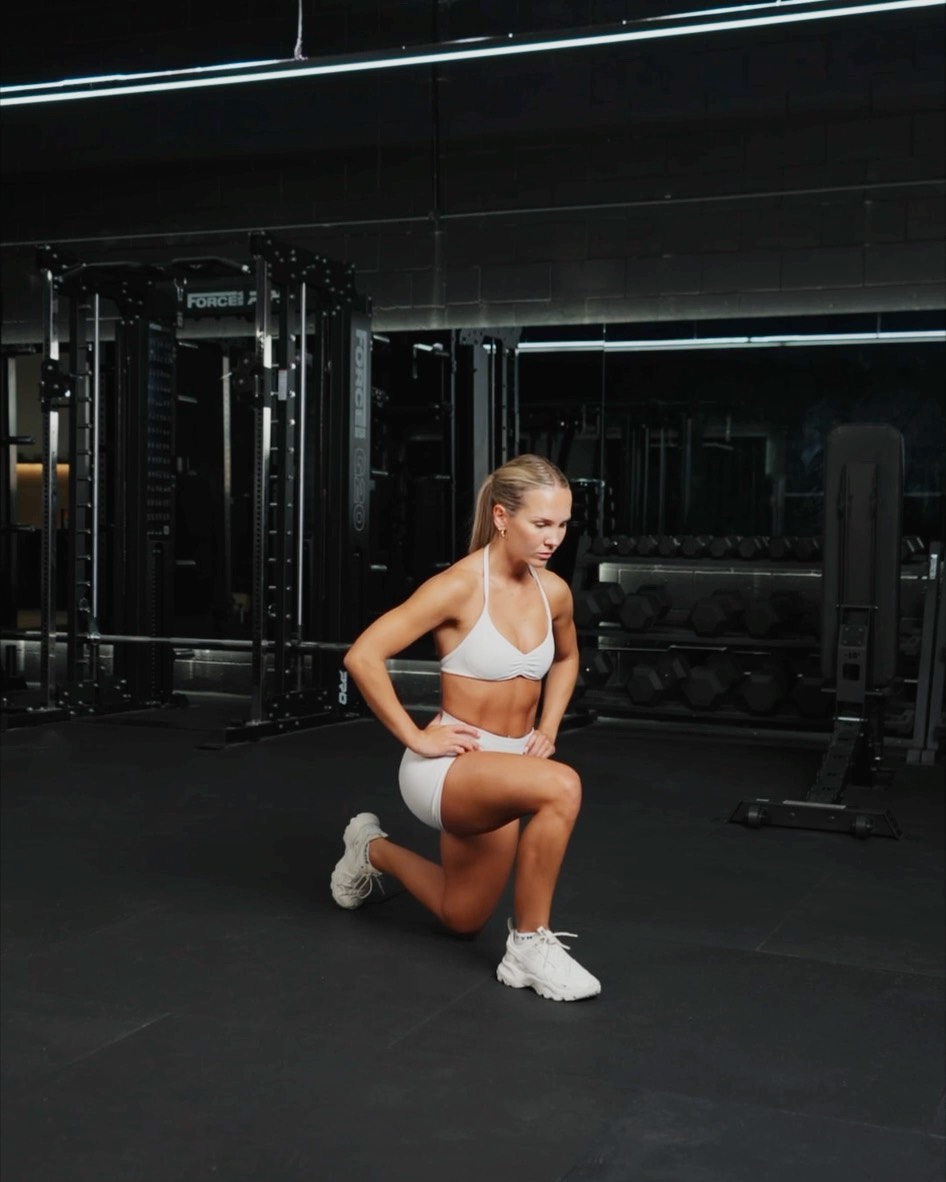
Bodyweight Reverse Lunge
Setup - Stand upright with your feet hip width apart and your hands on your hips - Engage your core and keep your chest tall, maintaining good posture throughout the movement Movement - Take a step backward with your right leg, keeping your hips square and your torso upright - As you take a step back, lower your body by bending both knees. Your front knee should be directly above your ankle and bent at about a 90 degree angle, while your back knee should lower towards the floor - Your back knee should come close to your ground, but not touch it - Push through the heel of your front foot to return to the starting position, standing up and bringing your back foot back to the original standing position
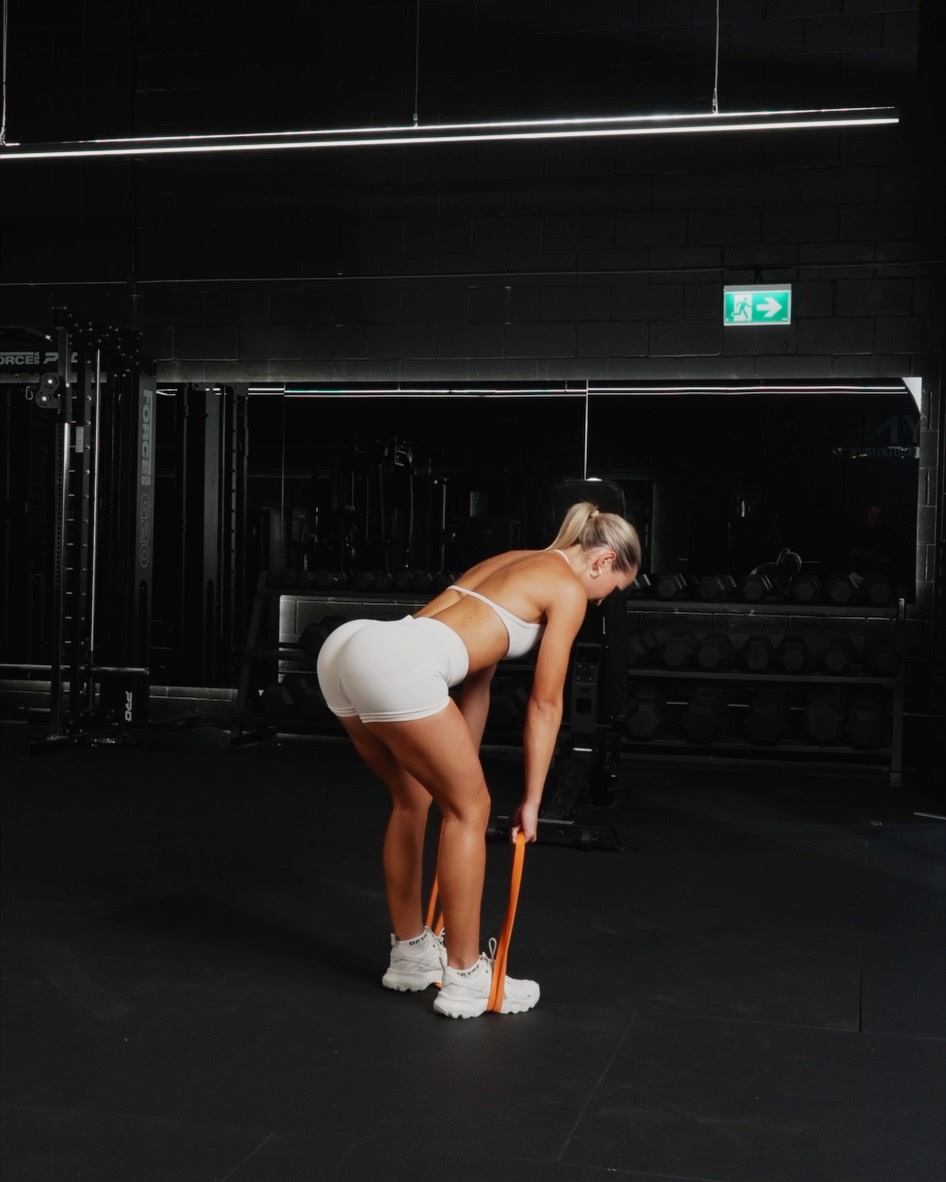
Banded RDLs
Setup - Stand with your feet hip-width apart and place the middle of the resistance band under the arches of both feet - Grasp the ends of the band with your hands. Your arms should be fully extended, and the band should have tension even at the start - Make sure the band is tight when you’re standing upright. The tighter the band, the greater the resistance - Engage your core, pull your shoulders back, and stand with a neutral spine Movement - Begin the movement by pushing your hips back (not down). The hinge should come from your hips, not your knees - As you push your hips back, allow your torso to lean forward, keeping your back straight and chest lifted - Maintain a slight bend in your knees as you lower your torso toward the floor - Lower your torso until you feel a deep stretch in your hamstrings (this will typically be when your upper body is nearly parallel to the floor or when you can no longer maintain a neutral spine) - To return to the starting position, drive your hips forward, bringing your torso upright. Focus on squeezing your glutes and pushing through your heels to stand back up
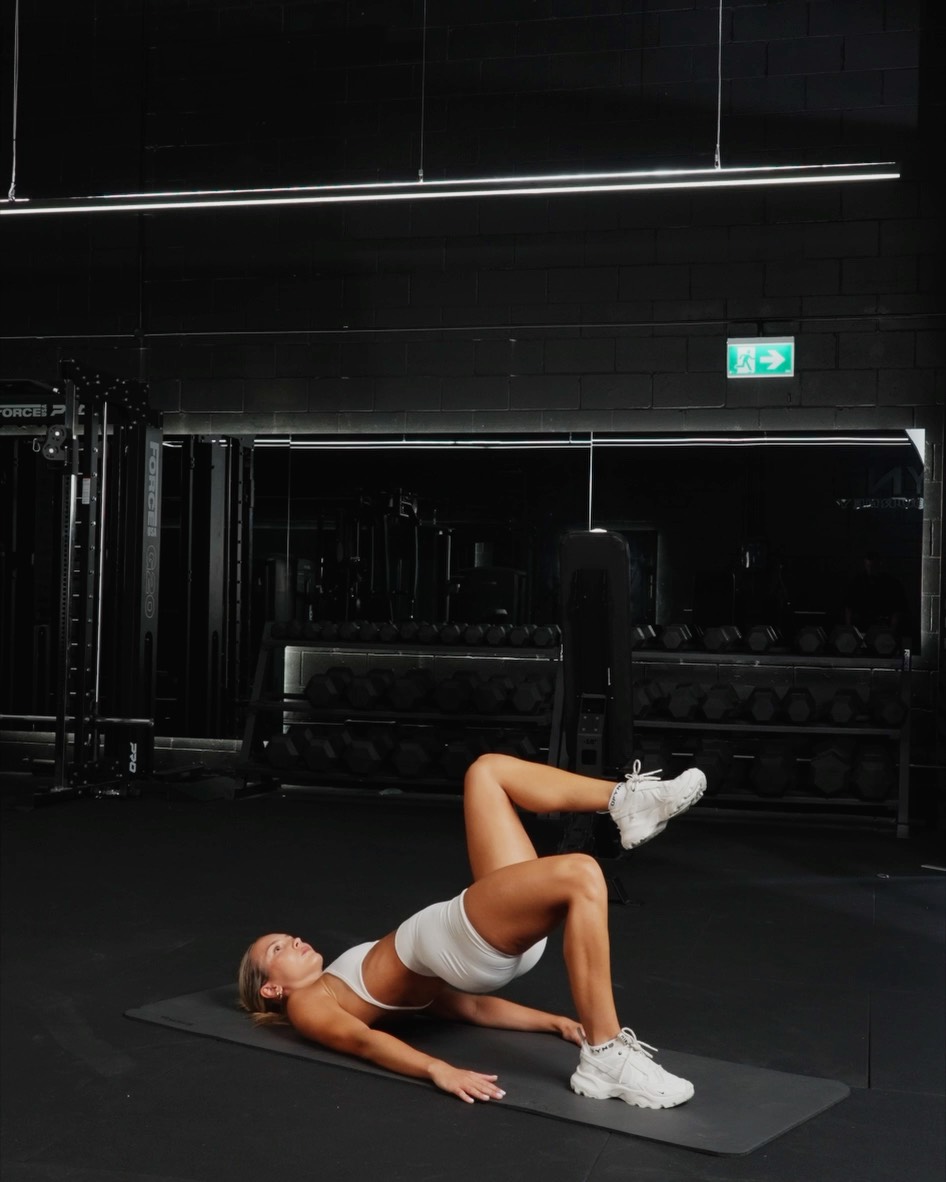
Single Leg Bodyweight Hip Thrusts
Setup - Lie flat on your back on the floor with your knees bent and your feet flat on the ground, hip-width apart - Place your arms flat on the floor by your sides for stability - Position one foot flat on the floor and extend the other leg straight out in front of you, keeping it elevated and off the ground. This is the leg you’ll be working - Make sure your spine is in a neutral position Movement - Begin by pushing through the heel of the foot that is flat on the ground - Engage your glutes and core as you begin to lift your hips off the ground - The leg that is extended should stay straight throughout the movement, parallel to the ground or slightly above it - Push your hips upwards until your body forms a straight line from your shoulders to your knee on the grounded leg - Slowly lower your hips back towards the ground with control, but don’t let your glutes touch the floor between reps
Exercise library
Edit exercise
Default fields
2 selectedDefaults apply when adding this exercise to a workout. You can remove them per workout, and block-required fields still apply.
Tags
3 selectedMuscles
10 selectedNo muscles loaded yet.
Alternative exercises
5 selectedB Stance Landmine RDLs
Setup - Secure a barbell into a landmine attachment - Stand facing the barbell, with the end of the barbell in front of your working leg - Position your feet so that your working foot is about hip width apart and directly in line with the barbell - Your non working foot should be placed slightly behind and to the side of your body, with your heel in the air - Grip the barbell with one hand or both, using an overhand grip or mixed - Keep your chest up, shoulders back and core braced Movement - Initiate the movement by pushing your hips back, keeping the barbell close to your body as you lower it towards the ground. Maintaining a slight bend in your knees - Continue lowering until you feel a good stretch in your hamstrings and your glutes, usually when the barbell reaches around mid-shin height or when torso is near parallel to the ground - Reverse the movement by pushing your hips forward, engaging your glutes and hamstrings to lift the barbell back upDumbbell B-Stance RDLs
Setup - Stand with your feet about hip width apart, or slightly narrower - Hold a dumbbell in each hand with a neutral grip (palms facing your thighs). Keep the dumbbells in front of your thighs with your arms fully extended - Position your non working foot to be placed slightly behind and to the side of your body, with your heel in the air and the working foot flat on the ground slightly in front of you - Engage your core, pull your shoulders back, and maintain a neutral spine Movement - Initiate the movement by pushing your hips back, keeping the dumbbells close to your body. Lowering the dumbbells just past your knees to the middle of your shins. Maintaining a slight bend in your knees - Continue lowering until your feel a good stretch in your hamstrings and glutes - Reverse the movement by pushing your hips forward, engaging your glutes and hamstrings to lift yourself back up to the starting positionDumbbell RDLs
Setup - Stand with your feet shoulder width apart and hold a dumbbell in each hand Movement - Hinge your hips back, with a slight bend in your knees, pushing all the weight through your heels - As you hinge the dumbbells should travel straight down along your thighs, close to your body - Lower the dumbbells until you feel a stretch in your glutes and hamstrings - Push through your heels and use your glutes and hamstrings to reverse the movement. Drive your hips forward to return to the starting positionBarbell RDLs
Setup - Set up barbell on the floor right in front of you - Stand with your feet hip width apart, with your toes pointing straight ahead - Bend down and grip the bar with an overhand grip, or a mixed grip. Your hands should be outside of your knees - Set your shoulders back and down, and keep your back straight by engaging your core Movement - Start the movement by pushing your hips back with a slight bend in your knees throughout the movement - As you push your hips back, lower the barbell by allowing your torso to lean forward. Keep your back flat and your core engaged -Continue to push your hips back, lowering the barbell towards the middle of your shins. The barbell should travel in a straight line, staying close to your body as you descend - You should feel a stretch in your glutes and hamstrings as you lower the bar. From here return to the standing position by driving your hips forward and pushing all the weight through your heelsBench Assisted Single Leg RDLs
Setup - Set a bench or elevated surface up next to you, and grab a dumbbell. You'll be using the bench for support as you perform this exercise - Stand beside the bench placing your right leg bent on the bench. Your left leg standing beside the bench with your dumbbell in your left hand - Engage your core keeping your shoulders back and chest up Movement - Push your hips back to initiate the movement. Keep a slight bend in your left knee - Lower the dumbbell down your left leg, keeping it nice and close. Your torso should lean forward, and your right leg should be resting on the bench beside you to help guide you through the movement - Lower the dumbbell until your feel a good stretch in your left glute and hamstring - Press through your left heel to drive your hips forward and stand back up, bringing your torso back to an upright position - Perform reps as stated then switch legs