Builder / Exercises
Exercise library
Curate movements, manage alternatives, and keep the library tight.
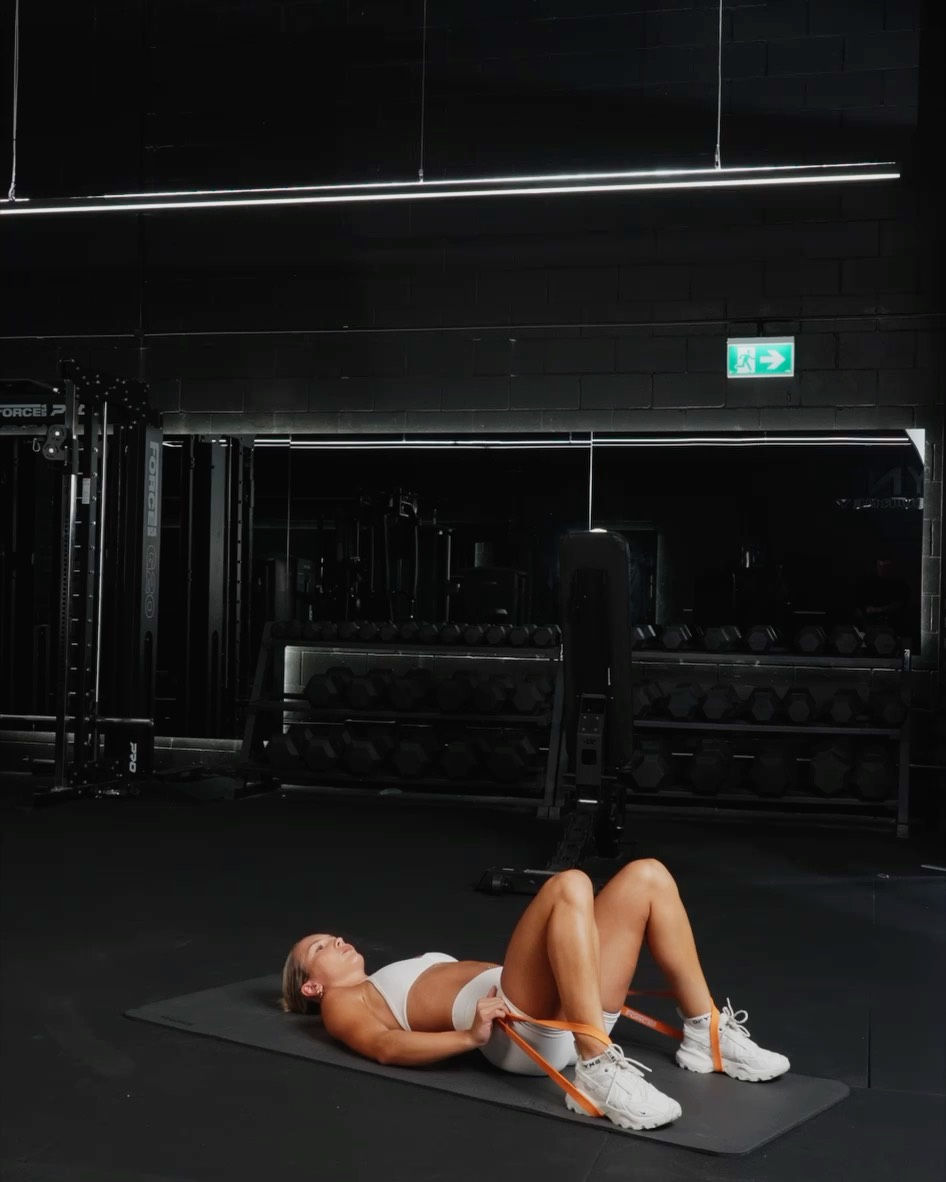
Banded Anchored Hip Thrusts
Setup - Start by positioning a loop resistance band under the middle of both feet. The band should be tight when your feet are flat on the floor and your knees bent. The band should be placed across your mid foot or near the toes - Place your feet shoulder width apart with your toes externally pointed outwards slightly - Lie back with your upper back flat on the floor, your arms at your sides holding the band, and your head in a neutral position with your spine - Your hips should be on the floor, with your knees bent and your feet positioned directly underneath your knees Movement - Begin the movement by driving your hips upwards, pressing through your heels and the balls of your feet. As you push upward, squeeze your glutes at the top and ensure your shoulders, hips, and knees form a straight line at the peak - Engage your core keeping your pelvis stable at the top of the movement - Slowly lower your hips back down towards the floor back to the starting position
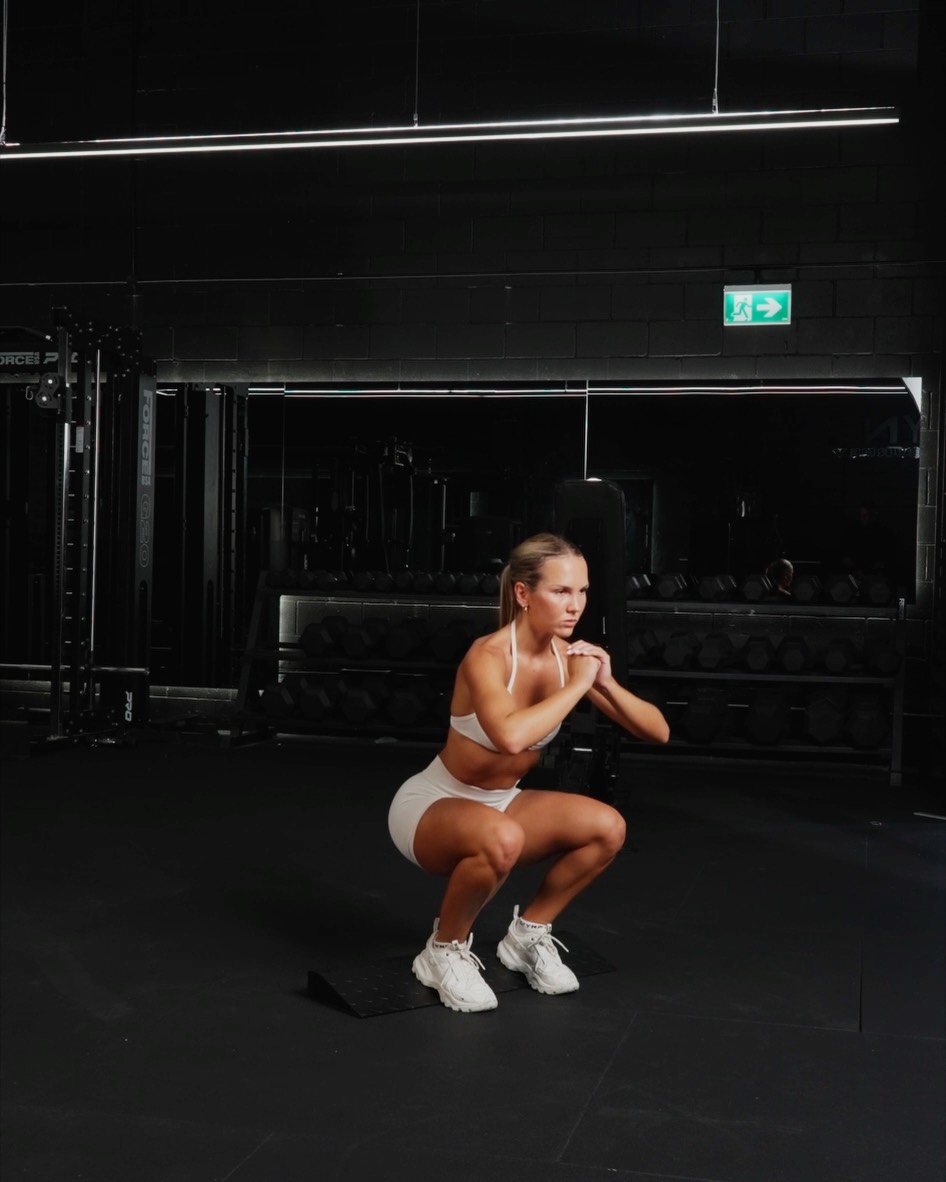
Elevated Squat Pulses
Setup - Find a stable elevated surface about 4-6 inches high OR if you can't just leave your feet flat on the ground - Place your heels on the elevated surface, keeping your toes on the floor. Your feet should be shoulder width apart. This slight elevation increases the range of motion for your squats and shifts the focus more onto the quads and calves - Stand tall with your feet positioned at shoulder width, heels elevated on the surface - Keep your chest up, shoulders back, and core engaged. Look straight ahead to maintain a neutral spine Movement - Push your hips back and bend your knees to lower into a squat position. Your knees should track over your toes, and your hips should drop low enough to get your thighs at least parallel to the floor - As you squat down, ensure your weight is in your heels and mid foot to prevent the knees from coming forward over the toes - Once you reach the bottom of your squat, pulse by making small, controlled up-and-down movements. Each pulse should be a very small range of motion where you’re barely coming out of the squat, maintaining constant tension in the quads and glutes - Repeat for reps stated
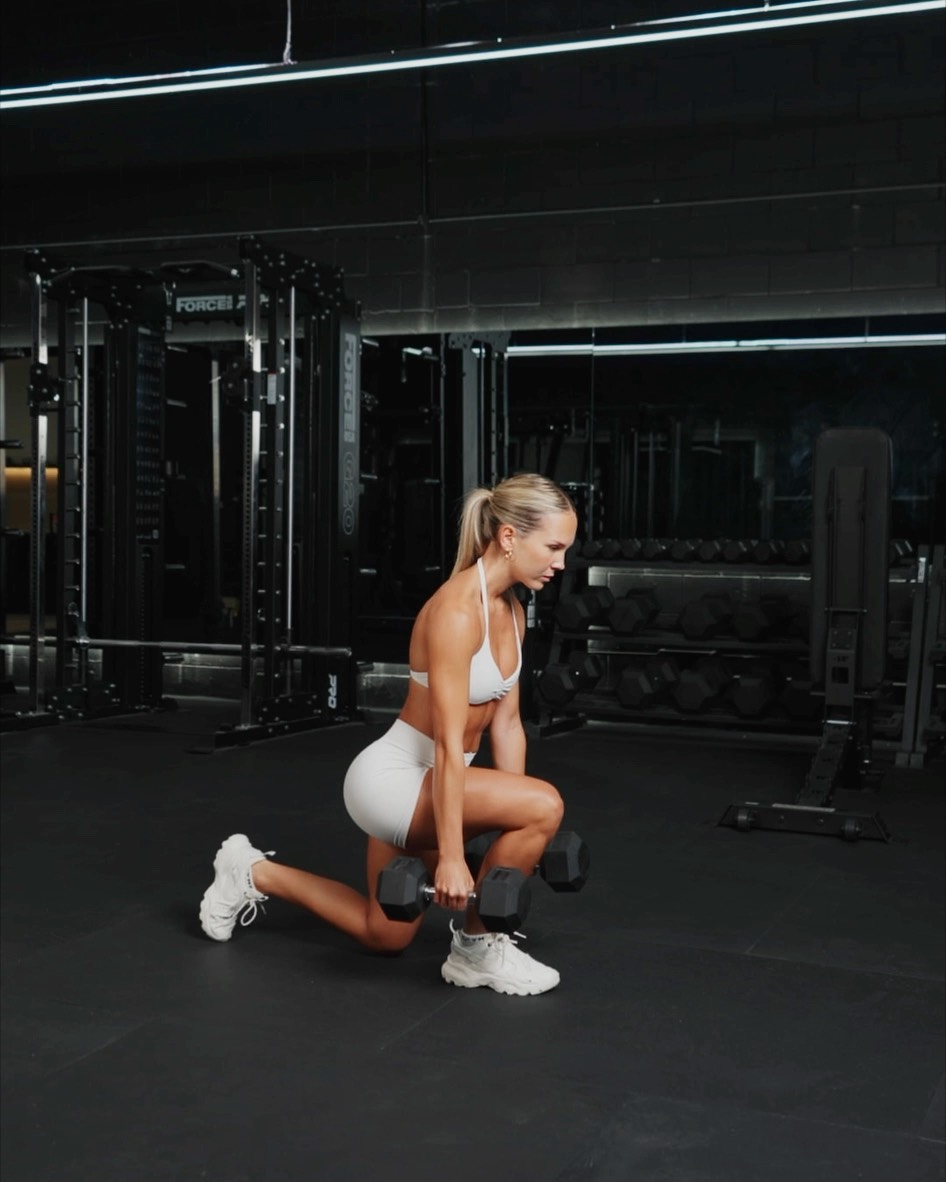
Dumbbell Static Reverse Lunge
Setup - Stand with your feet hip width apart - Hold a dumbbell in each hand, letting them hang by your sides with your palms facing inwards Movement - Take a controlled step backward with one leg, lowering your body into a lunge position - Your front thigh should be parallel to the floor, with your knee directly above your ankle. Your back knee should lower towards the ground but don't let it touch the floor - Once at the bottom position of the lunge push through your front heel to return to the starting position, stepping forward with your back leg
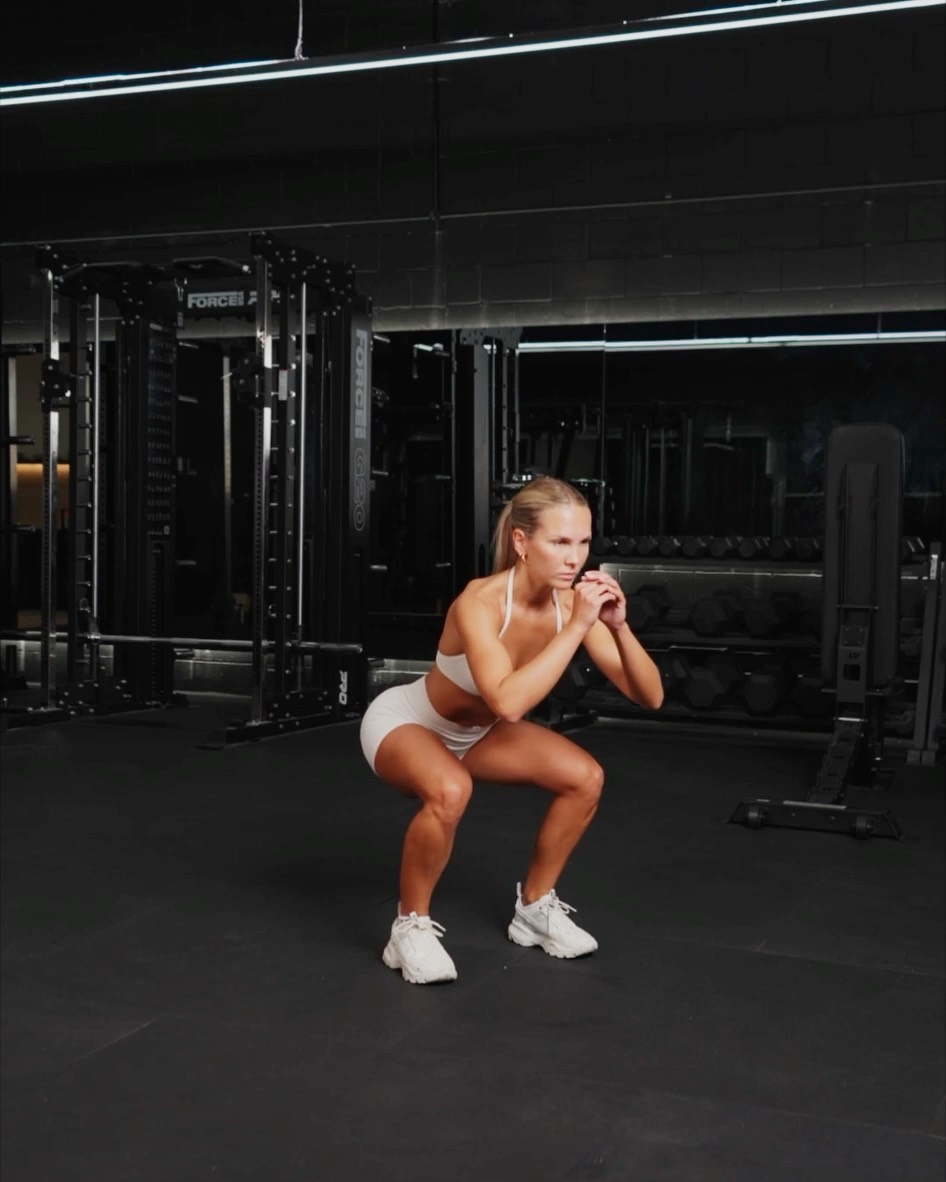
Air Squats
Setup - Stand with your feet about shoulder-width apart, with your toes slightly pointing outwards - Keep your chest up, shoulders back, and engage your core Movement - Begin by pushing your hips back - Bend your knees, ensuring they track over your toes but don't go beyond them - Lower your body until your thighs are parallel to the ground - Keep your weight in your heels, and try to keep your knees in line with your toes - Push through your heels to stand back up, straightening your legs and returning to the starting position
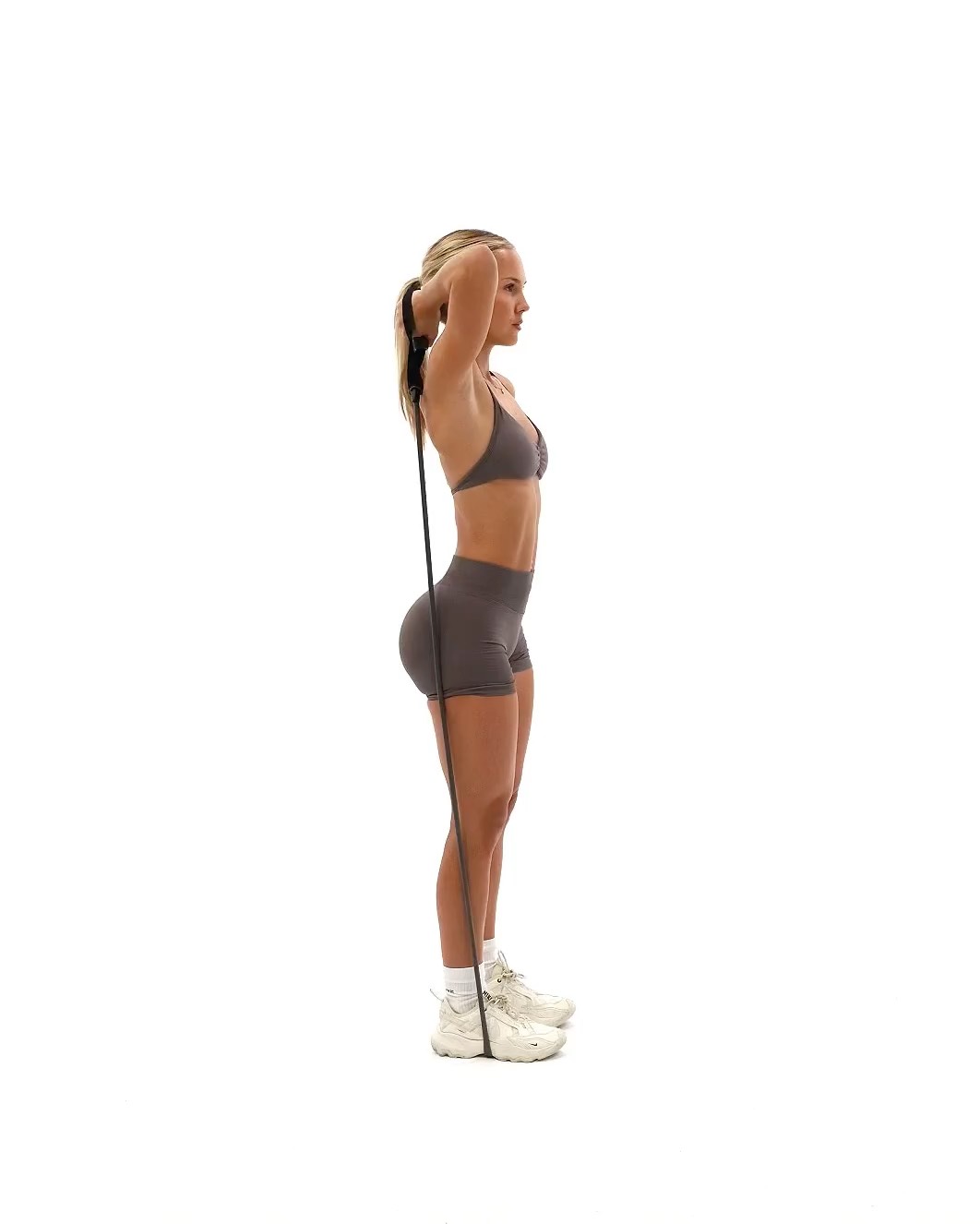
Banded Tricep Extensions
Banded tricep extensions target the back of the upper arms by extending your elbow against resistance from a band to strengthen and tone the triceps How to Perform - Stand with feet shoulder-width apart. Secure the band under one foot or anchor it behind you. Hold the other end of the band with both hands behind your head, elbows bent - Press the band upward until your arms are fully extended - Bring your hands back to the starting position in a controlled motion
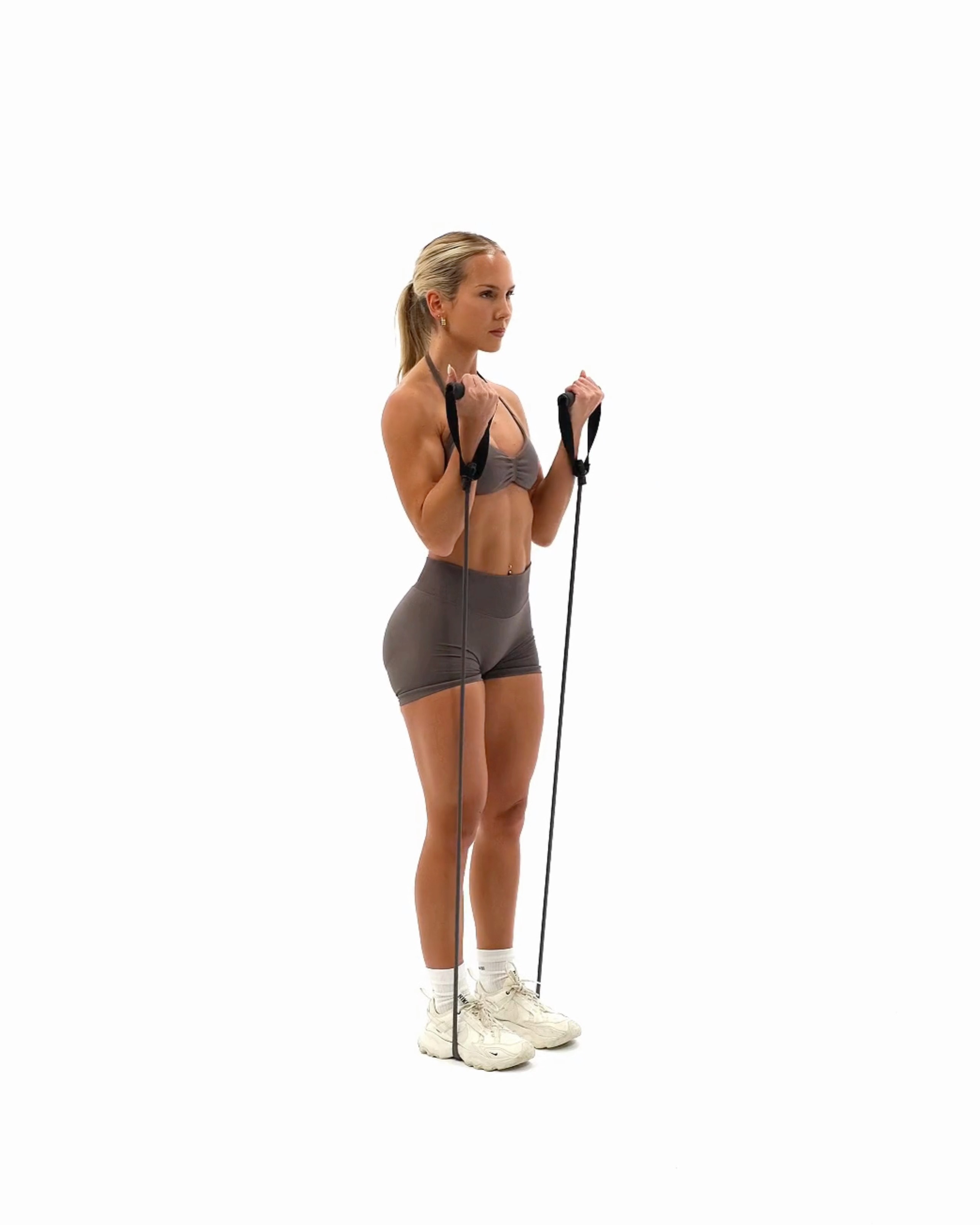
Banded Bicep Curls
Banded Bicep Curls are an exercise where you stand on a resistance band and curl the ends up toward your shoulders to strengthen your biceps. They help build arm muscle, and improve grip strength How to Perform - Stand with your feet shoulder-width apart, securing the resistance band under both feet. Hold the other end of the band in each hand with palms facing forward - Bend your elbows to bring your hands toward your shoulders, squeezing your biceps at the top - Lower your hands back down in a controlled motion, keeping tension in the band
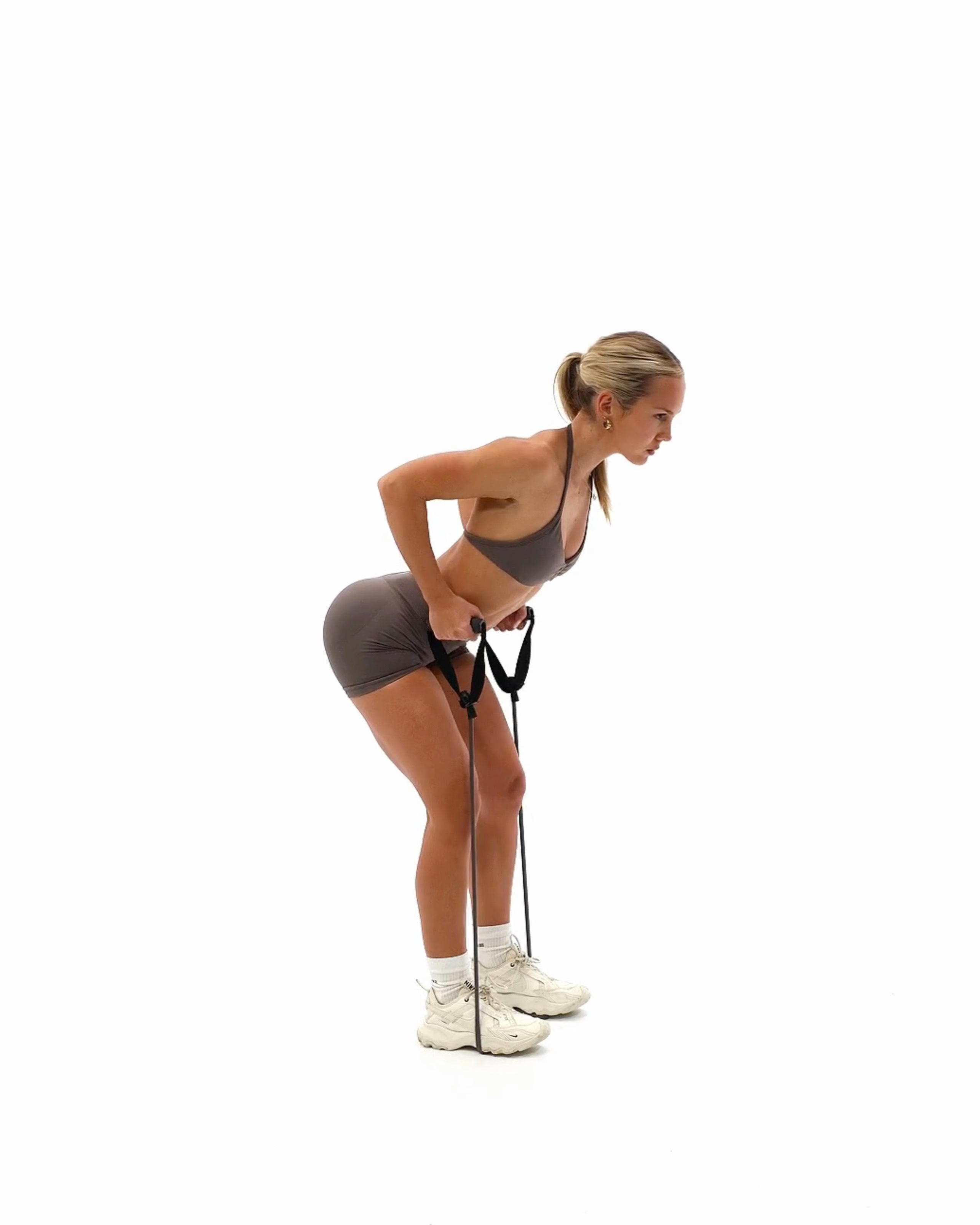
Banded Bentover Rows
Banded Bent Over Rows are an exercise where you hinge forward and pull a resistance band toward your torso. They strengthen your upper back, improve posture, and build core stability How to Perform - Stand with feet shoulder-width apart, securing the resistance band under both feet. Hold the band with both hands, palms facing your body, and slightly bend your knees - Bend forward at the hips until your torso is at about a 45-degree angle, keeping your back straight and core engaged - Pull the band toward your torso by driving your elbows back and squeezing your shoulder blades together - Hold for a second at the top, then slowly extend your arms back to the starting position
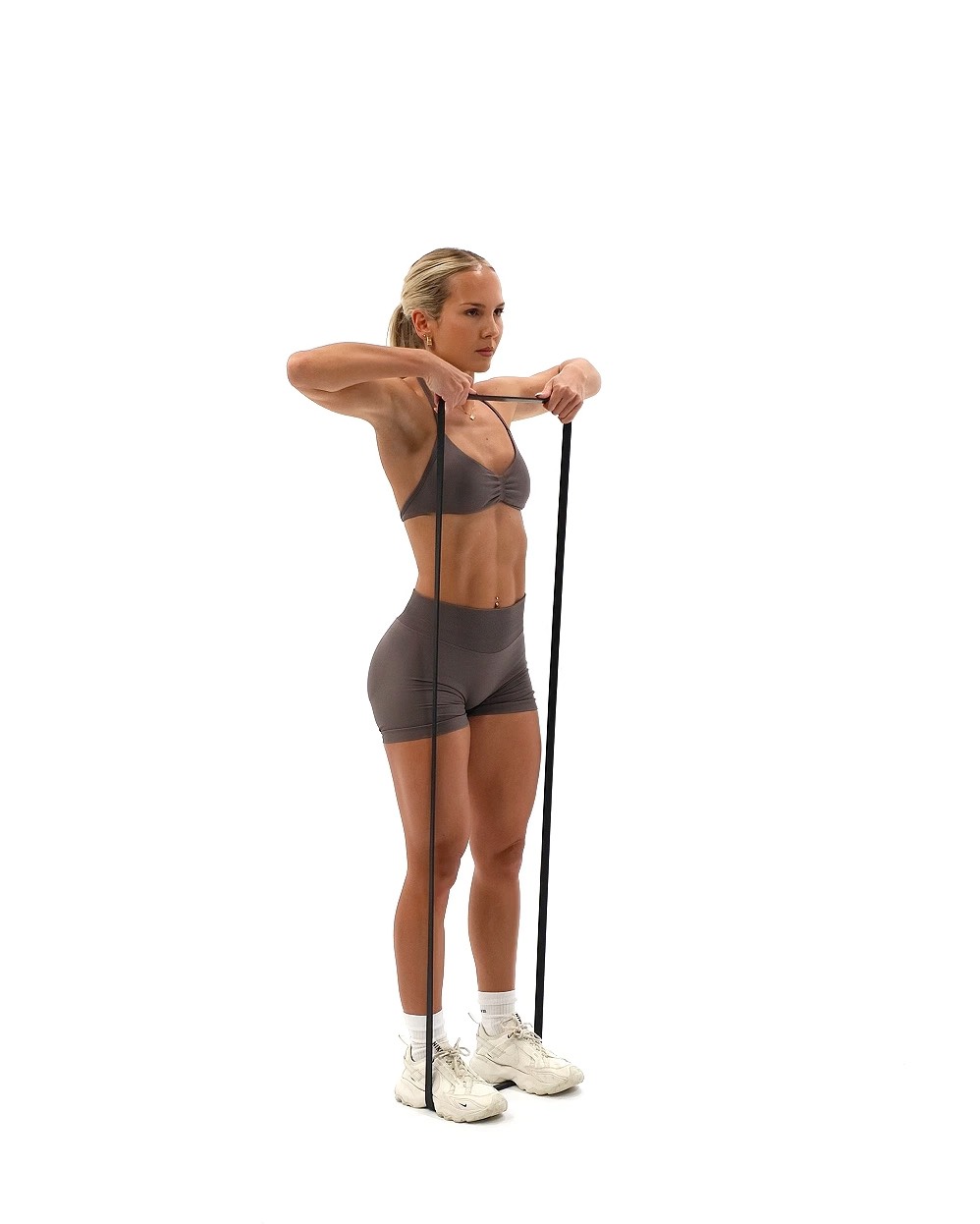
Banded Upright Row
The Banded Upright Row is a strength exercise targeting your shoulders, upper back, and traps. Instead of using a barbell or dumbbells, you perform the movement using a resistance band, making it joint-friendly and easy to do anywhere How to Perform - Stand with your feet hip-width apart, securing the resistance band under both feet. Hold the other end of the band with both hands in front of your thighs, palms facing your body - Pull the band upward toward your chest, leading with your elbows and keeping them higher than your hands - Pause at the top when your hands reach chest level, then slowly lower the band back down
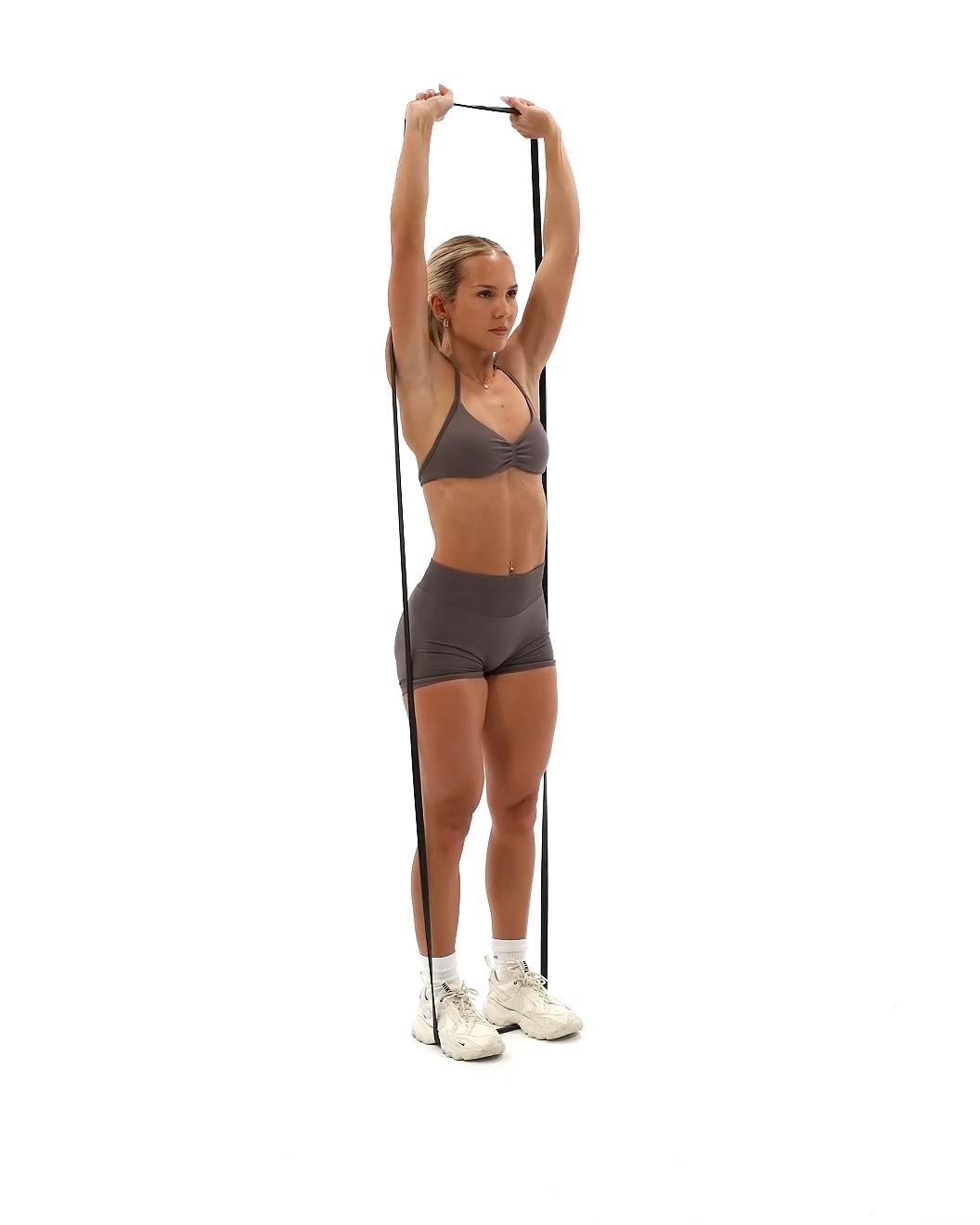
Banded Shoulder Press
Banded Shoulder Press is an exercise where you press resistance band handles overhead from shoulder height. It targets the shoulders, improves overhead strength, and enhances shoulder stability How to Perform - Stand with your feet shoulder-width apart, securing the resistance band under both feet. Hold the other end of the band in each hand at shoulder height, palms facing forward - Extend your arms overhead, fully straightening your elbows while keeping control of the movement - Bring your hands back down to shoulder height in a controlled motion
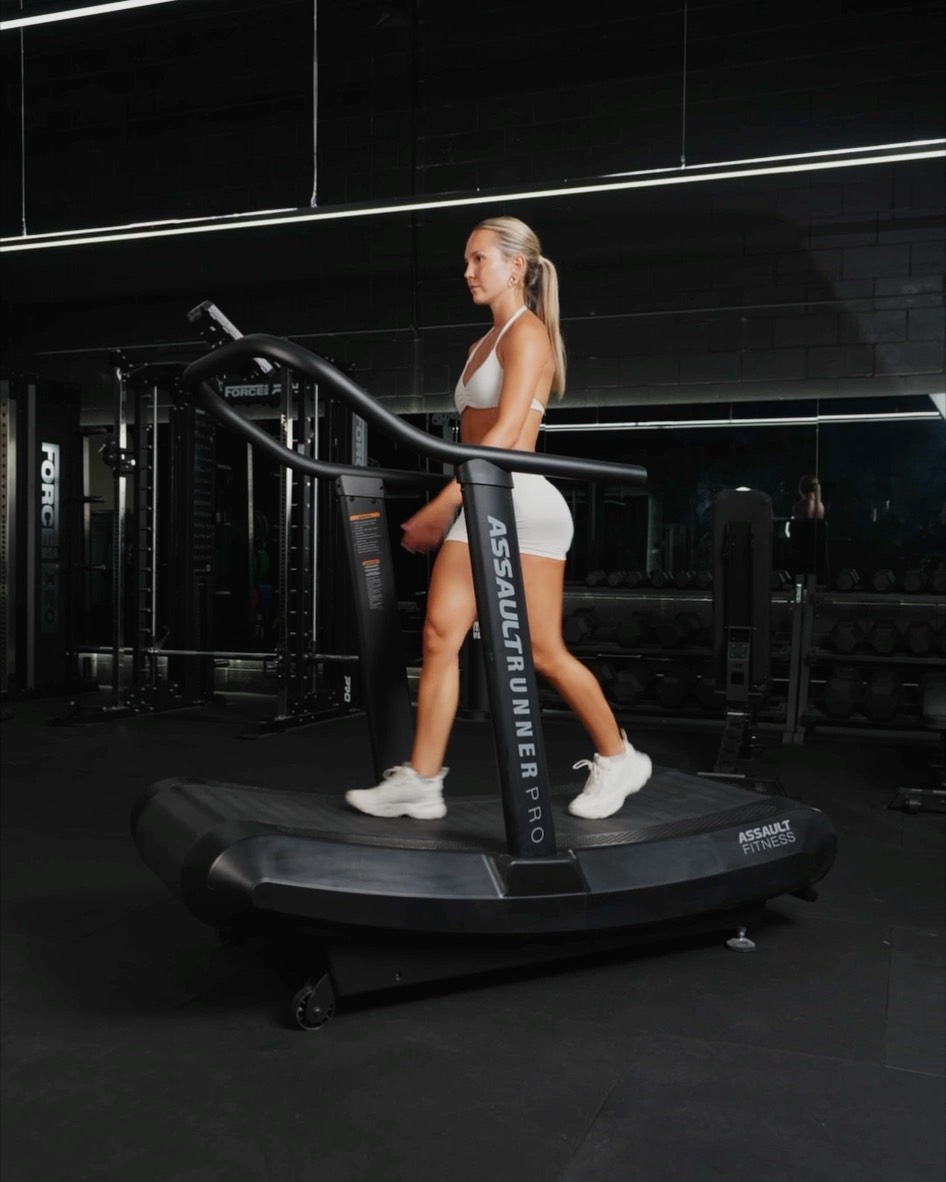
Steady Walk
Movement - Perform a steady state walk at your own pace
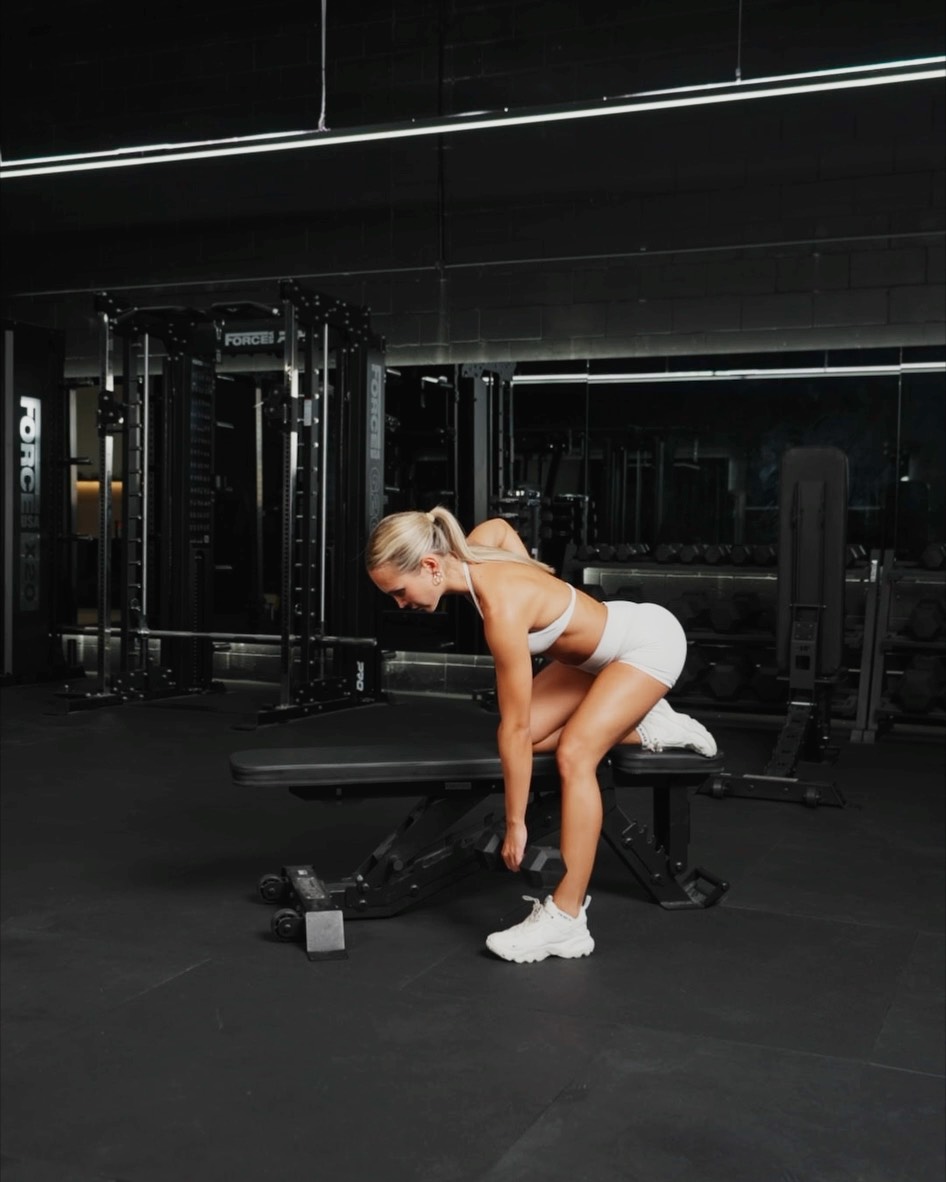
Bench Assisted Single Leg RDLs
Setup - Set a bench or elevated surface up next to you, and grab a dumbbell. You'll be using the bench for support as you perform this exercise - Stand beside the bench placing your right leg bent on the bench. Your left leg standing beside the bench with your dumbbell in your left hand - Engage your core keeping your shoulders back and chest up Movement - Push your hips back to initiate the movement. Keep a slight bend in your left knee - Lower the dumbbell down your left leg, keeping it nice and close. Your torso should lean forward, and your right leg should be resting on the bench beside you to help guide you through the movement - Lower the dumbbell until your feel a good stretch in your left glute and hamstring - Press through your left heel to drive your hips forward and stand back up, bringing your torso back to an upright position - Perform reps as stated then switch legs
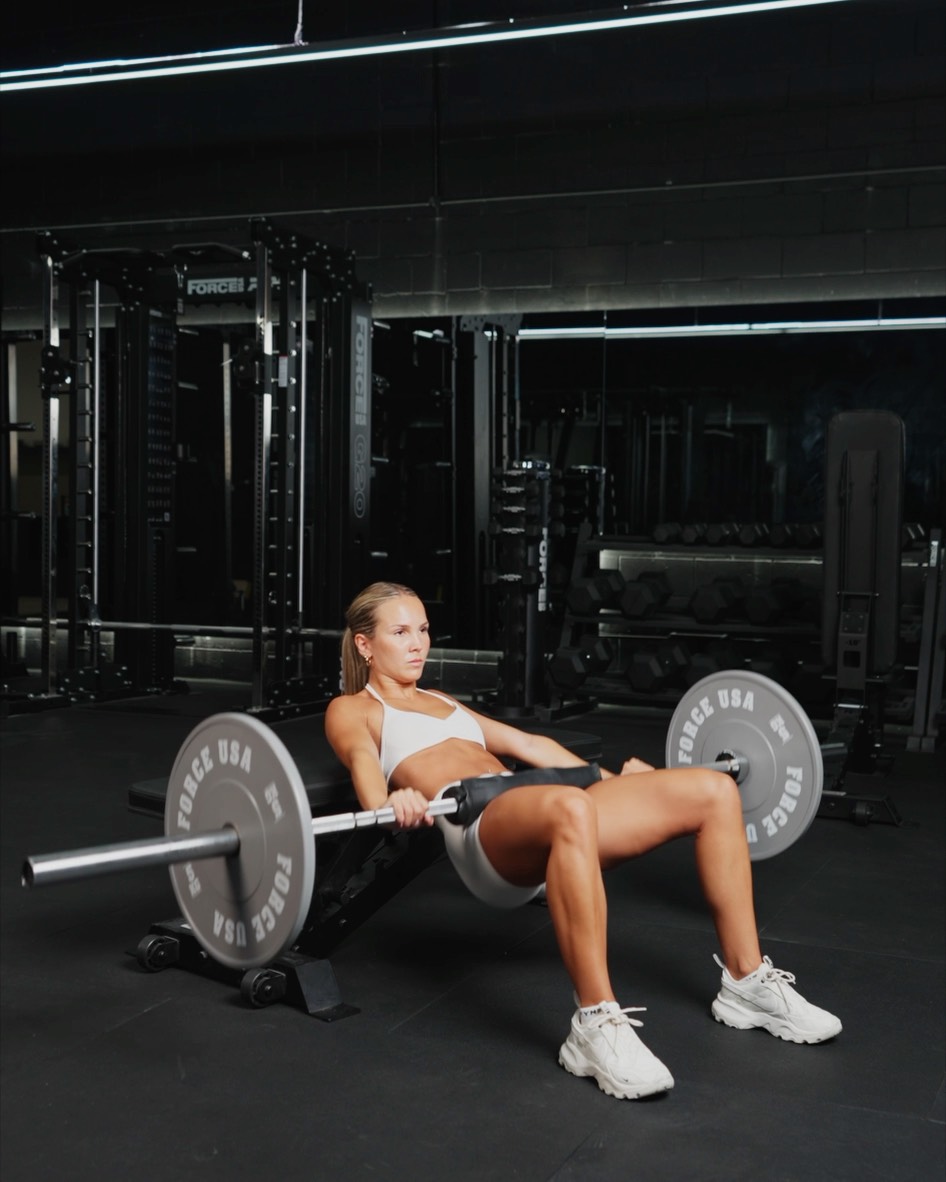
Barbell Kas Hip Thrusts
Setup - Sit on floor with your upper back against a bench or box that is about mid back height. Place a barbell across your hips - Position your feet flat on the floor, about shoulder width apart. Bend your knees to around 90 degrees - Before initiating the lift engage your core Movement - Press through your heels to drive your hips upward - At the peak of the movement, your hips should be fully extended, forming a straight line from your shoulders to your knees. Ensure that you squeeze your glutes at the top of the motion for a brief second - Slowly lower your hips back down in a slow controlled manner. As Kas Hipthrusts are a shorter range of motion, lower your hips halfway down not all the way
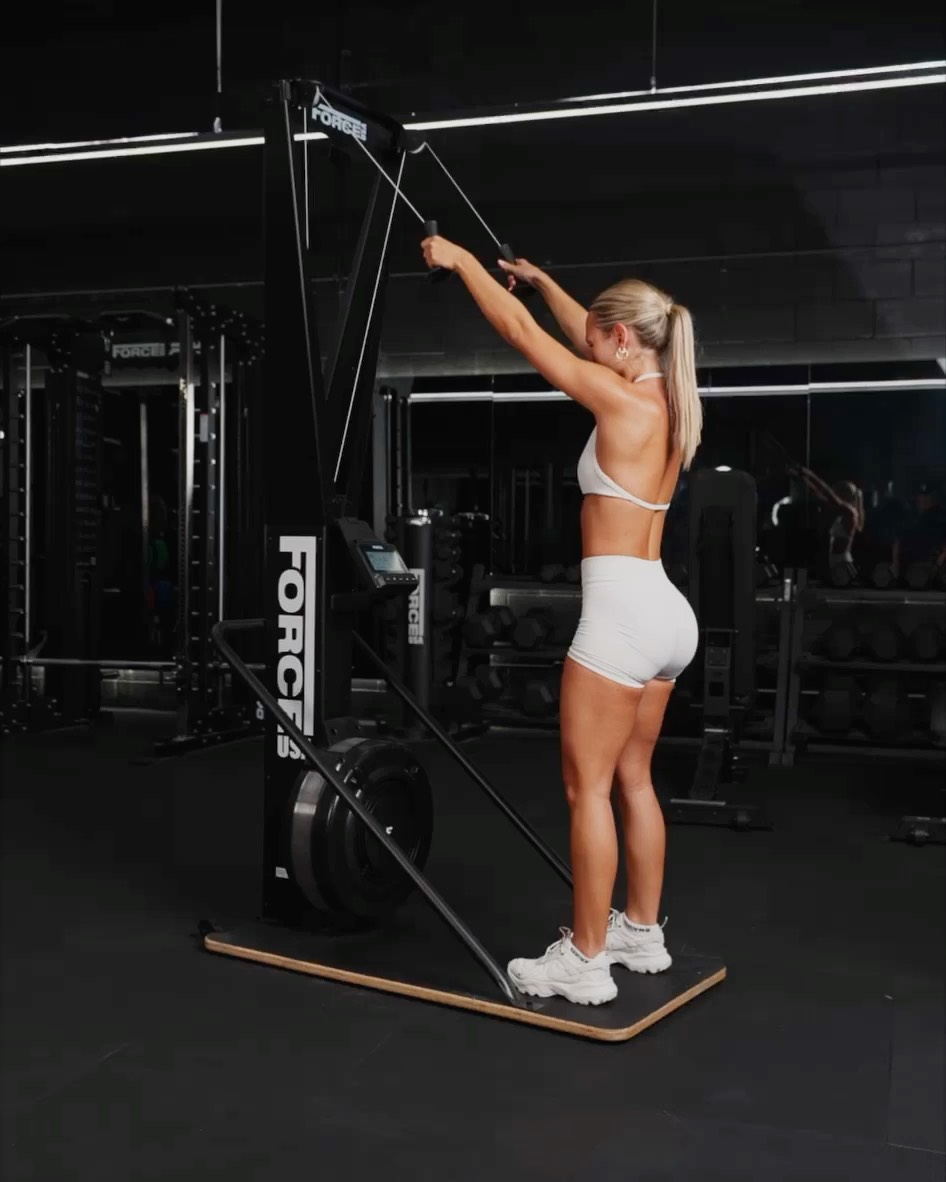
Ski Erg
Setup - Stand facing the Ski Erg with your feet shoulder width apart - Grasp the handles with both hands, keeping your arms extended in front of you at about shoulder height Movement - Begin by pulling the handles down, driving your arms down and outwards. As you pull engage your back, shoulders and arms - At the bottom of the pull, your arms should be fully extended down with your body slightly leaning forward - Allow the handles to return to the starting position
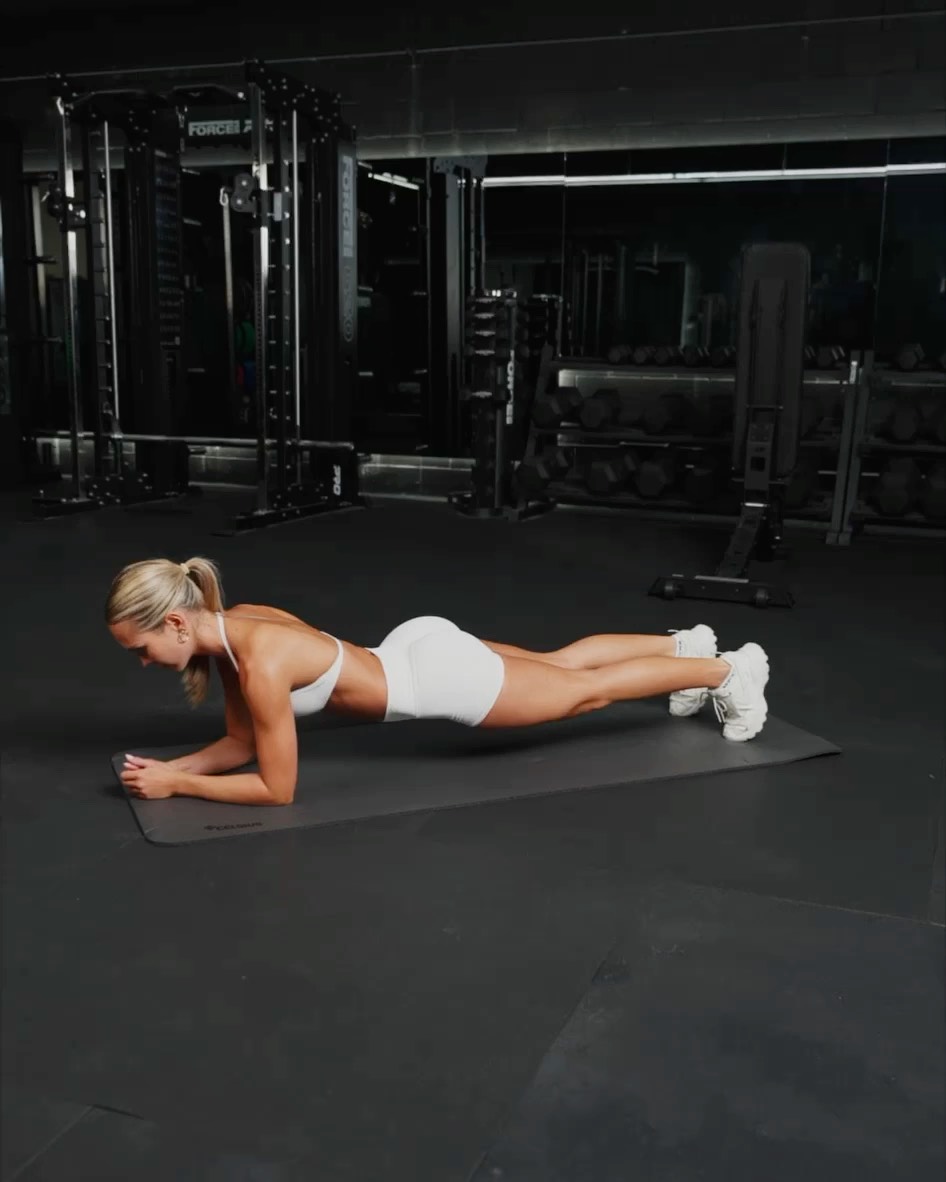
Plank
Setup - Start by lying with your stomach down to the floor and your forearms resting flat on the ground - Your elbows should be directly beneath your shoulders and hands clasped together Movement - Press your forearms into the ground and lift your body up, supporting yourself on your forearms and toes - Tighten your core by pulling your belly button toward your spine and squeezing your glutes. Make sure your body is in a straight line
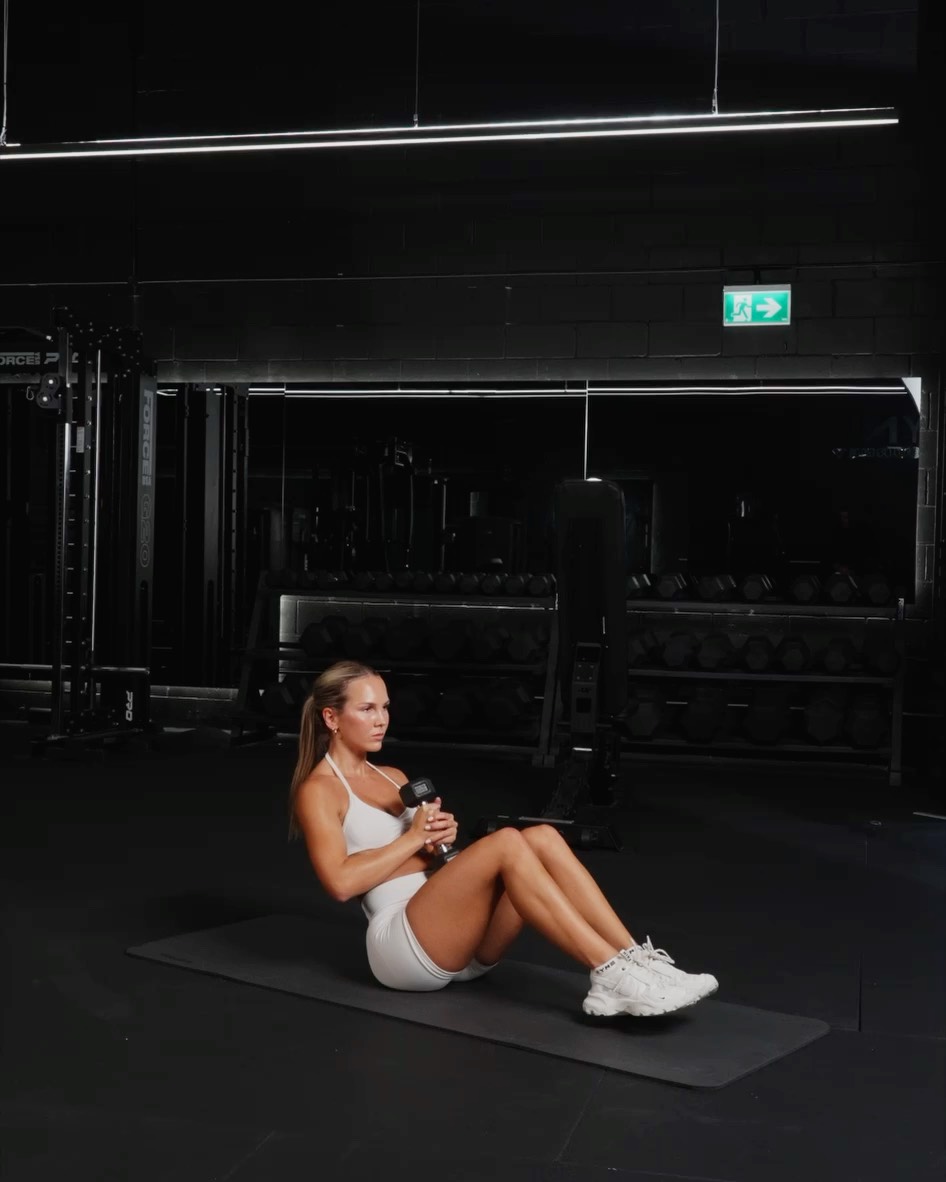
Dumbbell Russian Twists
Setup - Sit on the floor or a mat with your knees bent and feet flat. Hold a dumbbell vertically with both hands at chest level - Lean back slightly so your torso forms a 45-degree angle with the floor, keeping your core engaged. Lift your feet a few inches off the ground to make it more challenging Movement - Rotate your torso to the right, moving the dumbbell beside your hip - Pause briefly, then rotate through your core to the left side, bringing the dumbbell across your body
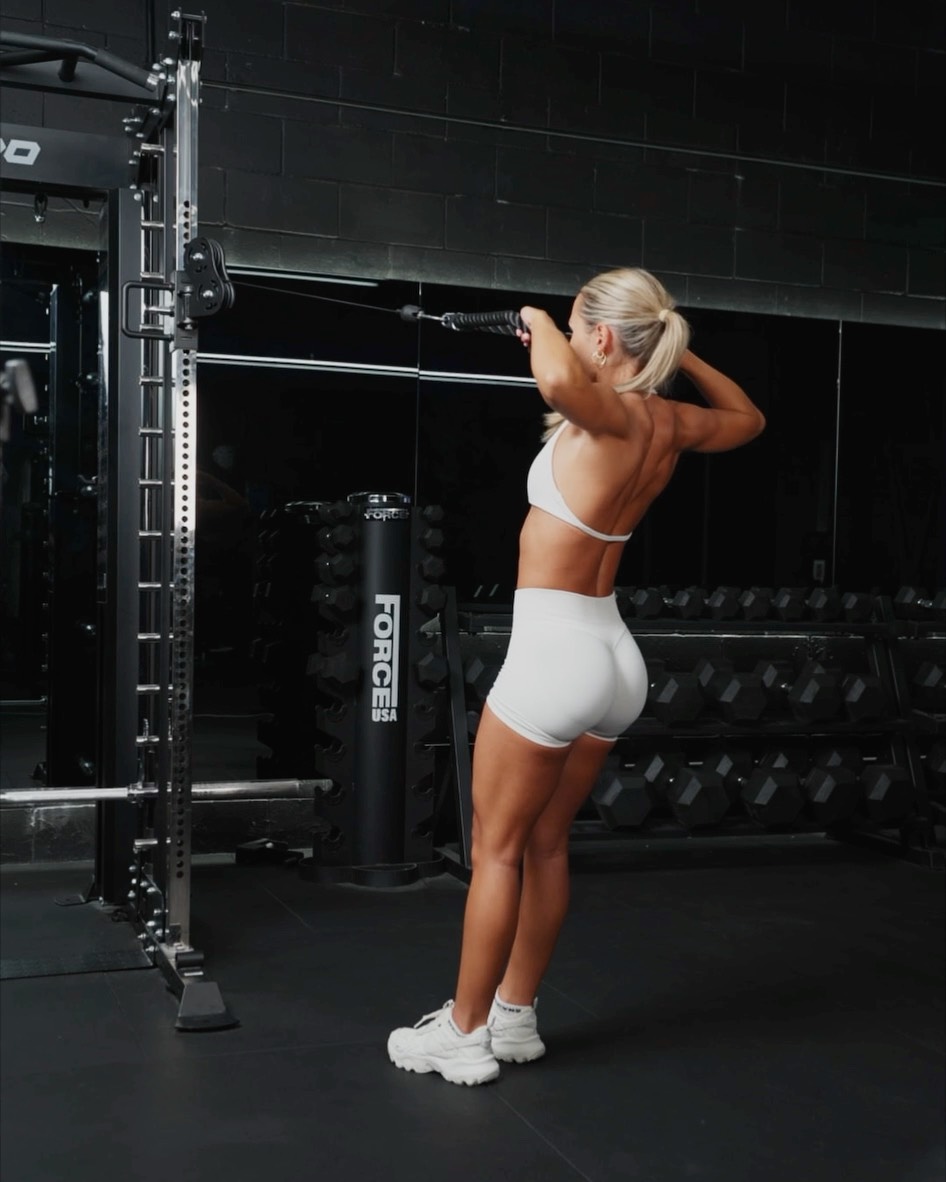
Cable Face Pulls
Setup - Attach a rope attachment to a high pulley on a cable machine - Set the pulley to a height slightly above or at eye level - Stand facing the cable machine, about 1-2 feet away from the machine, with your feet hip width apart - Grasp the ends of rope with your palms facing the ground. - Take a small step back to create tension in the cable and ensure you are slightly leaning back from the cable Movement - Pull the rope towards your face, keeping your upper arms parallel to the ground. Focus on driving your elbows outwards and backwards - As you pull, your hands should seperate, and the rope should end up near the sides of your face - At the peak of the movement, hold and squeeze before slowly reversing the movement to return to the starting position
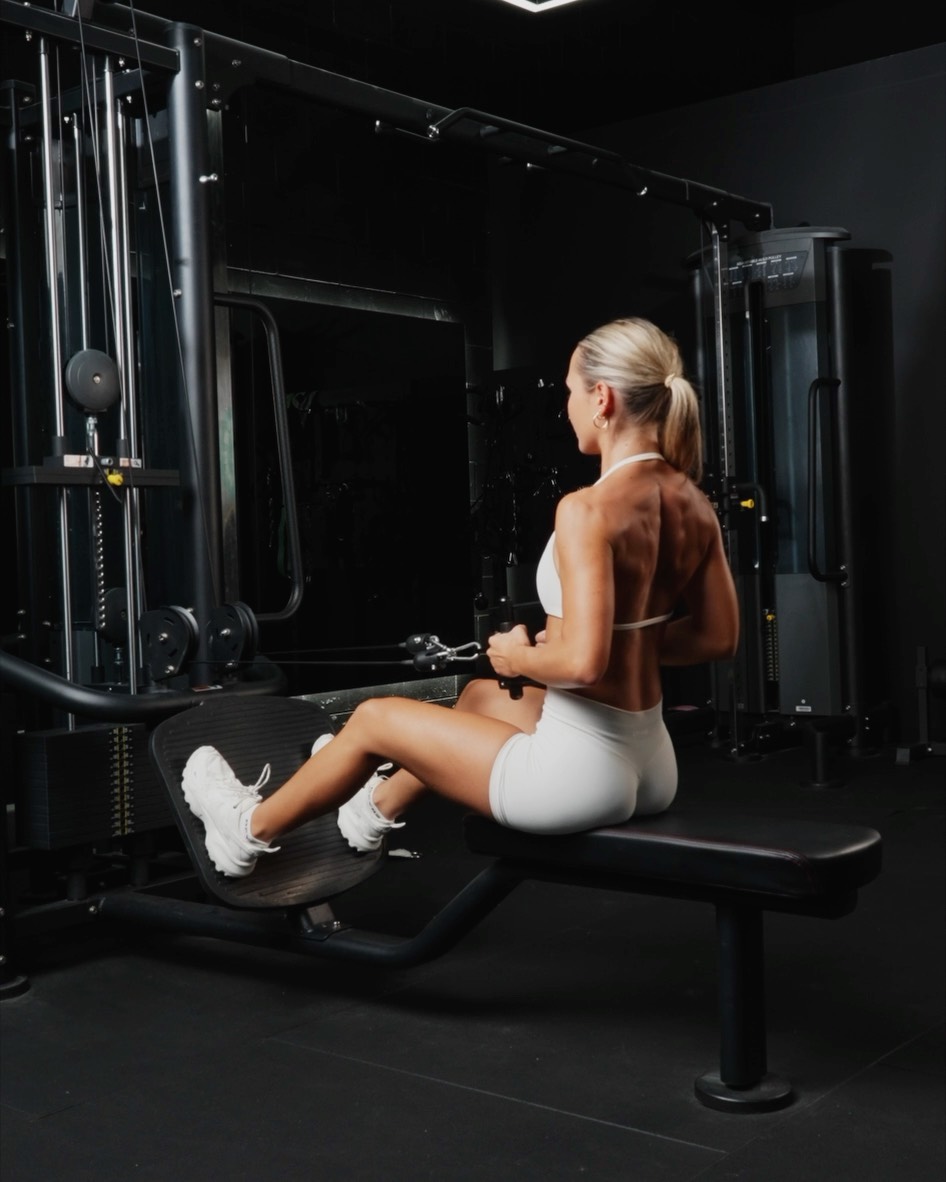
Close Grip Cable Row
Setup - Sit down at a cable row machine with your feet flat on the footrests and your knees slightly bent. Ensure that the cable attachment is at the low point of the machine - Grab the close-grip attachment with both hands. Your palms should face each other, and your hands should be positioned about shoulder-width apart Movement - Begin with your arms fully extended in front of you, holding the attachment. Your chest should be lifted, and your shoulders should be slightly forward, with your torso leaning slightly forward - Initiate the movement by pulling the attachment toward your torso, keeping your elbows close to your body. Focus on driving your elbows back and not just pulling with your hands - Continue pulling until your hands are near your torso, typically around the area of your lower ribs or upper stomach - Slowly release the handle back to the starting position, keeping control of the weight and maintaining proper posture
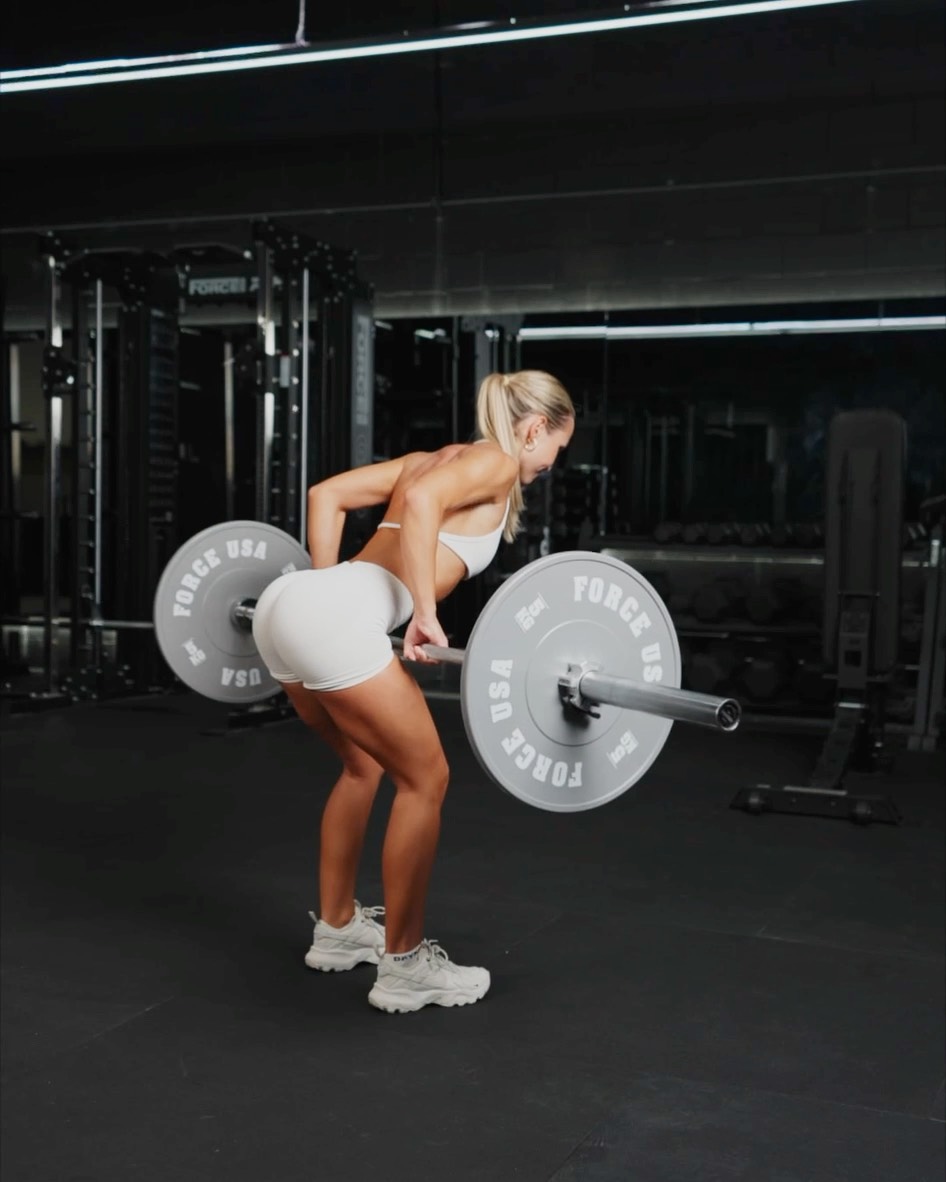
Barbell Bent Over Row
Setup - Setup the barbell with plates evenly loaded on each side - Stand with your feet shoulder width apart, with the barbell positioned directly in front of you Movement - Bend your hips and knees to reach down and grip the bar with an overhand grip. Your hands should be placed at shoulder width apart. Pick barbell up - With your knees slightly bent, push your hips back while maintaining a flat back. Your torso should be at about a 45 degree angle to the floor - Keep your chest up and core engaged as you begin to pull the barbell towards your lower chest/upper stomach, leading with your elbows. The elbows should travel close to your torso - Pause briefly at the top, squeezing your back muscles together ( Lats, Rhomboids, Traps), and then slowly lower the bar back towards the starting position fully extending your arms
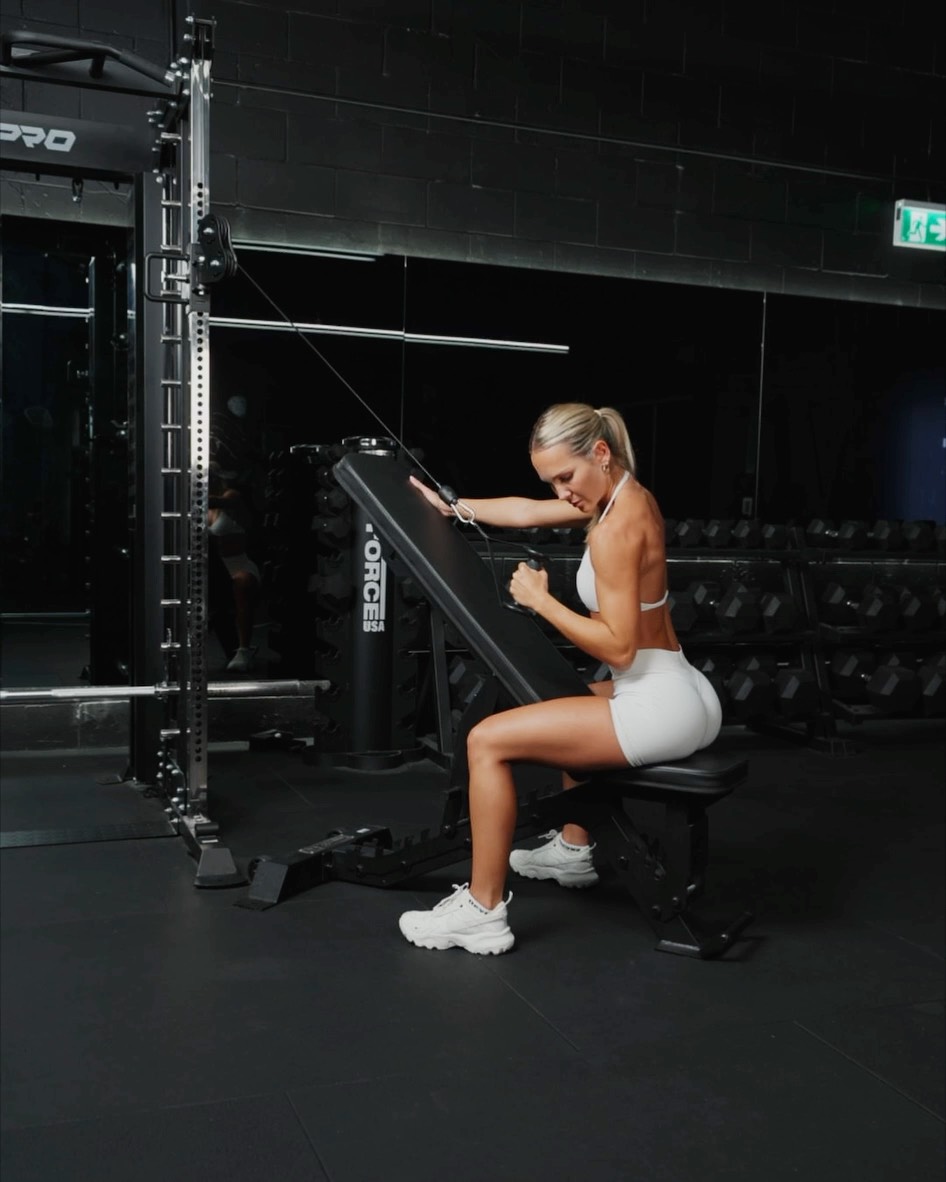
Bench Supported Single Arm Lat Pulldown
Setup - Set the incline bench at an angle of about 40-60 degrees - Adjust the pulley of the cable to height comfortable to pull the handle down in a controlled manner. Attach the stirrup handle - Sit on the bench with your body facing towards the back of the bench with your right hand placed on the top of the bench for support and the left hand gripping the handle Movement - Start at full extension and begin to pull your left arm down, leading with your elbow until you reach the side of your torso or slightly further. Your elbow should be pointing directly towards the floor - As you come down keep your elbow tucked into your body, and squeeze your lat at the bottom before releasing and reversing the movement going back to the starting position
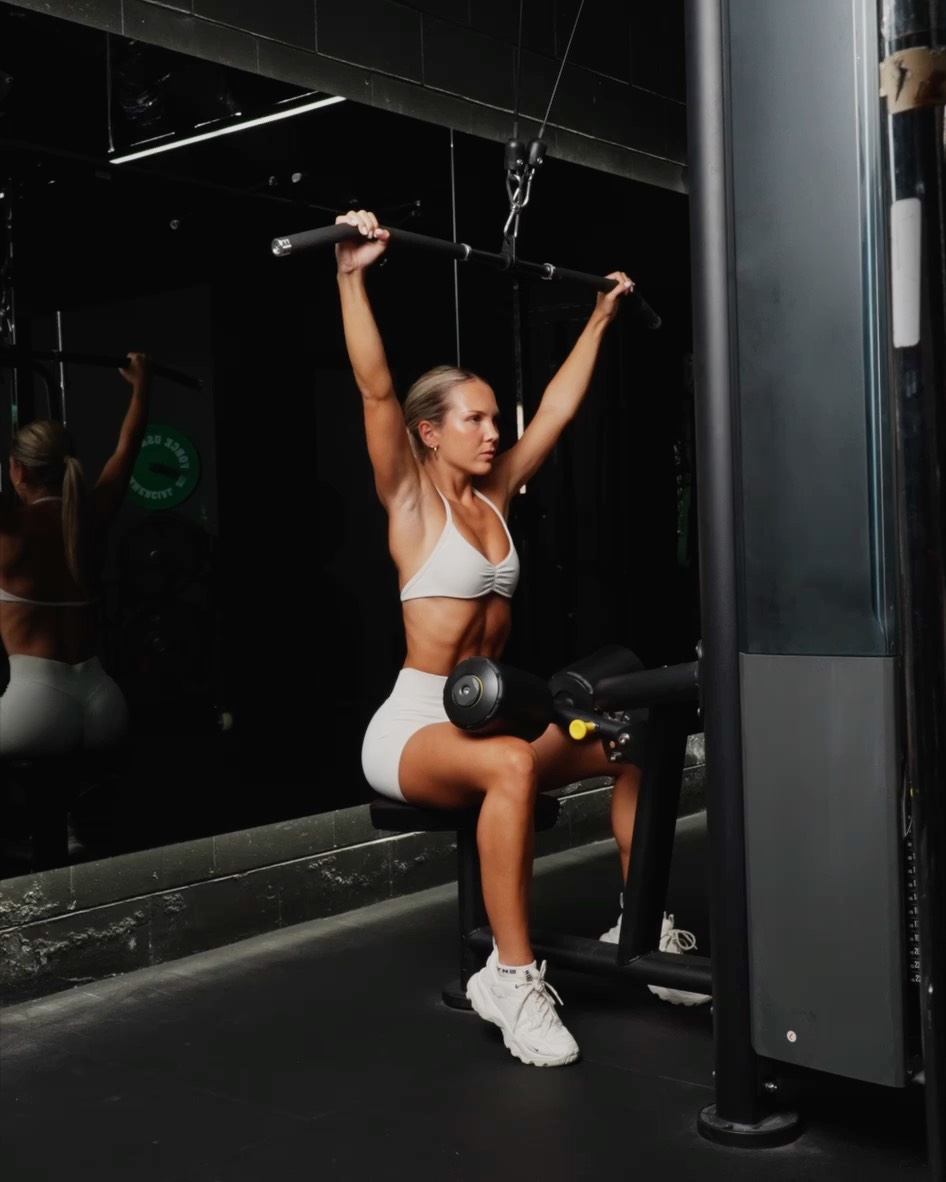
Lat Pulldowns
Setup - Set the seat height of the machine so that your thighs are firmly pressed against the thigh pads - Grasp the bar with a wide overhand grip slightly wider than shoulder width apart. Your arms should be fully extended overhead, and you should be sitting upright with a slight lean backwards - Your feet should be flat on the floor or slightly raised Movement - Begin by engaging your lats and retracting your shoulder blades to initiate the movement. Your elbows should be the driving force as you pull the bar down - Slowly bring the bar down towards your upper chest, keeping your elbows pointed down towards your sides - Once the bar reaches your upper chest, squeeze your shoulder blades together and contract your lats - Slowly extend your arms to return the bar to the starting position. Allow your lats to stretch fully