Builder / Exercises
Exercise library
Curate movements, manage alternatives, and keep the library tight.
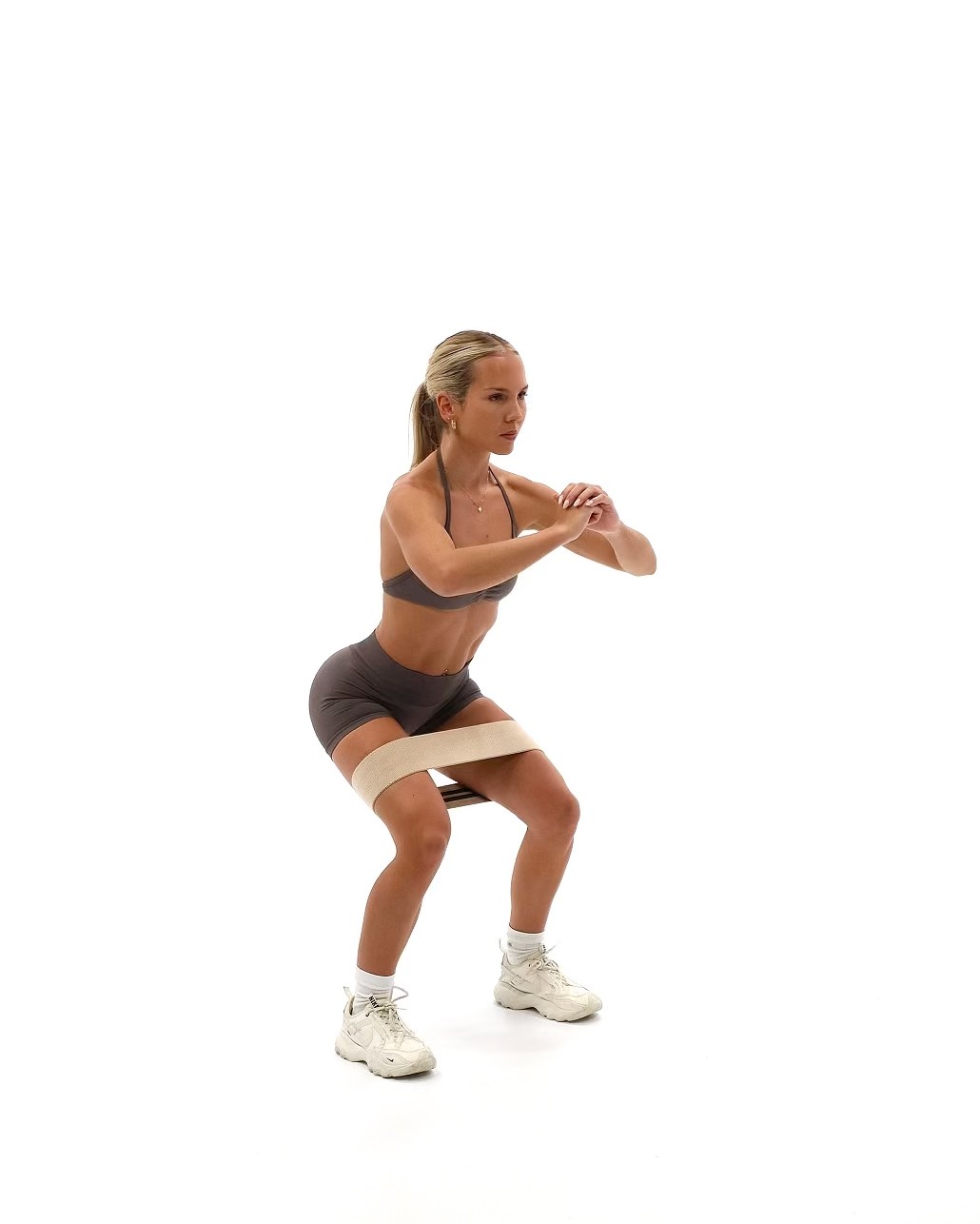
Standing Abductors
Standing Resistance Band Abductions target the glutes and hip abductors by moving both knees outwards against a resistance band. This exercise strengthens the outer hips, improves stability, and activates the gluteus medius How to Perform -Place a resistance band around your legs, just above your knees or around your ankles -Stand tall with feet hip-width apart, knees slightly bent, and core engaged -Step both feet outwards against the resistance of the band, moving both knees out to the sides in a controlled manner -Pause for a moment at the outermost position, feeling the activation in your glutes and hip abductors -Slowly bring your legs back together, resisting the band's pull
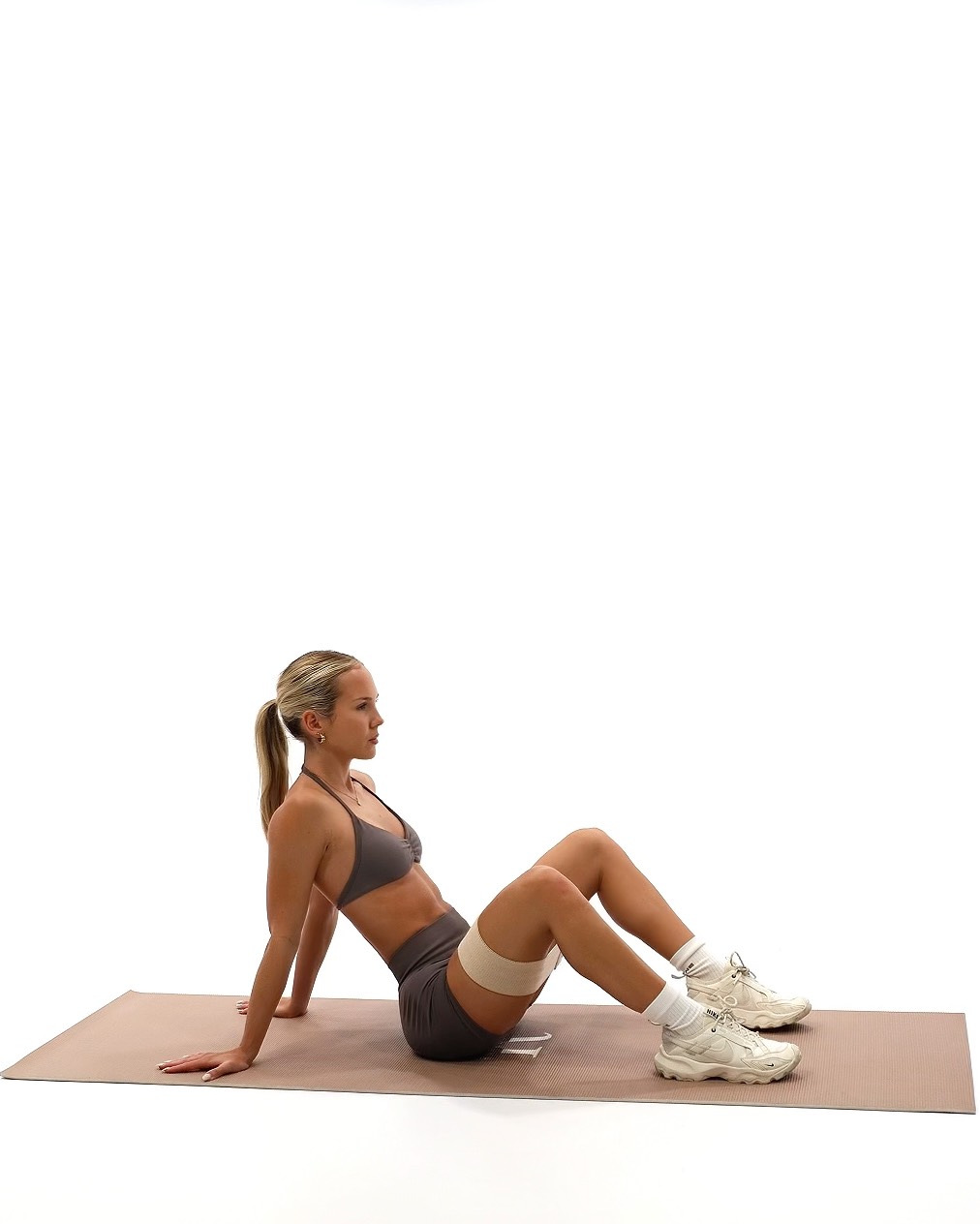
Seated Abductors
Seated Abductors focus on activating and strengthening the hip abductor muscles while seated. This exercise helps improve hip stability, mobility, and control by encouraging outward movement of the thighs against resistance or bodyweight How to Perform - Sit on a chair or bench with your feet flat on the floor, hip-width apart - Place a resistance band around your thighs just above the knees - Slowly push your knees outward against the band or simply away from each other, focusing on engaging the outer hips - Hold the position briefly, then return to the starting position with control
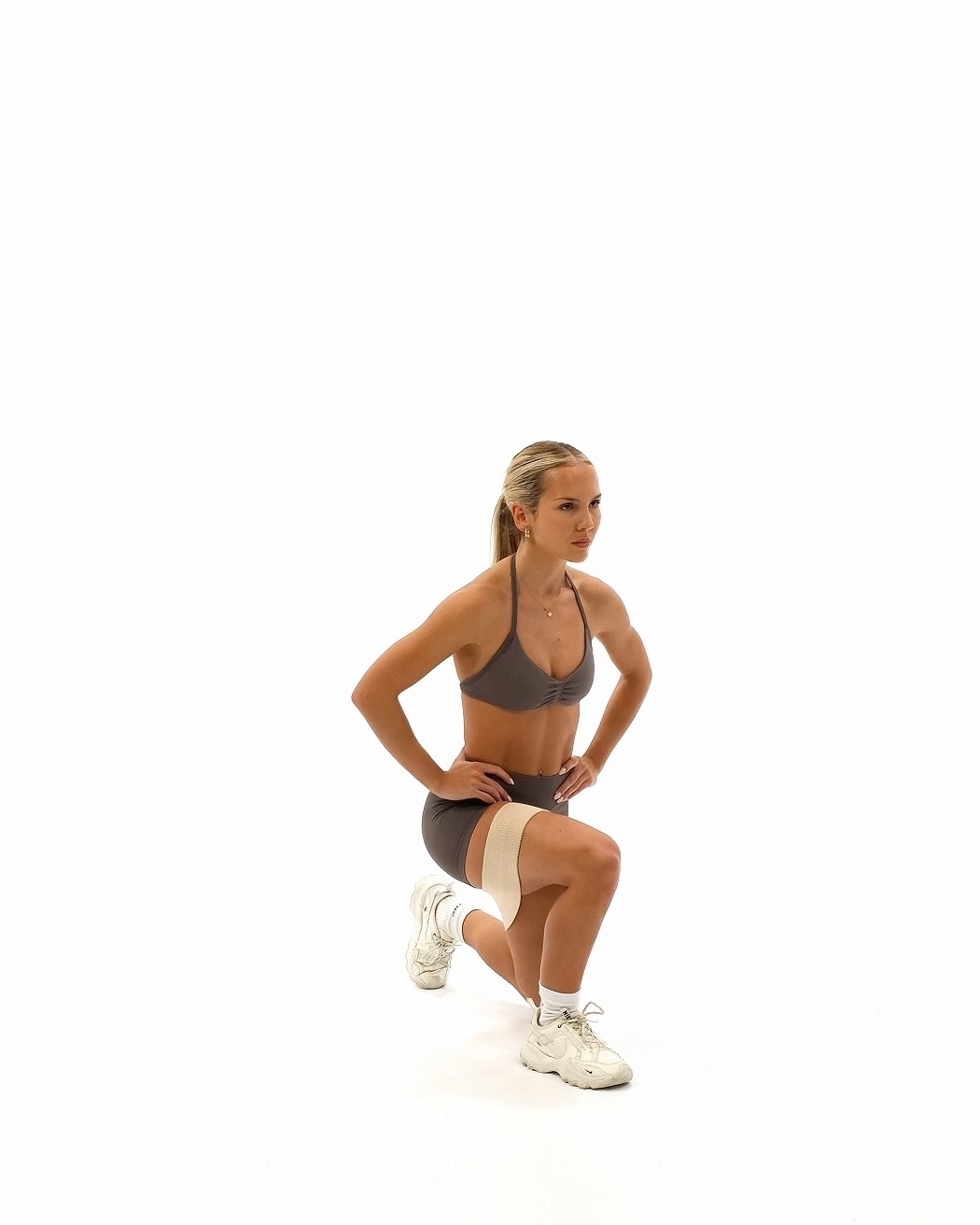
Resistance Band Lunges
Resistance Band Lunges target the glutes, quads, and hamstrings. With a resistance band around the knees, it adds tension to activate the lower body muscles and improve stability How to Perform - Place a resistance band around your legs, just above your knees, and step one foot forward into a lunge position. - Lower your back knee towards the floor, keeping your front knee aligned with your ankle. - Push through the back of your working legs heel and reset at the top
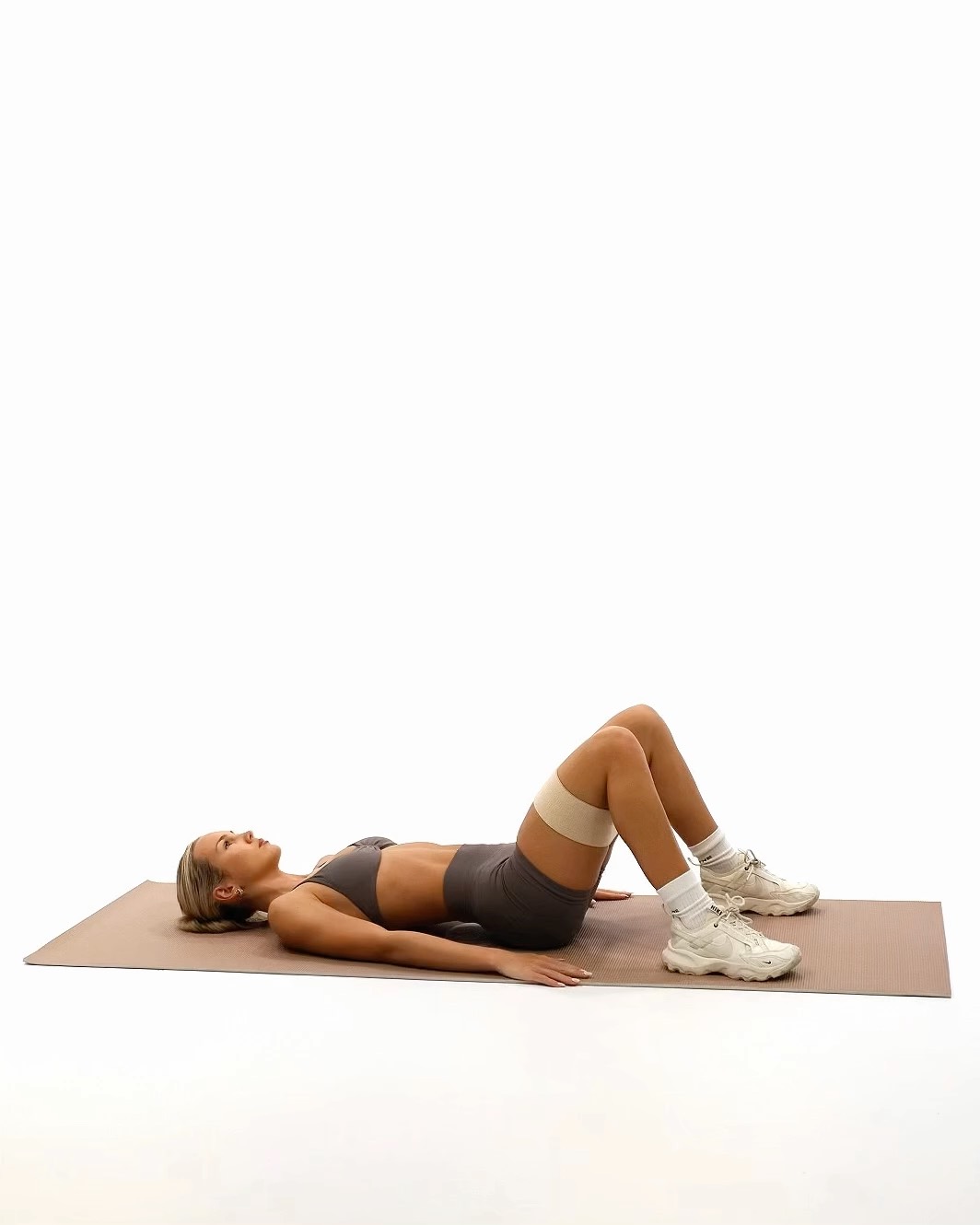
Resistance Band Hip Thrusts
Banded Hip Thrusts target the glutes using a resistance band around the thighs to increase muscle activation and improve strength How to Perform - Place a resistance band around your hips, lying flat on your back with knees bent and feet flat on the floor - Press through your heels, thrusting your hips upward while keeping your back on the floor - Squeeze your glutes at the top, then slowly lower your hips back down
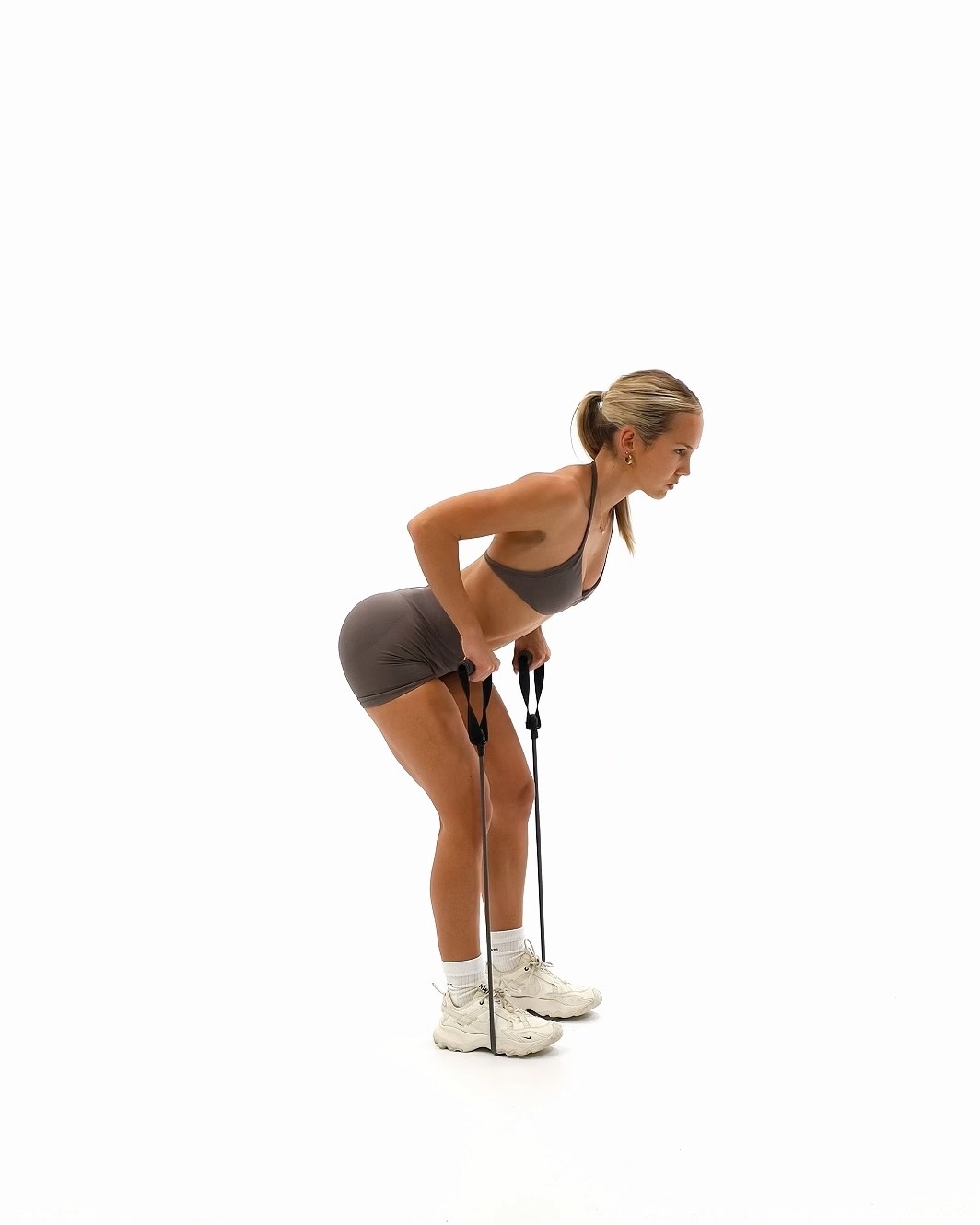
Overhand Banded Bentover Rows
Overhand Banded Bent Over Rows work the upper back and lats by pulling a resistance band toward your torso with an overhand grip, improving strength and posture How to Perform - Stand on the centre of a resistance band with feet hip-width apart - Hold the band with an overhand grip, bend at the hips keeping your back flat, and let your arms extend toward the floor - Pull the band toward your torso by driving your elbows back and squeezing your shoulder blades together - Slowly lower your arms back to the starting position
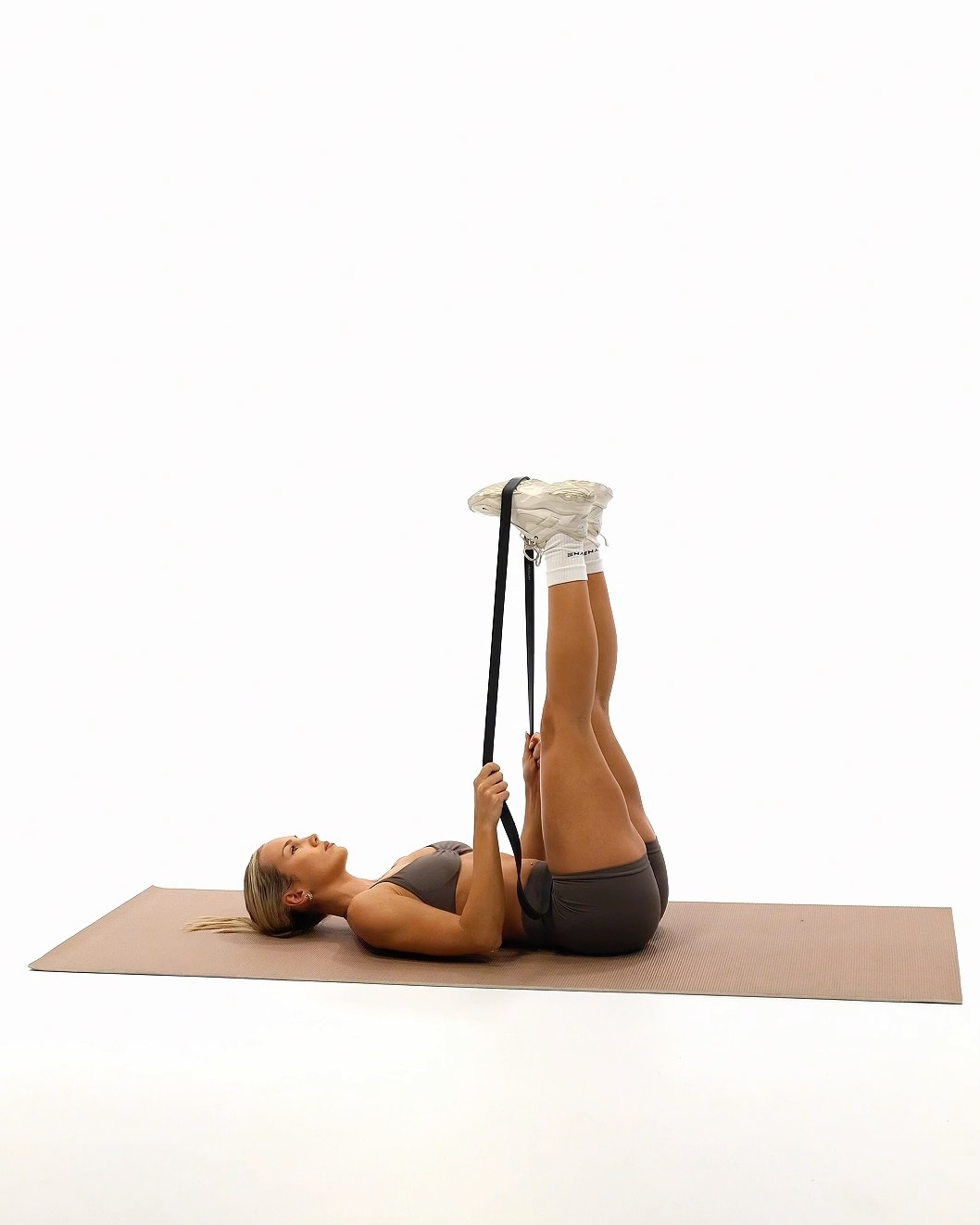
Lying Resistance Band Hamstring Stretch
The Lying Hamstring Stretch with a resistance band gently pulls your feet toward the body while lying on the back, helping to lengthen the hamstrings, improve flexibility, and reduce muscle tightness How to Perform - Lie flat on your back with both legs extended - Loop a long resistance band around the balls of both feet, holding the ends in your hands - Keep your legs straight and gently pull the band to bring both feet toward you, feeling the stretch in your hamstrings
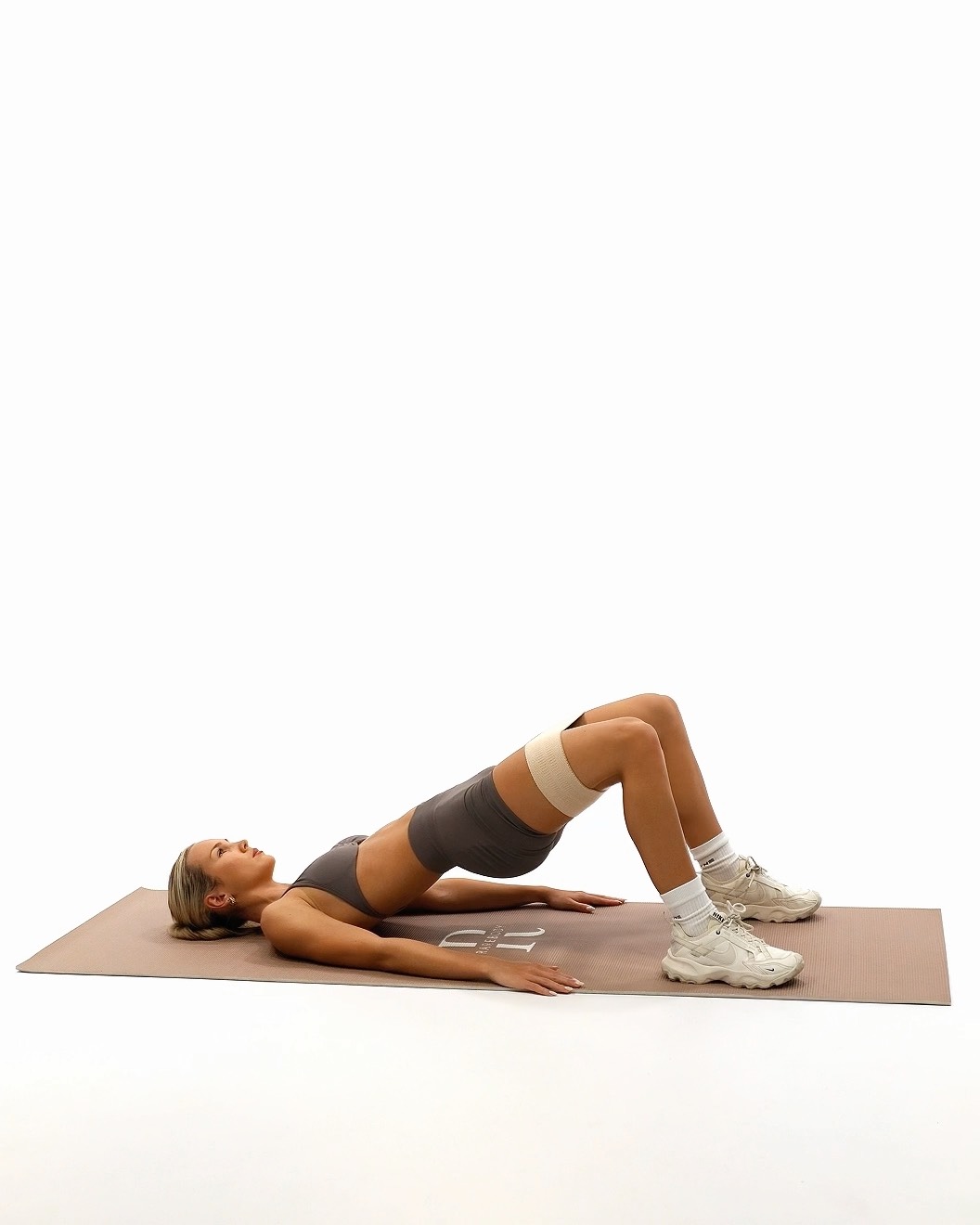
Lying Banded Glute Abductors
Banded Glute Abductors with Constant Hold at the top involve pressing the knees out and in against a resistance band while maintaining tension to enhance glute activation, stability, and control How to Perform - Lie on the floor or a bench with a resistance band looped just above your knees - Place your feet flat on the ground, hip-width apart, and keep your back flat on the floor - Press your knees outward against the band, then slowly bring them back in, keeping tension on the band at all times - Continue pressing out and in for your desired reps
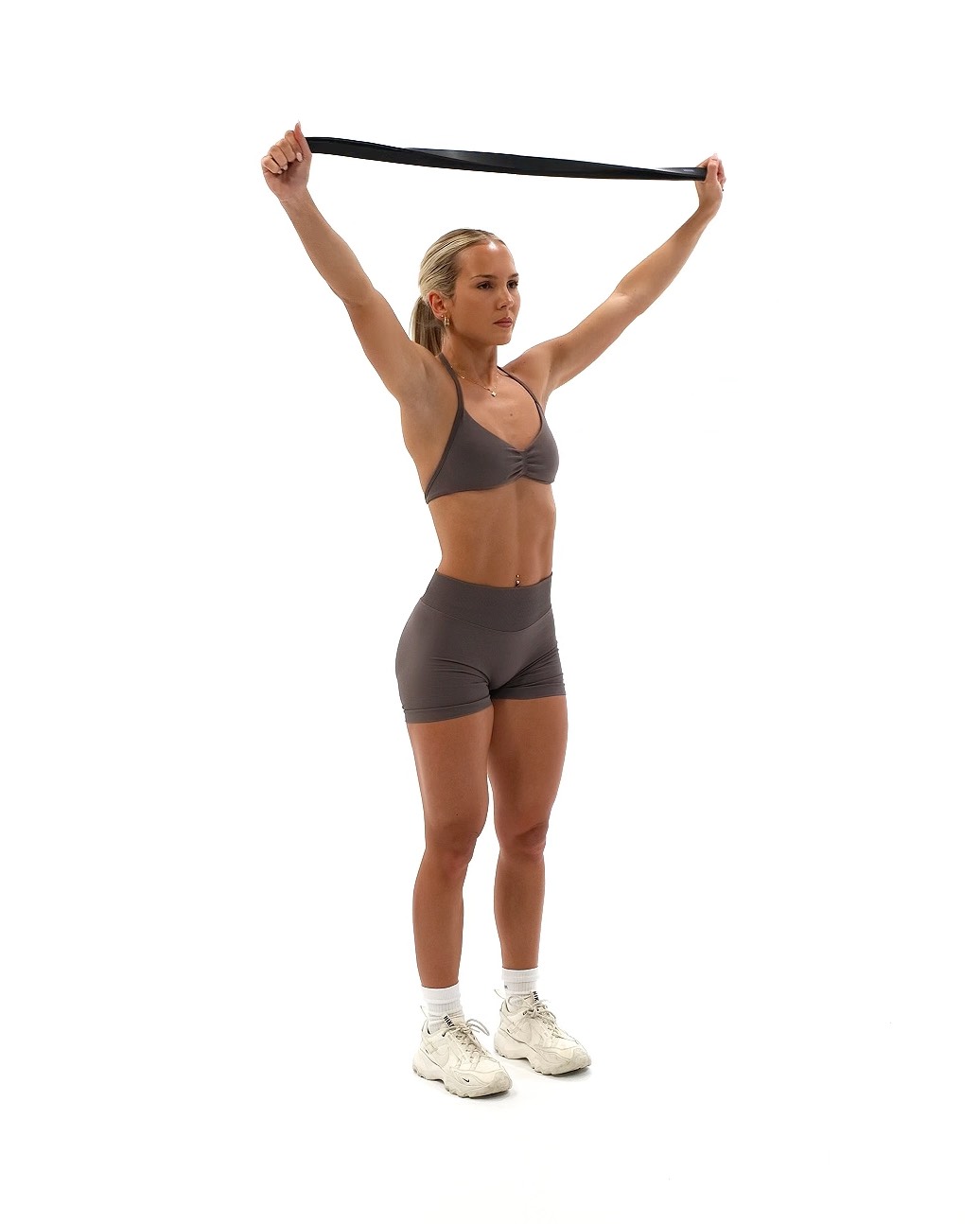
Front To Back Shoulder Stretch
The Front to Back Shoulder Stretch uses a resistance band to open the shoulders and chest. It helps improve shoulder flexibility and posture How to Perform - Grab a resistance band slightly wider than shoulder width - Raise your arms to shoulder height - Rotate your arms behind your head slowly, bringing your arms back in front of you
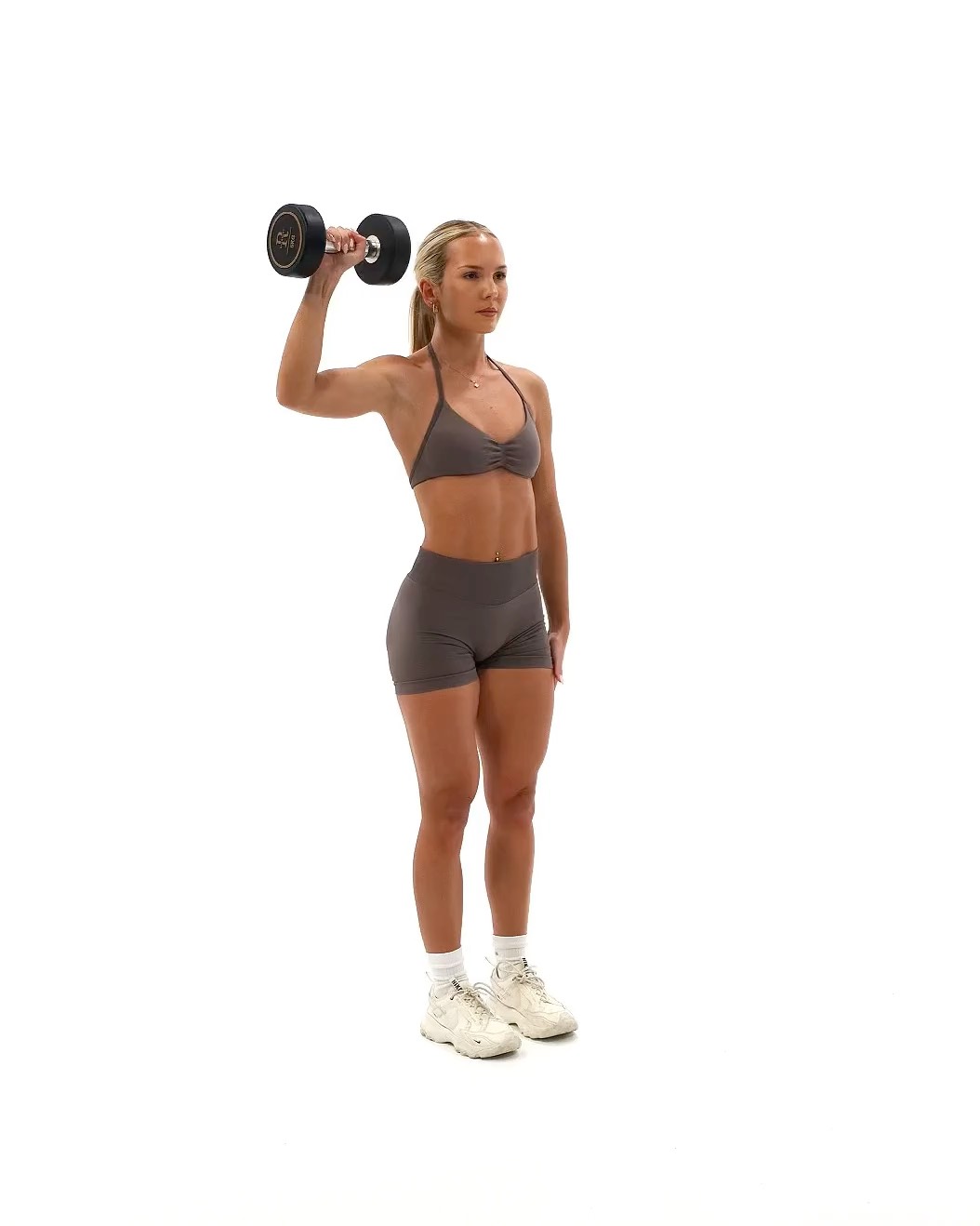
Front Rotation Shoulder Activation
Front Rotation Shoulder Activation involves rotating the arm inward from a shoulder press position, turning the palm down. It targets the shoulder’s internal rotators to improve stability and mobility How to Perform - Stand tall holding a light dumbbell in one hand - Bend your elbow 90 degrees, forearm pointing forward, elbow close to the side of your head - Slowly rotate the dumbbell towards the front of your torso until your forearms are facing the ground - Return to starting position and repeat
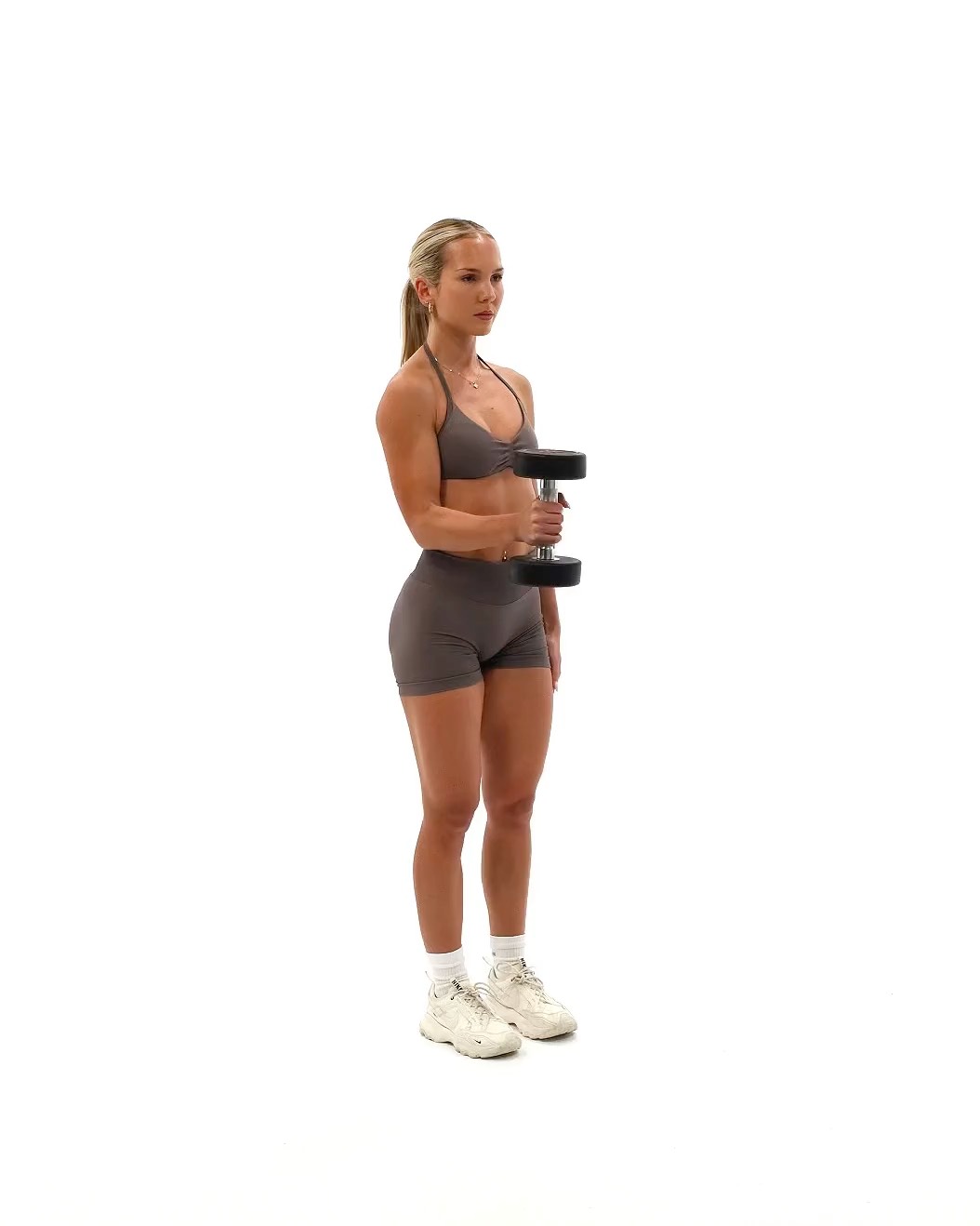
External Shoulder Activation
The External Shoulder Activation targets the external rotator muscles of the shoulder, helping improve shoulder stability and posture How to Perform - Stand tall with your feet hip-width apart - Hold a light dumbbell in one hand - Bend your elbow to 90 degrees so your forearm is across your belly, palm facing in - Tuck your elbow firmly against your side - Rotate your forearm outward, away from your body, while keeping your elbow glued to your side - Rotate until your forearm is pointing forward or until you feel a gentle stretch and activation in the back of your shoulder - Pause briefly at the end of the range, and return to the starting position. Repeat then switch sides
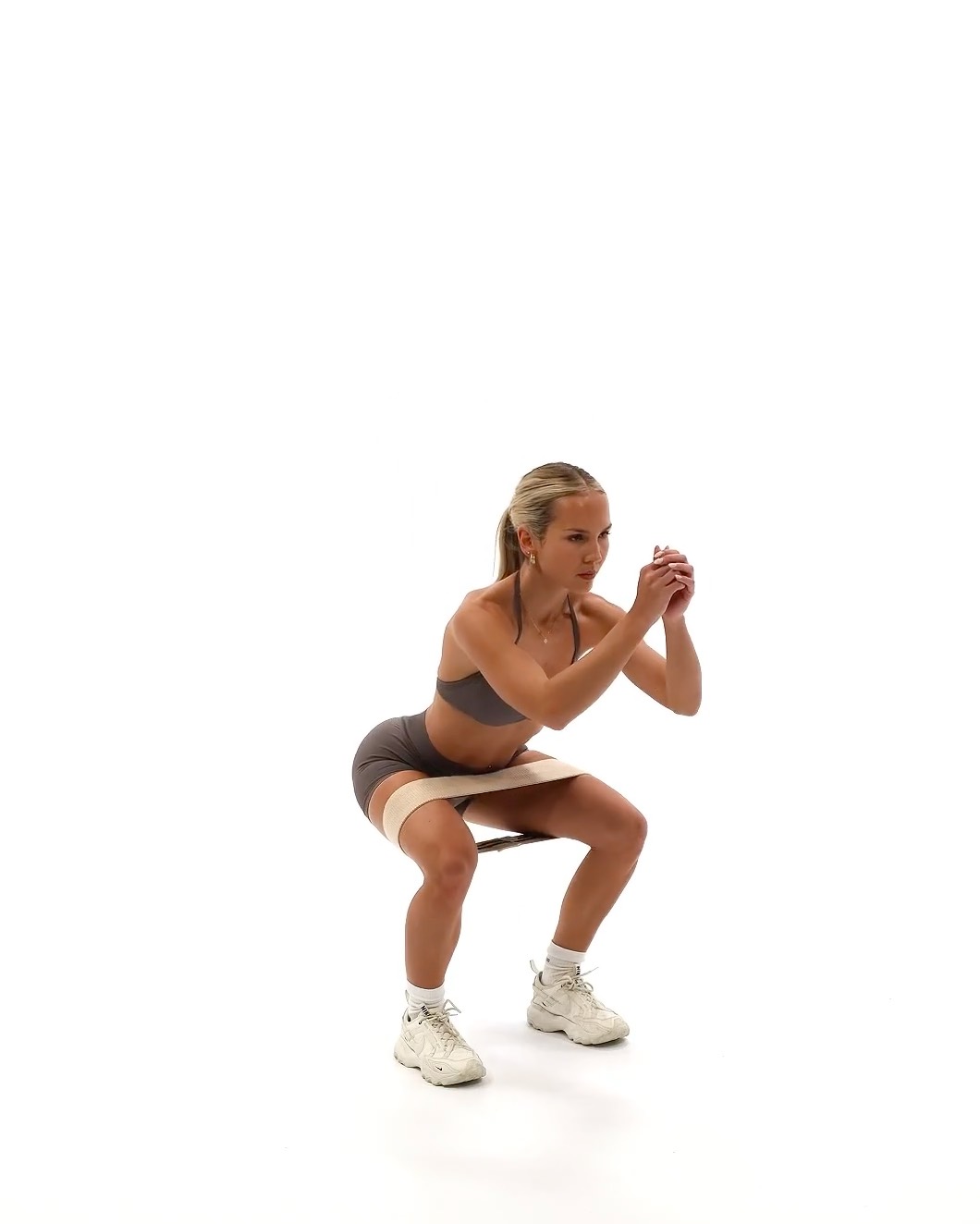
Banded Squats
Banded squats are squats done with a resistance band around your thighs to create extra tension. This helps activate and strengthen the glutes, hips, and outer thighs, improves stability, and encourages better squat technique How to Perform -Place a resistance band around your legs, just above your knees -Stand with feet shoulder-width apart, toes slightly turned out, and core engaged - Lower into a squat by bending your knees and pushing your hips back, keeping your chest up and knees tracking over your toes - Press your knees outward against the band's resistance as you squat down - Push through your heels to return to the standing position, keeping tension on the band
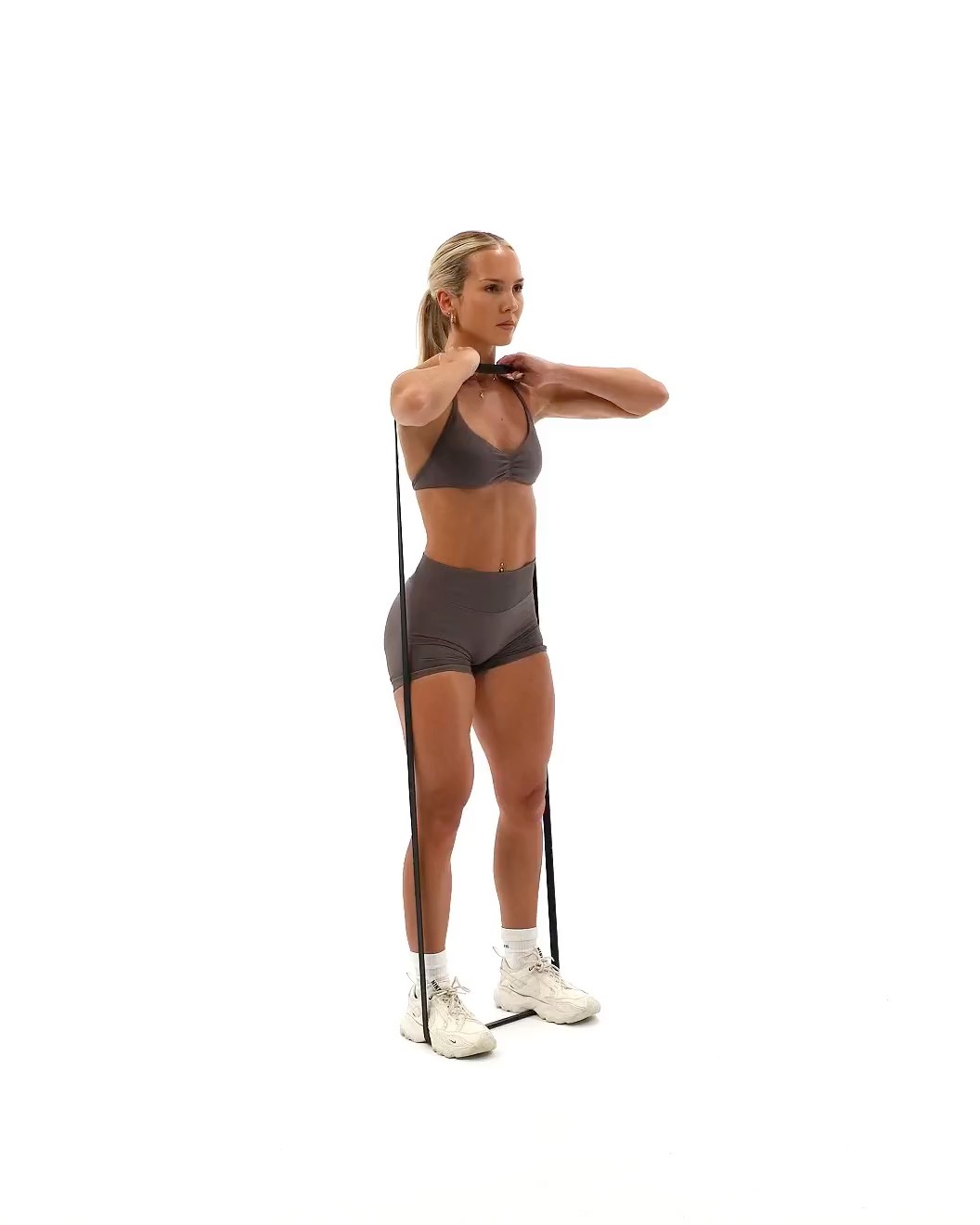
Banded Squat with Shoulder-Anchored Resistance
A Banded Squat with the band anchored over the shoulders is a lower-body exercise that strengthens the glutes, quads, and core. The band adds progressive resistance throughout the movement, increasing muscle activation, improving squat form, and enhancing stability and control How to Perform - Step onto the centre of the band with feet hip-width apart and bring the ends over your shoulders so it rests across your upper back - Stand tall with your core engaged, feet flat, and knees slightly bent - Lower into a squat until thighs are parallel or deeper, keeping knees behind toes and a neutral spine - Push through your heels to stand, driving hips forward to reset at the top
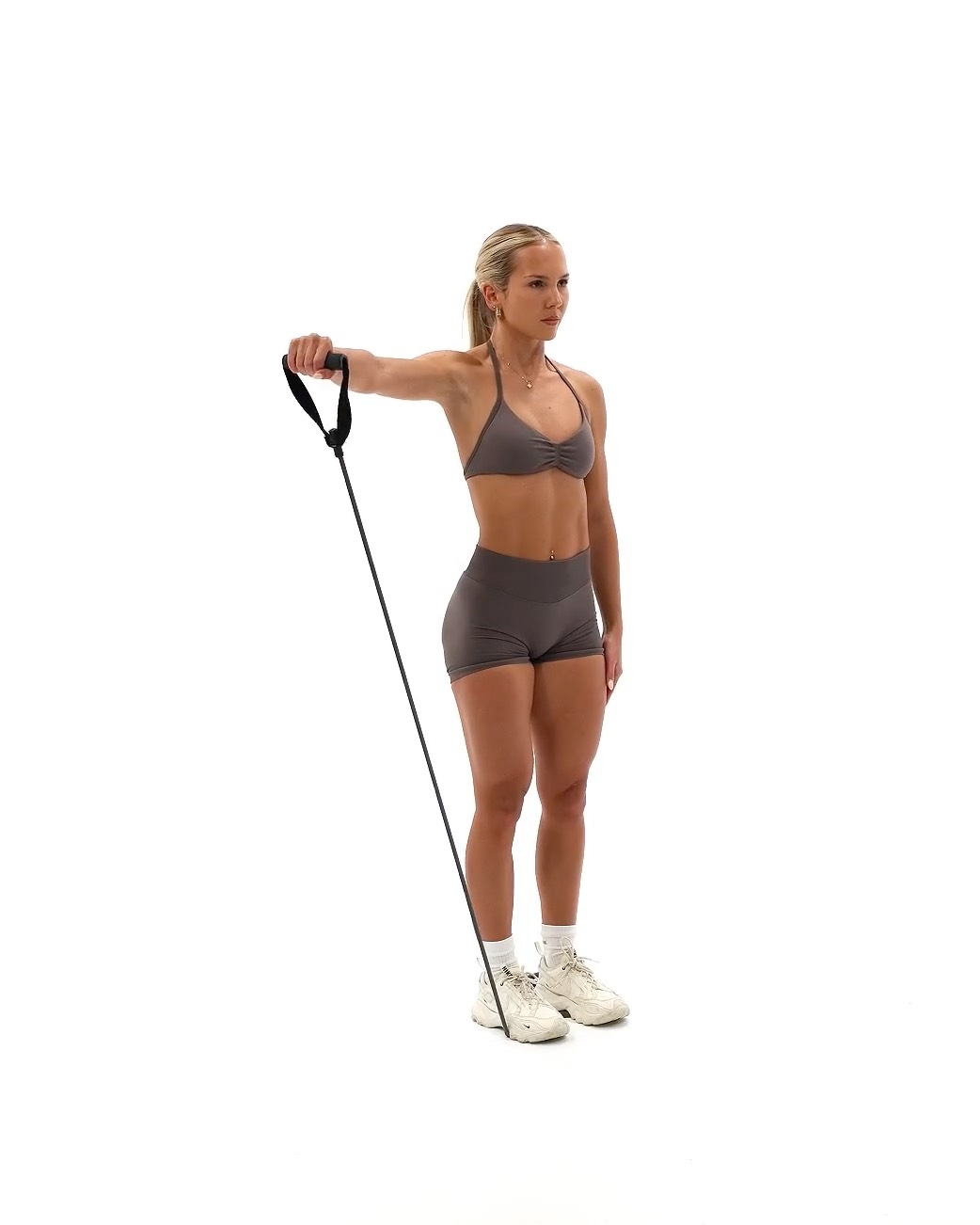
Banded Single Arm Lateral Raise
Single Arm Banded Lateral Raises target the side delts by lifting one arm out to the side against resistance from a band. This exercise helps build shoulder strength, improves stability, and enhances muscle definition without needing dumbbells How to Perform - Stand tall with one end of the resistance band secured under your foot and hold the other end in one hand - Keep your core engaged and your arm slightly bent at the elbow. - Raise your arm out to the side until it reaches shoulder height, keeping your palm facing down - Pause briefly at the top, feeling the tension in your shoulder - Lower your arm back down with control

Banded RDLs
Banded RDLs use a long band looped around the feet and held in the hands to create tension, strengthening the hamstrings, glutes, and lower back while improving hip hinge mechanics and stability How to Perform - Stand with your feet shoulder-width apart, loop the resistance band around your feet, and hold the ends firmly in your hands - Keep a slight bend in your knees and hinge at your hips by pushing them back, lowering your torso while keeping your back flat - Maintain tension on the band throughout the movement by keeping your hands steady - Lower until you feel a stretch in glutes and hamstrings
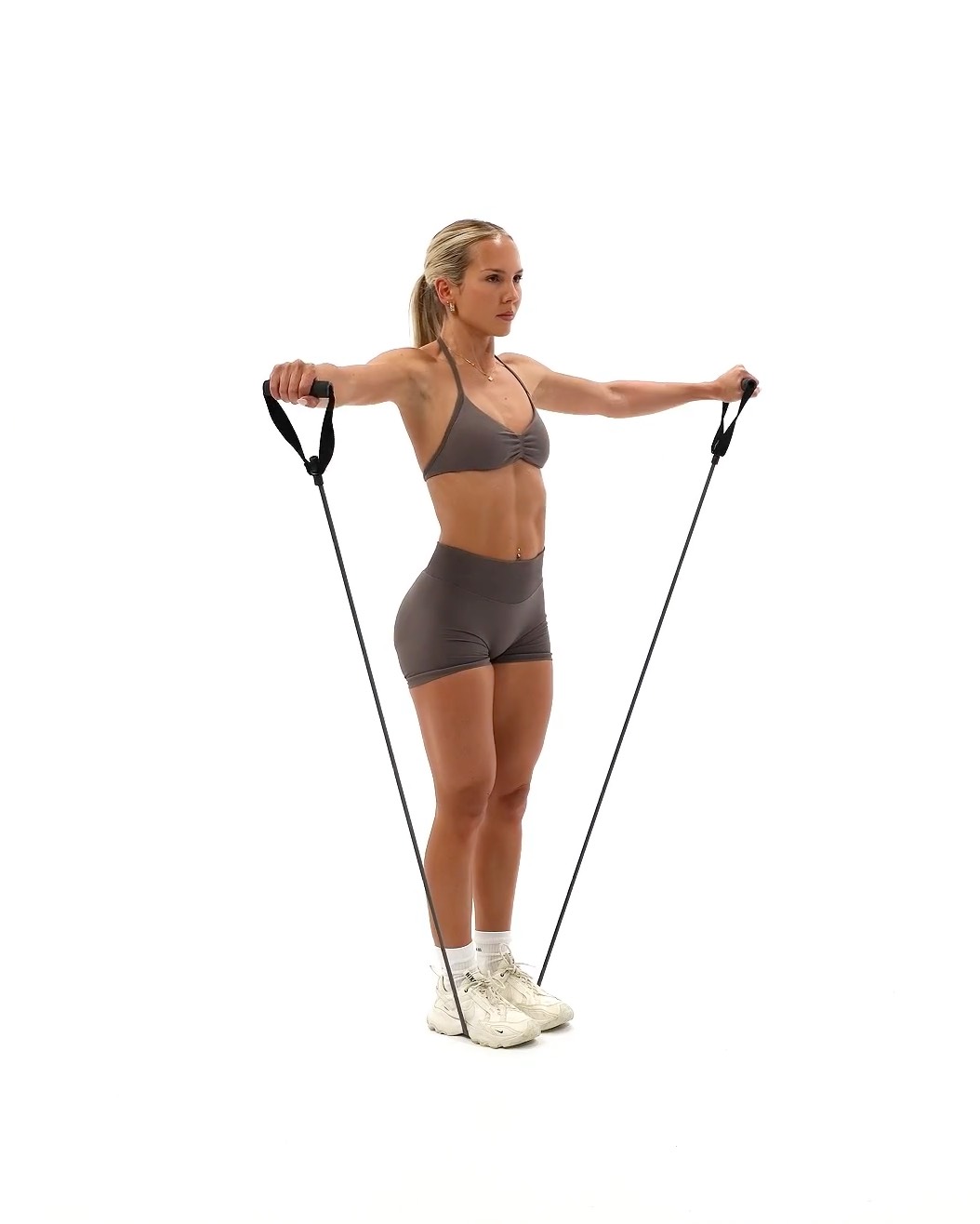
Banded Lat Raises
Banded Lat Raises target the side delts by lifting the arms out to the sides against resistance from a band. This exercise helps build shoulder strength, stability, and definition without using weight How to Perform - Stand with your feet about hip-width apart - Place the resistance band under the arches of both feet, holding one end in each hand - Start with your arms down by your sides, palms facing in toward your body - Raise your arms out to the sides until they reach shoulder height - Pause briefly at the top, feeling the tension in your shoulder - Slowly lower your arms back down with control
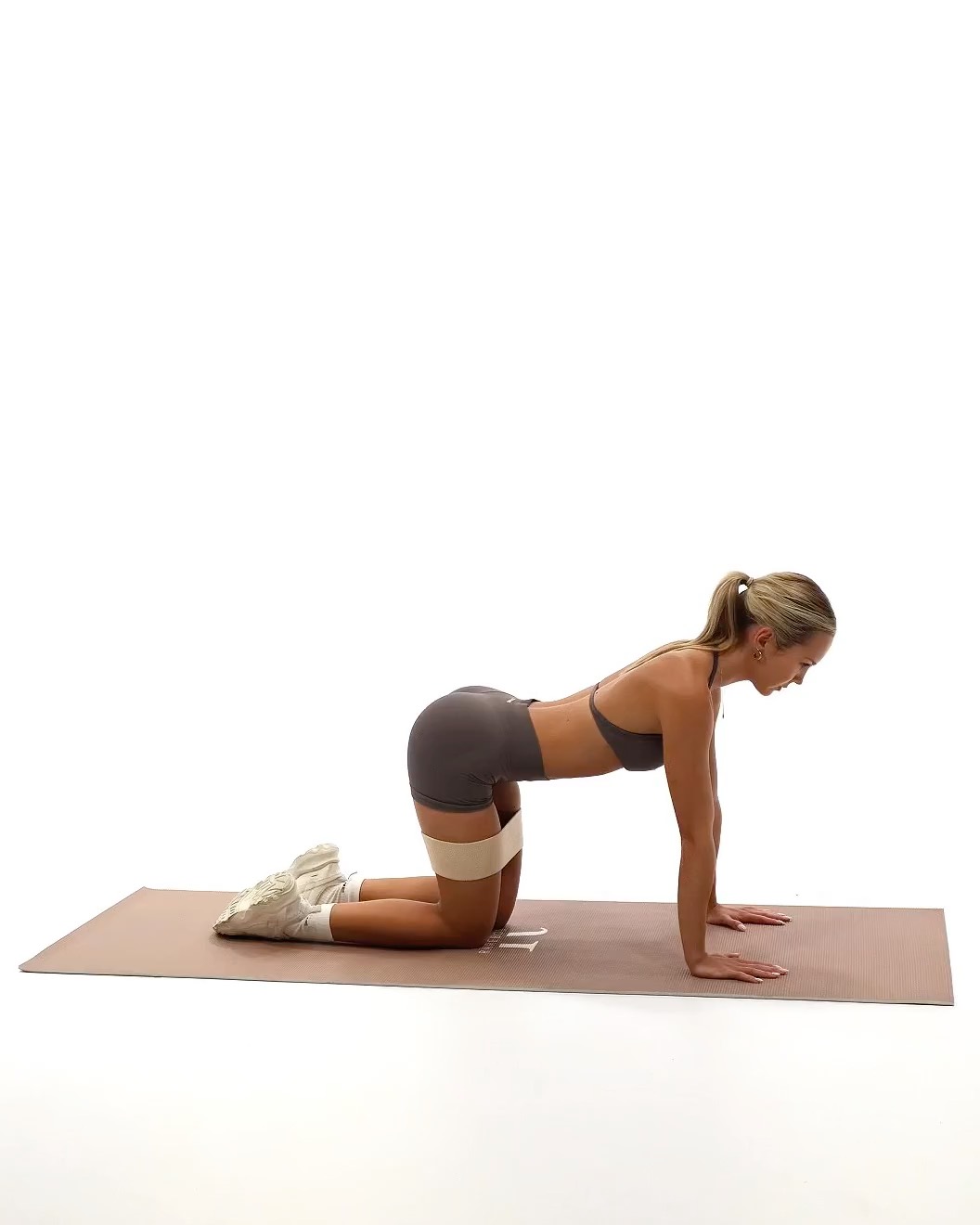
Banded Kickbacks With Pulse
Banded Kickbacks with Pulse target the glutes by extending the leg backward against a resistance band and adding small pulses at the top to boost activation, hip stability, and strength How to Perform - Start on all fours with a resistance band looped around your thighs, just above your knees - Lift one leg, driving your heel up toward the ceiling against the band’s resistance - At the top, perform small pulses by lifting and lowering the leg a few inches. Lower the leg back down with control
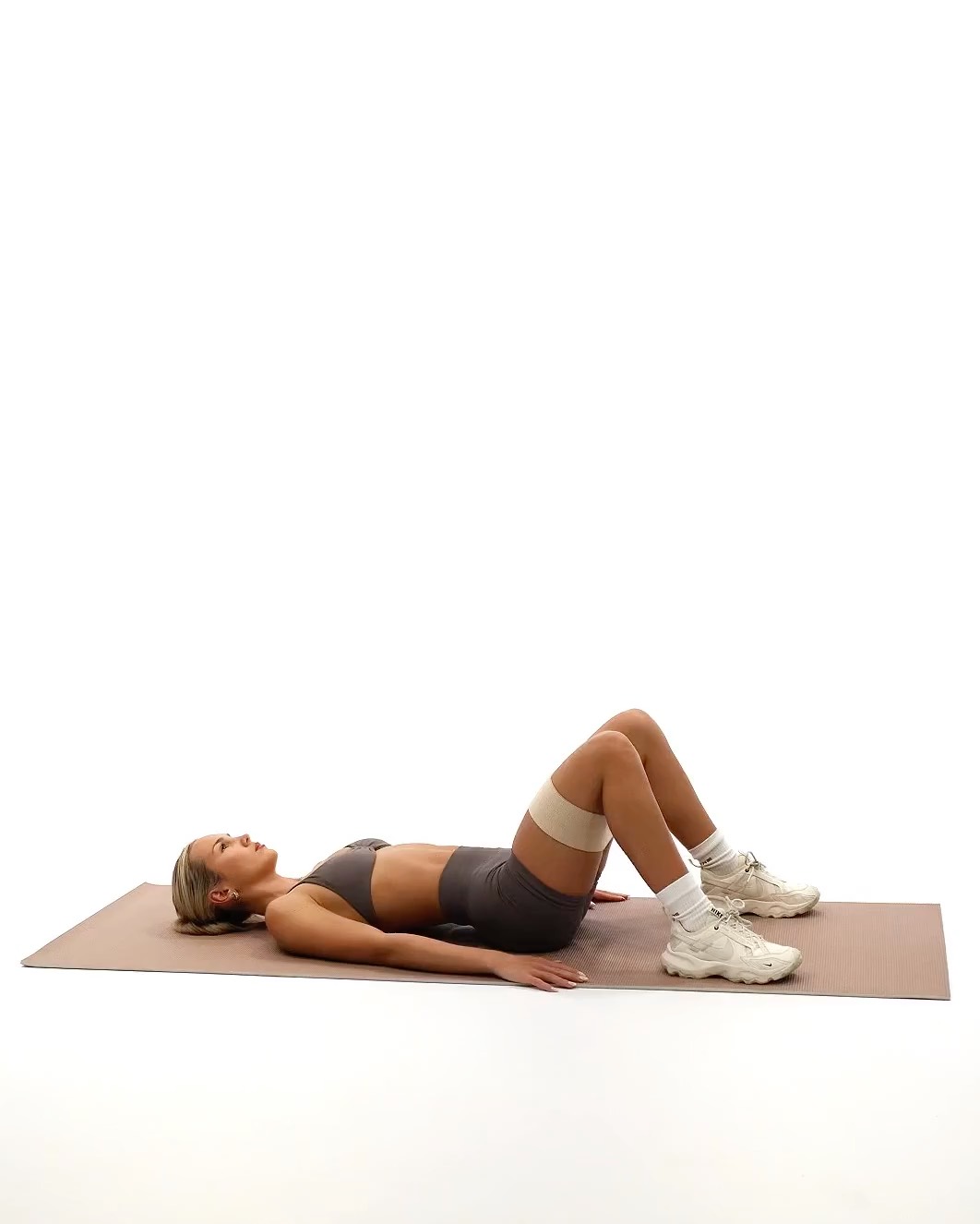
Banded Hip Thrust with Abductor
Banded Hipthrusts with an Abduction targets your glutes and hip abductors simultaneously by combining the traditional hipthrust with resistance band activation around the thighs. It helps improve glute strength, hip stability, and overall lower body power How to Perform - Lie flat on your back with your knees bent and feet flat on the floor, hip-width apart. Place a resistance band just above your knees - Engage your core and squeeze your glutes as you lift your hips off the floor until your body forms a straight line from your shoulders to your knees - At the top, push your knees outward against the band to activate your abductors, then slowly bring them back in
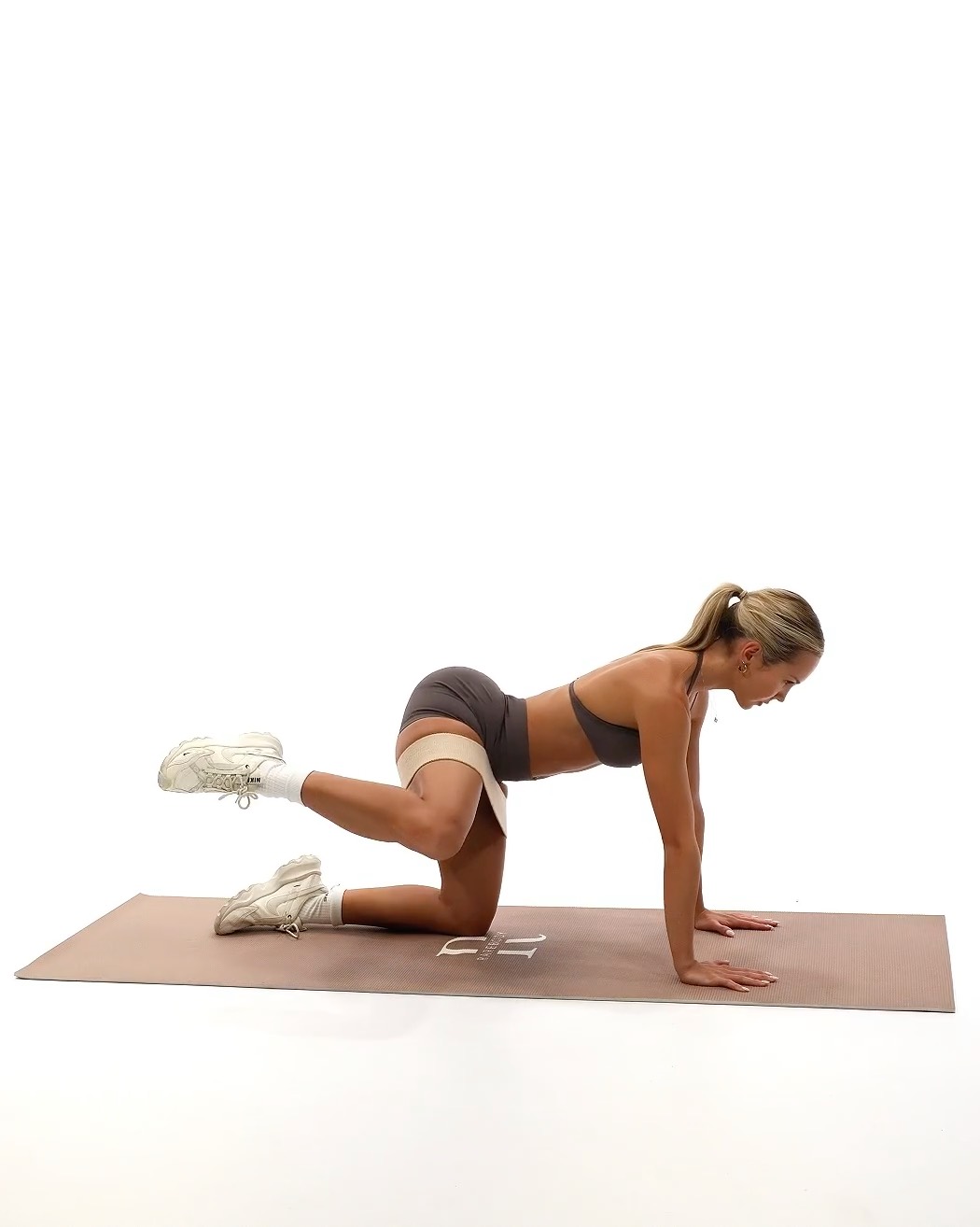
Banded Firehydrants
Banded Fire Hydrants target the gluteus medius and hip abductors by lifting the knee out to the side against resistance from a band. This exercise improves hip stability, strengthens the outer glutes, and helps enhance overall lower-body control How to Perform - Start on all fours with your hands under your shoulders and knees under your hips. Loop a resistance band just above your knees - Keeping your core engaged and hips level, lift one knee out to the side against the band’s resistance - Pause briefly at the top, squeezing your glute - Lower the knee back down with control
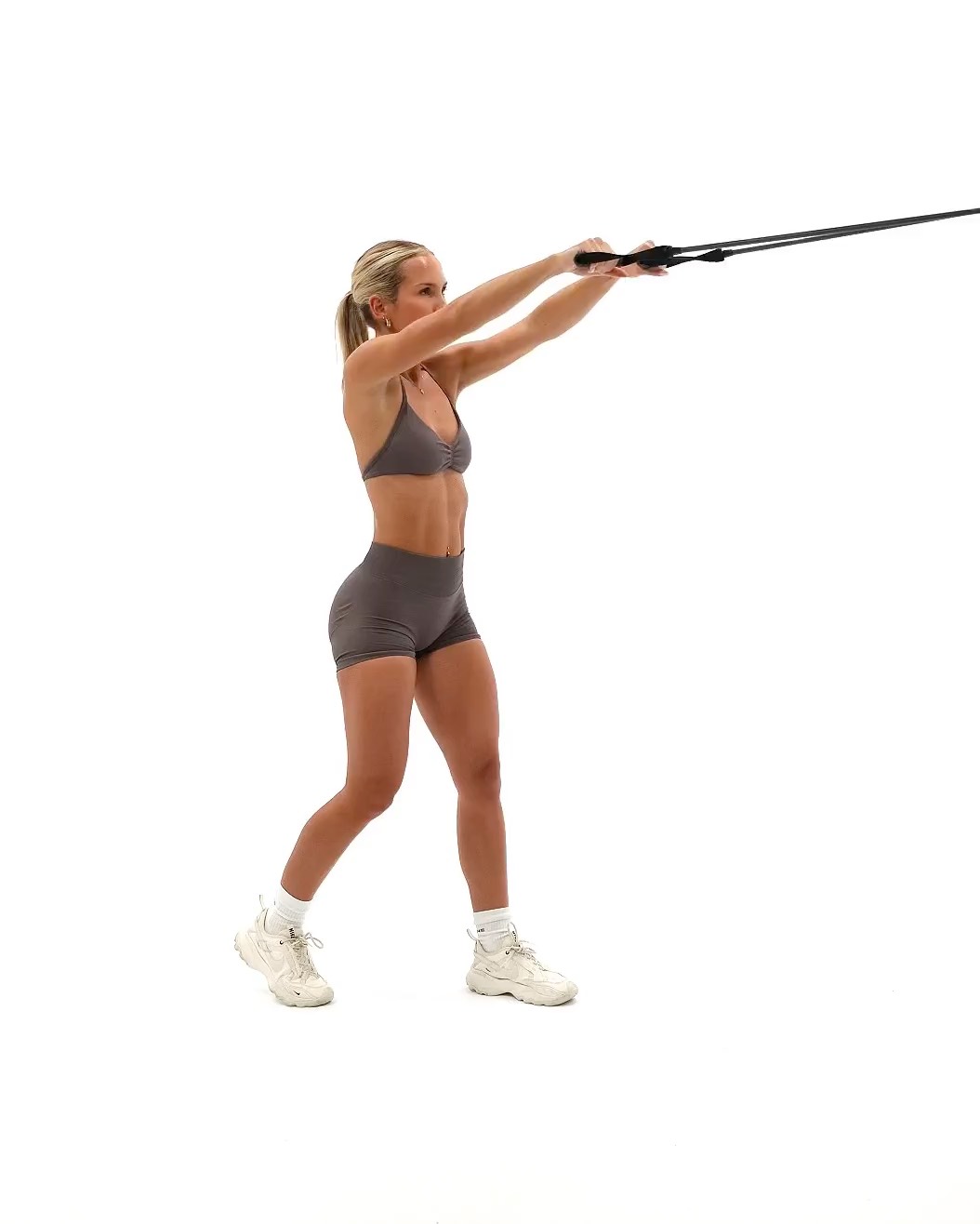
Banded Face Pull
Banded Face Pulls are an effective exercise targeting the upper back, rear deltoids, and rotator cuff muscles, helping improve posture and shoulder stability How to Perform - Anchor a resistance band at about head height or slightly higher - Grab the ends of the band with both hands, palms facing inward - Step back to create tension in the band, standing tall with a slight bend in your knees. Pull the band towards your face by driving your elbows outward and squeezing your shoulder blades together - Pause briefly at the peak contraction, then slowly return to the starting position
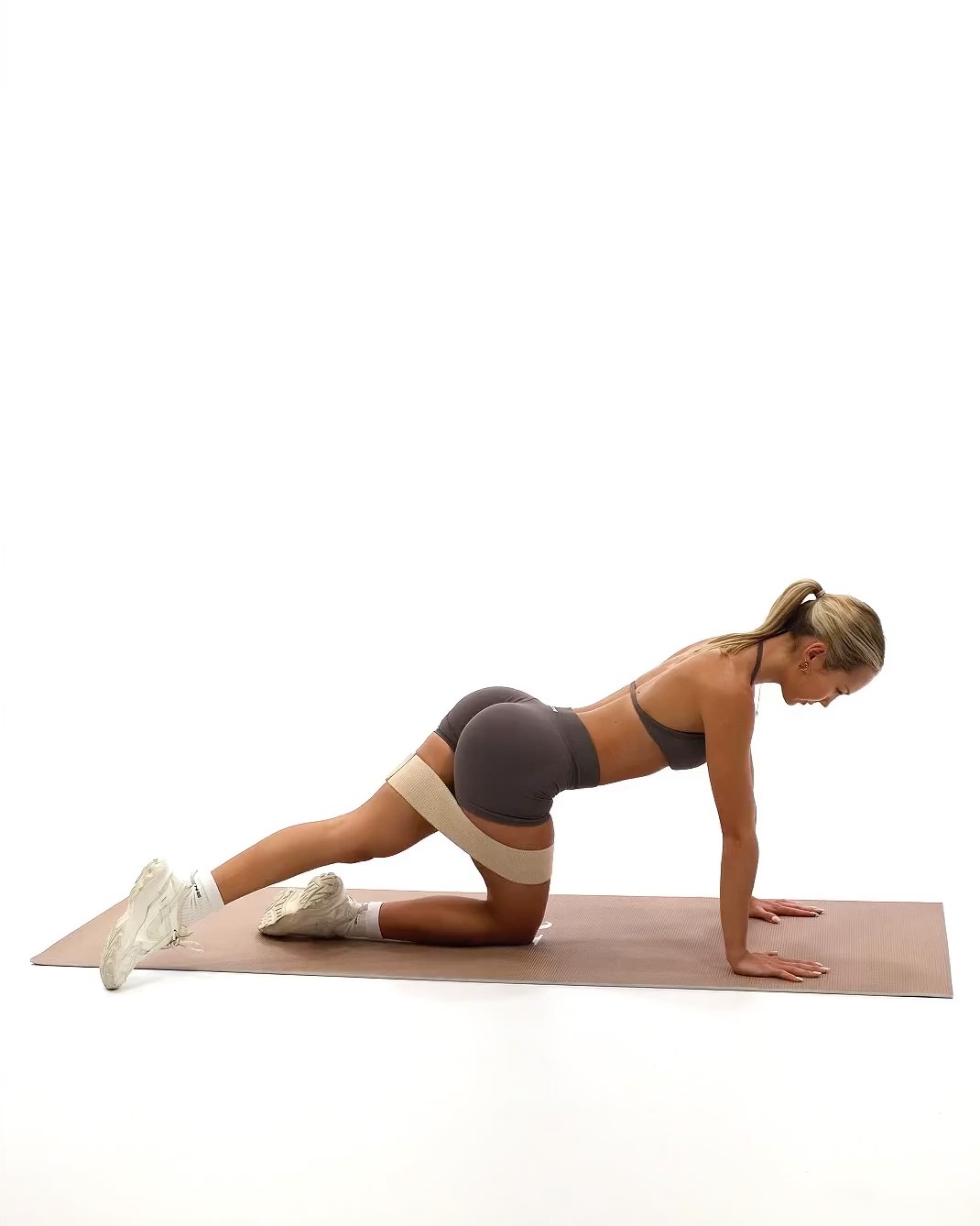
Banded Cross Overs
Banded Crossovers target the glutes by lifting the leg out to the side and sweeping it diagonally across behind the other leg, building hip strength and stability How to Perform - Start on all fours with a resistance band looped above your knees - Extend one leg straight out to the side, keeping it in line with your hip - Lift the leg up and sweep it diagonally across behind the opposite leg. - Squeeze your glute at the end of the movement. Return to the starting position with control
Exercise library
Edit exercise
Default fields
1 selectedDefaults apply when adding this exercise to a workout. You can remove them per workout, and block-required fields still apply.
Tags
5 selectedMuscles
11 selectedNo muscles loaded yet.
Alternative exercises
4 selectedBodyweight Reverse Lunge
Setup - Stand upright with your feet hip width apart and your hands on your hips - Engage your core and keep your chest tall, maintaining good posture throughout the movement Movement - Take a step backward with your right leg, keeping your hips square and your torso upright - As you take a step back, lower your body by bending both knees. Your front knee should be directly above your ankle and bent at about a 90 degree angle, while your back knee should lower towards the floor - Your back knee should come close to your ground, but not touch it - Push through the heel of your front foot to return to the starting position, standing up and bringing your back foot back to the original standing positionDumbbell Static Reverse Lunge
Setup - Stand with your feet hip width apart - Hold a dumbbell in each hand, letting them hang by your sides with your palms facing inwards Movement - Take a controlled step backward with one leg, lowering your body into a lunge position - Your front thigh should be parallel to the floor, with your knee directly above your ankle. Your back knee should lower towards the ground but don't let it touch the floor - Once at the bottom position of the lunge push through your front heel to return to the starting position, stepping forward with your back legBodyweight Curtsy Lunge
Setup - Stand tall with feet hip-width apart, core engaged, shoulders relaxed Movement - Step your right leg diagonally behind your left leg, crossing slightly behind. Both knees bend to lower your body into a lunge. - Lower until your front thigh is roughly parallel to the floor. Back knee hovers just above the ground - Press through your front heel to return to the starting position.Dumbbell Curtsy Lunge
Setup - Stand with your feet hip width apart, holding a set of dumbbells by your sides Movement - Step your right leg behind your left leg and across your body - Lowering your body into a lunge position, keeping your front knee aligned with your toes. Your knee should bend close to the ground but don't touch the floor - Push through the heel of your left foot to return to the starting position